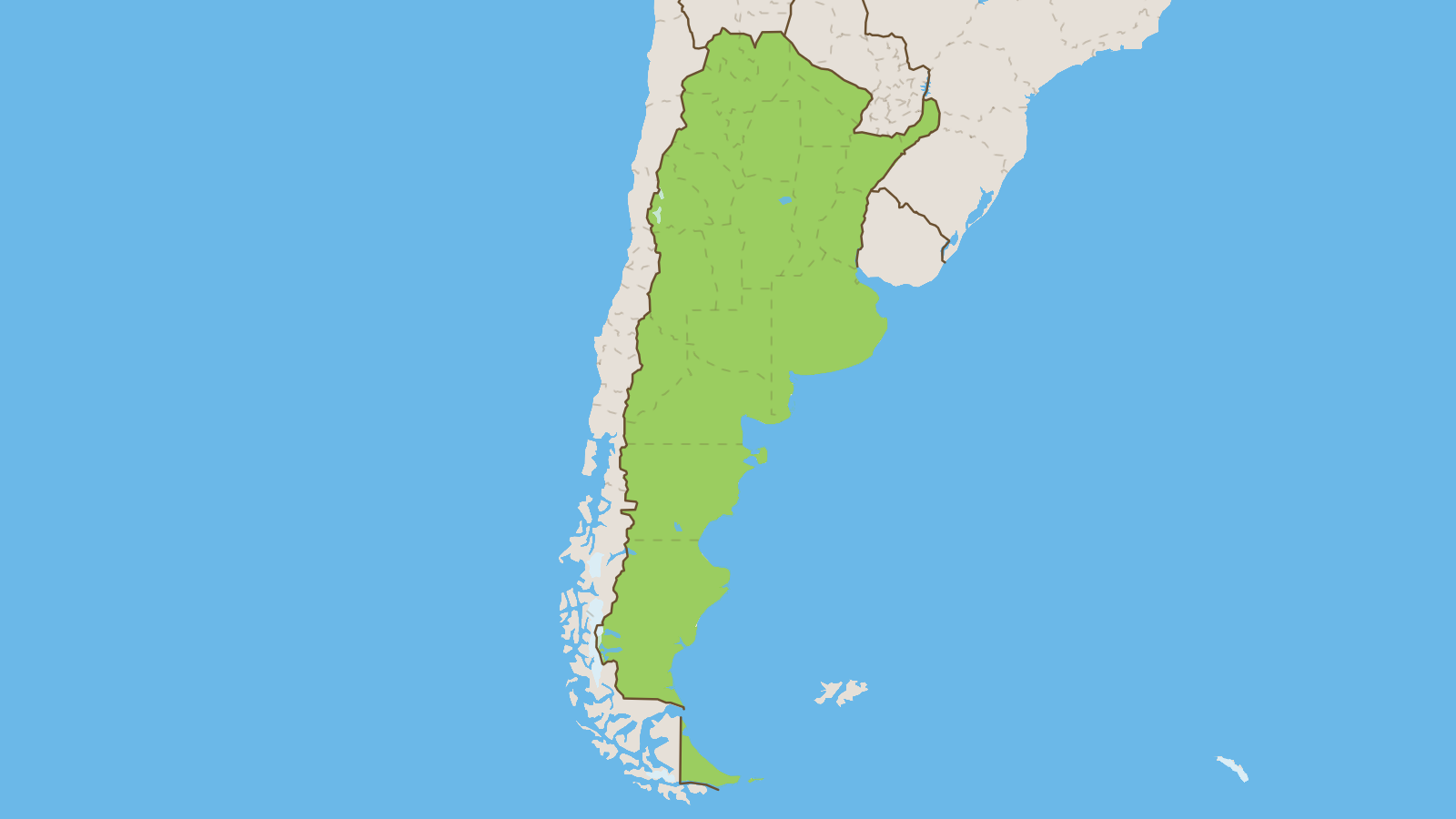
Argentina is a huge and exciting country stretching down the southern part of South America. It is the eighth largest country in the world, so you can imagine just how much variety fits inside its borders. From the tropical north to the icy wilderness of Patagonia in the south, Argentina is packed with dramatic landscapes, wild animals, and incredible natural wonders like the thundering Iguazu Falls.
The atmosphere in Argentina feels warm and passionate, shaped by its love of music, dance, and sport. The tango, a beautiful and dramatic dance, was born here in the streets of the capital, Buenos Aires. Football is practically a religion, and Argentina has produced some of the greatest players the world has ever seen. With a mix of Spanish and Guaraní spoken across the country, Argentina blends cultures in a way that makes it truly one of a kind.
Landmarks
-
1

Puerto Madryn Whale Watching
Puerto Madryn is a coastal city in Patagonia that serves as the gateway to the Valdés Peninsula, one of the world's best places to watch southern right whales. Every year from June to December, hundreds of these massive whales gather in the protected gulf near Puerto Madryn to breed and raise their calves, often swimming very close to shore. At up to 17 meters long, southern right whales are known for their acrobatic breaching and their distinctive callosities — rough pale patches of skin on their heads.
-
2

Esteros del Iberá Wetlands
The Esteros del Iberá is one of the largest wetland systems in South America, a vast network of shallow lagoons, floating islands, and marshes in the northeastern province of Corrientes. It is a biodiversity hotspot teeming with caimans, capybaras, marsh deer, and hundreds of bird species, making it one of Argentina's top wildlife destinations. The wetlands are also part of a rewilding project that successfully reintroduced jaguars to Argentina after decades of local extinction.
-
3
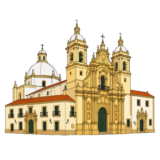
Córdoba Jesuit Block
The Córdoba Jesuit Block is a UNESCO World Heritage Site in the heart of Córdoba city, comprising a group of colonial buildings constructed by Jesuit missionaries between the 17th and 18th centuries. It includes a university — one of the oldest in South America — a church with a distinctive dome and bell towers, a residence, and a school, all built in a Spanish colonial Baroque style. The complex is a remarkable survival of Jesuit influence in South America and still serves as an active university campus.
-
4

Cueva de las Manos
Cueva de las Manos, meaning 'Cave of the Hands,' is a UNESCO World Heritage Site in Patagonia containing some of the oldest cave art in the Americas, dating back over 9,000 years. The cave walls are covered in hundreds of hand stencils, created by indigenous people who blew pigment around their hands, along with paintings of animals like guanacos. The dominant color of the handprints is a striking reddish-orange, though purple, black, and white also appear.
-
5
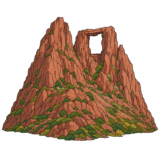
Sierra de la Ventana
Sierra de la Ventana is a mountain range in Buenos Aires province, remarkable because it rises dramatically from the surrounding flat Pampas grasslands. The range gets its name — which means 'Window Mountain' — from a natural rock arch near the summit of Cerro de la Ventana that looks like an open window in the stone. Hikers can climb to the arch and look through it for a stunning view of the valleys below.
-
6

Mar del Plata Coastline
Mar del Plata is Argentina's most famous seaside resort city, located along the Atlantic coast about 400 kilometers south of Buenos Aires. Its coastline features a mix of wide sandy beaches, rocky headlands, and a bustling harbor packed with colorful fishing boats. One iconic sight is the colony of South American sea lions that lounge near the port, entertaining visitors year-round.
-
7
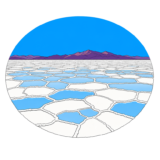
Salinas Grandes Jujuy
Salinas Grandes is a vast salt flat located in the Jujuy province of northwestern Argentina, sitting about 3,450 meters above sea level in the Andes. It is one of the largest salt flats in the world, stretching over 212 square kilometers of blinding white terrain. During the rainy season, a thin layer of water covers the surface, creating a mirror-like reflection of the sky that makes it look like you are walking through the clouds.
-
8

Cafayate Quebrada de las Conchas
The Quebrada de las Conchas, also called the Quebrada de Cafayate, is a stunning desert canyon carved by the Calchaquí River in Salta Province. The gorge stretches about 50 kilometers and is famous for its extraordinary red and ochre rock formations sculpted by wind and water into shapes like amphitheaters, frog statues, and the famous El Anfiteatro natural bowl. It is one of the most visually dramatic landscapes in all of Argentina.
-
9

Museo Nacional de Bellas Artes Buenos Aires
The National Museum of Fine Arts is Argentina's most important art museum, holding the largest public art collection in Latin America. It contains works by European masters like Rembrandt and Rodin alongside celebrated Argentine artists. The museum is housed in a stately neoclassical building in the Recoleta neighborhood.
-
10
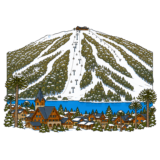
Cerro Chapelco San Martín de los Andes
Cerro Chapelco is a renowned ski resort rising above the charming Andean town of San Martín de los Andes in Neuquén province, Argentina. Known for its reliable powder snow and family-friendly atmosphere, the resort offers sweeping views over the beautiful Lake Lácar and the surrounding forested valleys. The town at its base has a distinct Tyrolean Alpine character with wooden chalets and flower-lined streets, giving the whole area a storybook mountain feel.
-
11

Bariloche Cathedral Ski Resort
Cerro Catedral, known as the Cathedral Ski Resort, is the largest and most important ski resort in South America, located just outside the city of San Carlos de Bariloche in the Argentine Lake District. The resort gets its name from the rocky cathedral-like spires that crown the mountain ridge above the ski runs, which are visible even from the slopes. On clear days, skiers enjoy breathtaking panoramic views of turquoise Lake Nahuel Huapi far below, framed by Patagonian forests.
-
12
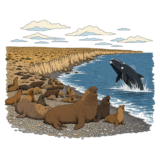
Península Valdés
Península Valdés is a rugged, wildlife-rich peninsula jutting into the Atlantic Ocean in Patagonia, Argentina, and is a UNESCO World Heritage Site celebrated as one of the world's great marine wildlife sanctuaries. It is famous for its extraordinary gatherings of southern right whales, elephant seals, sea lions, Magellanic penguins, and orcas that hunt along its shores. The dramatic sight of orcas intentionally beaching themselves to catch sea lion pups on the gravel beaches here is one of nature's most spectacular and unusual behaviors.
-
13
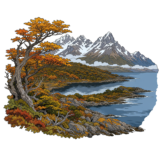
Tierra del Fuego National Park
Tierra del Fuego National Park is Argentina's only coastal national park, located at the very southern tip of South America where the Andes mountains plunge dramatically into the Beagle Channel. The park is a wild landscape of ancient lenga beech forests, glacial lakes, peat bogs, and rugged coastline that feels truly like the edge of the world. It is home to rare wildlife including Andean condors, sea lions, and beavers — the beavers were introduced accidentally and have altered the forests significantly.
-
14

Mount Fitz Roy
Mount Fitz Roy, known locally as Cerro Chaltén, is a jagged granite massif in Patagonia reaching 3,405 meters, located in Los Glaciares National Park near the town of El Chaltén. It is one of South America's most photographed mountains, famous for the way its multiple spires glow fiery orange and pink at dawn — a phenomenon called alpenglow. The mountain is sacred to the indigenous Tehuelche people, who called it 'Chaltén,' meaning 'smoking mountain' because of the clouds that almost always swirl around its summit.
-
15

Talampaya National Park
Talampaya National Park is a UNESCO World Heritage Site in the province of La Rioja, Argentina, famous for its towering red sandstone cliffs and canyons that were sculpted by wind and water over millions of years. The park preserves important dinosaur fossils and ancient rock art left by indigenous peoples, making it a place where both natural history and human history come alive. Some of the canyon walls rise over 150 meters straight up, creating an awe-inspiring and almost otherworldly red landscape.
-
16
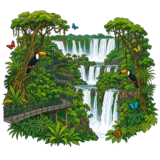
Iguazú National Park Argentina
Iguazú National Park on the Argentine side protects the lush subtropical rainforest ecosystem surrounding the famous Iguazú Falls, and is designated as a UNESCO World Heritage Site. The park is home to an incredible diversity of wildlife, including jaguars, giant anteaters, hundreds of bird species, and colorful butterflies that flutter around visitors on the jungle trails. A network of elevated metal walkways allows visitors to get thrillingly close to the roaring waterfalls while staying safely above the rushing water.
-
17
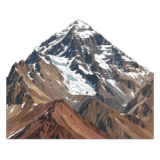
Aconcagua Summit
Aconcagua is the highest mountain in both the Western and Southern Hemispheres, reaching a staggering 6,961 meters above sea level in the Andes mountain range near Mendoza, Argentina. It is a popular destination for experienced mountaineers from around the world, even though it has no technical rock climbing, because the extreme altitude and harsh weather make it a serious challenge. Its broad, rocky peak is often dusted in snow and surrounded by a sea of lower Andean ridges.
-
18
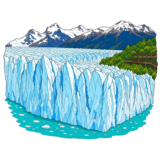
Perito Moreno Glacier
Perito Moreno Glacier is a massive river of ice located in Los Glaciares National Park in Patagonia, Argentina, and is one of the few glaciers in the world that is still advancing rather than retreating. It stretches about 30 kilometers long and rises up to 74 meters above the surface of Lake Argentino. Every few years, enormous chunks of ice dramatically break off into the lake in a process called 'calving,' creating thunderous crashes that draw crowds of amazed visitors.
-
19
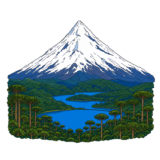
Lanín Volcano
Lanín Volcano is a stunning, near-perfectly cone-shaped stratovolcano rising 3,747 meters on the border between Argentina and Chile, surrounded by the forests and lakes of Lanín National Park. Its symmetrical snow-capped peak is considered one of the most beautiful volcanoes in South America and is sacred to the indigenous Mapuche people. Climbers from around the world come to scale its glaciated slopes, while the surrounding landscape of blue lakes and Araucaria trees adds to its drama.
-
20

Beagle Channel Ushuaia
The Beagle Channel is a narrow waterway at the southern tip of South America, separating Argentina and Chile, and named after the ship that carried Charles Darwin on his famous scientific voyage. The city of Ushuaia, often called 'the southernmost city in the world,' sits along its Argentine shore, framed by jagged snow-capped mountains plunging steeply into the dark water. Visitors can spot penguins, sea lions, and albatrosses on boat trips through the channel.
-
21
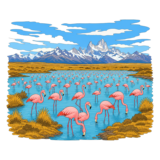
Laguna Nimez Flamingo Reserve El Calafate
Laguna Nimez is a small freshwater lake on the edge of El Calafate in Patagonia, protected as a nature reserve famous for its large flocks of flamingos and other water birds. Hundreds of pink flamingos wade in the shallow waters against the dramatic backdrop of the Patagonian steppe and the distant Andes. It is a surprisingly accessible wildlife experience, just a short walk from the town center.
-
22
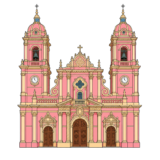
Salta Cathedral
The Cathedral Basilica of Salta is a magnificent colonial church in the heart of Salta city in northwest Argentina, facing the main plaza. Its distinctive pink and cream baroque facade with twin bell towers makes it one of the most recognizable buildings in the region. Inside, it houses the revered figures of the Lord and Virgin of the Miracles, which are deeply important to local Catholic tradition.
-
23
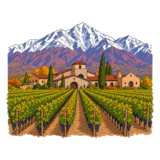
Mendoza Wine Region
Mendoza is Argentina's most famous wine-producing region, nestled at the foot of the Andes Mountains and renowned worldwide for its Malbec red wine. The region's high altitude, dry climate, and glacier-fed irrigation canals create perfect conditions for growing exceptional grapes. Visitors are treated to endless rows of vineyards with the snow-capped Andes as a dramatic backdrop.
-
24
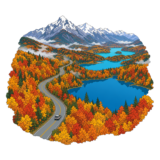
Seven Lakes Road Neuquén
The Seven Lakes Road, or Ruta de los Siete Lagos, is one of South America's most scenic drives, stretching about 110 kilometers through the Andes between San Martín de los Andes and Bariloche in Neuquén and Río Negro provinces. The route winds through Nahuel Huapi National Park, connecting a chain of stunning glacial lakes — including Lago Lácar, Lago Villarino, and Lago Falkner — each framed by different colors of forest, especially spectacular in autumn when the beech trees turn gold and red. The road passes through barely touched wilderness with almost no towns, making it feel like a journey through the world's last wild places.
More interesting landmarks
-
25
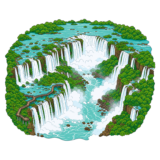
Iguazú Falls
Iguazú Falls is one of the world's largest and most spectacular waterfall systems, stretching nearly 2.7 kilometers along the border of Argentina and Brazil. It is made up of around 275 individual cascades, with the thundering 'Devil's Throat' being the most dramatic drop of all. The surrounding subtropical rainforest is so lush and alive that you can spot toucans and coatis right alongside the viewing walkways.
-
26
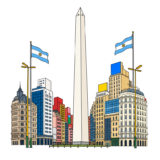
Buenos Aires Obelisco
The Obelisco de Buenos Aires is a tall, white stone obelisk that stands at the very center of the city's widest avenue, the famous Avenida 9 de Julio. Built in 1936 to celebrate the 400th anniversary of the founding of Buenos Aires, it stands 67.5 meters tall and has become the most recognized symbol of the city. Argentinians gather around the Obelisco to celebrate everything from football victories to national holidays.
-
27
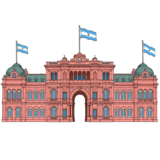
Casa Rosada Buenos Aires
The Casa Rosada, which means 'Pink House,' is the executive mansion and office of the President of Argentina, located on the historic Plaza de Mayo in Buenos Aires. Its famously pink facade is thought to get its color from a mix of lime and ox blood used in the original paint, though today a special rose-colored paint maintains the tradition. The building's ornate balcony is one of the most iconic in the world — it is from here that Eva Perón gave her legendary speeches to the Argentine people.
-
28
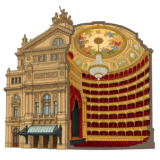
Teatro Colón Buenos Aires
Teatro Colón is Buenos Aires's grand opera house and one of the most celebrated performance venues in the entire world, known for its extraordinary acoustics and breathtaking interior. Opened in 1908, the theater can seat over 2,500 people and has hosted legendary performers including Luciano Pavarotti and Mikhail Baryshnikov. The inside is decorated with red velvet seats, a massive central chandelier, gilded balconies rising in tiers, and a stunning painted ceiling.
-
29
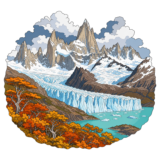
Los Glaciares National Park
Los Glaciares National Park is a UNESCO World Heritage Site in the Patagonian Andes of southern Argentina, covering over 700,000 hectares of dramatic landscapes that include glaciers, jagged mountain peaks, and brilliant turquoise lakes. The park is home to the Southern Patagonian Ice Field, one of the largest bodies of ice outside of the polar regions. Iconic landmarks like Perito Moreno Glacier and the sharp peaks of Mount Fitz Roy make it one of South America's most photographed wilderness destinations.
-
30

Ischigualasto Provincial Park
Ischigualasto Provincial Park, also known as 'Valle de la Luna' or 'Valley of the Moon,' is a UNESCO World Heritage Site in San Juan province, Argentina, containing one of the world's most complete fossil records from the Triassic period, around 230 million years ago. The landscape is surreal and almost lunar, with grey and lavender clay badlands, eroded rock formations, and rounded grey boulders scattered across a barren valley floor. Some of the earliest known dinosaur fossils ever discovered were found here, making it an enormously important site for paleontology.
-
31
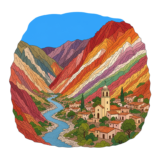
Quebrada de Humahuaca
Quebrada de Humahuaca is a dramatic mountain valley in northwest Argentina, carved by the Río Grande and stretching about 155 kilometers through the Andes. It is a UNESCO World Heritage Site recognized for its stunning geology and over 10,000 years of human history, from pre-Inca cultures to colonial times. The valley's famous Cerro de los Siete Colores — the Hill of Seven Colors — displays bands of red, purple, yellow, and green rock that glow brilliantly at sunrise.
-
32
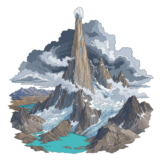
Cerro Torre
Cerro Torre is one of the most difficult and awe-inspiring mountain peaks on Earth, rising 3,128 meters in Patagonia on the border of Argentina and Chile. Its nearly vertical granite needle shape, often capped with a wild mushroom of ice and rime, makes it one of the world's most iconic and challenging climbs. The peak is frequently shrouded in violent storms that make it a legendary test for elite mountaineers.
-
33
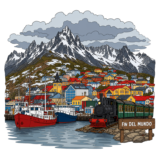
Ushuaia End of the World
Ushuaia is the southernmost city in the world, tucked between the Martial mountain range and the Beagle Channel in Tierra del Fuego, Argentina. Often called 'La Fin del Mundo' — the End of the World — it is a gateway for expeditions to Antarctica and a popular destination for adventurous travelers. The harbor is lined with colorful buildings, and the famous 'End of the World' train carries visitors through dramatic sub-Antarctic scenery just outside the city.
-
34

Nahuel Huapi National Park
Nahuel Huapi is Argentina's oldest national park, established in 1934, and centers on the spectacular deep-blue Lake Nahuel Huapi in the Andean foothills of Patagonia. The park is a vast wilderness of glacial lakes, ancient cypress and lenga beech forests, volcanoes, and snow-capped peaks that straddle the border with Chile. At its heart is the famous Llao Llao Hotel, an iconic Swiss-style wooden lodge perched on a peninsula surrounded by lake and mountain scenery.
-
35

MALBA Museum Buenos Aires
MALBA, the Latin American Art Museum of Buenos Aires, is one of the most important modern art museums in South America. It houses an impressive collection of 20th-century Latin American artwork, including pieces by Frida Kahlo and Diego Rivera. The building itself is a striking work of contemporary architecture that draws visitors from around the world.
-
36

La Boca Caminito Buenos Aires
Caminito is a famous short street and open-air museum in the colorful La Boca neighborhood of Buenos Aires. The street is lined with brightly painted corrugated iron houses in vivid reds, yellows, blues, and greens, creating one of the most photographed scenes in Argentina. Caminito is also the birthplace of the tango dance, and street performers often dance there for visitors.
-
37

San Telmo Market Buenos Aires
The San Telmo Market is a historic covered market in one of Buenos Aires's oldest neighborhoods, dating back to 1897. Inside its beautiful iron-and-glass structure, visitors find antique stalls, local food vendors, and artisan shops. The market is a beloved cultural hub that captures the old-world charm of Buenos Aires.
-
38
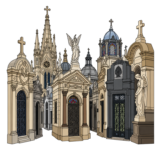
Recoleta Cemetery Buenos Aires
Recoleta Cemetery is one of the world's most spectacular cemeteries, filled with elaborate marble mausoleums and ornate stone tombs built like tiny palaces and chapels. It is the resting place of many famous Argentinians, including Eva Perón, known as Evita. Walking through it feels like strolling through a miniature city of Gothic, Baroque, and Art Deco architecture.
-
39
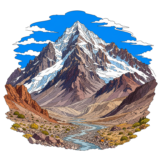
Aconcagua Provincial Park
Aconcagua Provincial Park protects Mount Aconcagua, the highest peak in both the Western and Southern Hemispheres at nearly 6,961 meters (22,838 feet). The massive mountain dominates the landscape near the Chilean border in Mendoza Province, drawing climbers and trekkers from around the world. Its summit is permanently capped with ice and snow, and the surrounding park features dramatic glaciers and rugged Andean wilderness.
-
40
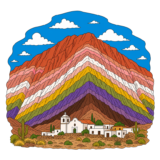
Jujuy Pumamarca Cerro de los Siete Colores
The Hill of Seven Colors, or Cerro de los Siete Colores, is a breathtaking mountain near the village of Purmamarca in Jujuy Province, Argentina. Its slopes display a remarkable natural palette of seven distinct colors — red, pink, white, yellow, green, purple, and brown — created by different mineral deposits in the rock layers over millions of years. The small whitewashed colonial village nestled at its foot makes the scene even more unforgettable.
Ten Largest Cities
Puzzles