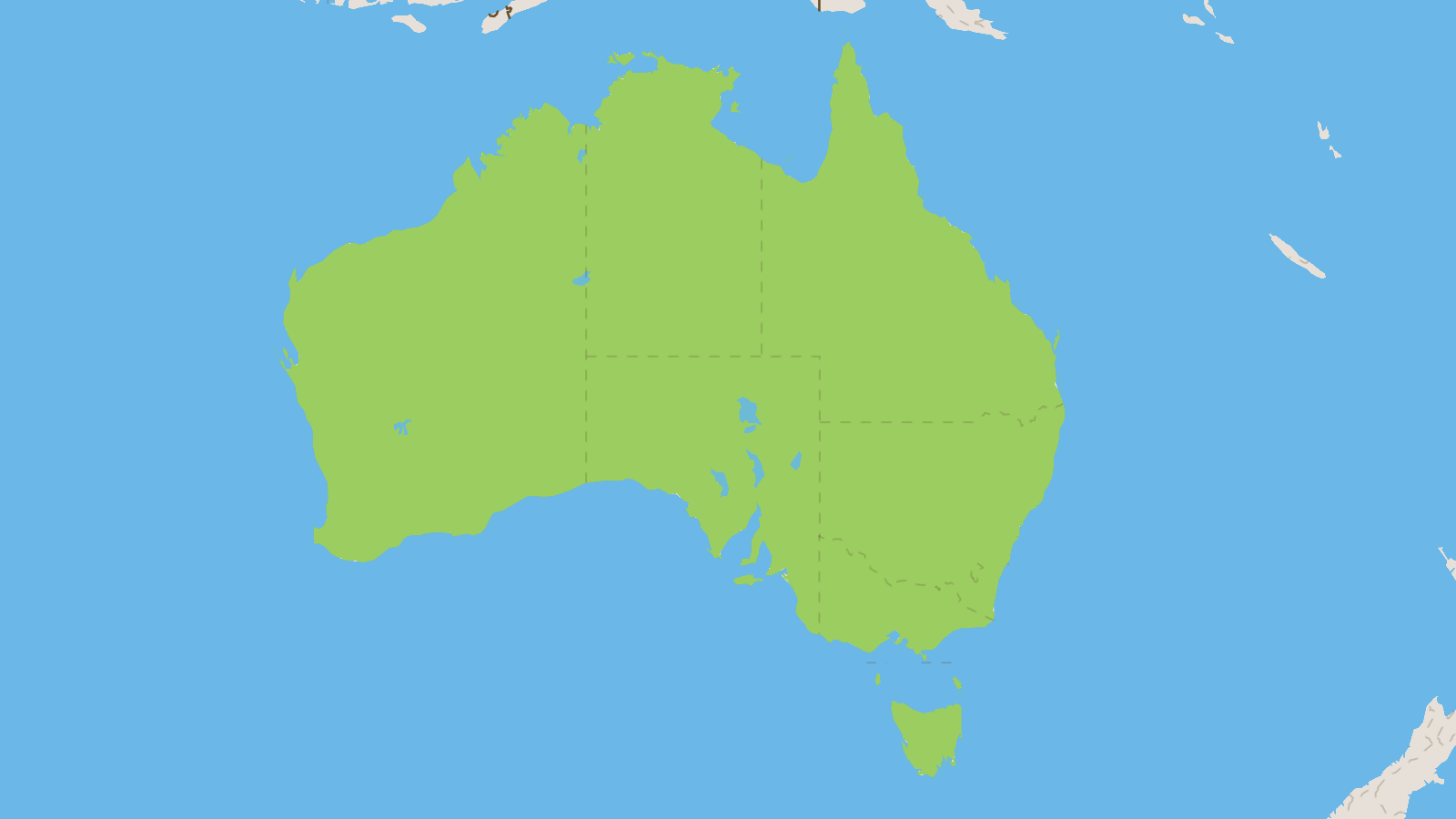
Australia is a country like no other. It sits in the Southern Hemisphere, surrounded by the Indian and Pacific Oceans, and it is so vast that it counts as its own continent. From scorching red deserts in the outback to lush tropical rainforests and stunning golden beaches, the landscapes here are wildly varied and endlessly impressive. With a population of around 27 million people spread across such an enormous land, Australia has a relaxed, adventurous spirit that is truly infectious.
Australia is world famous for its incredible wildlife, including kangaroos, koalas, and the peculiar platypus, animals you simply will not find living wild anywhere else on Earth. The Great Barrier Reef, stretching along the northeast coast, is the largest coral reef system on the planet and a paradise for sea creatures. English is the main language, and Australians are known for their friendly, laid-back attitude and love of the outdoors.
Landmarks
-
1
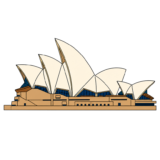
Sydney Opera House
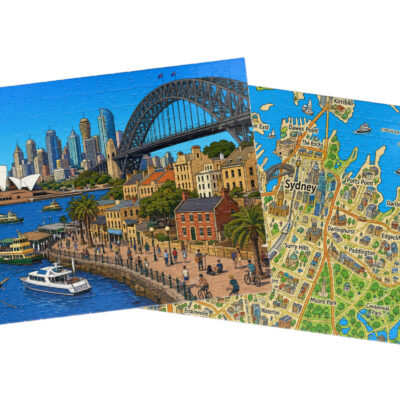
The Sydney Opera House is one of the most recognizable buildings in the world, sitting on a peninsula in Sydney Harbour. It serves as a major performing arts venue, hosting opera, theatre, and concerts. Its roof is made up of over one million white and cream ceramic tiles that gleam in the sunlight.
-
2
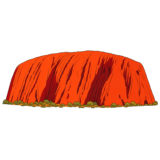
Uluru (Ayers Rock)
Uluru is a colossal sandstone monolith rising dramatically from the flat red desert of Australia's Northern Territory. It is deeply sacred to the Anangu Aboriginal people, who have lived in the area for over 30,000 years. The rock famously changes colour throughout the day, glowing deep orange and red at sunrise and sunset.
-
3
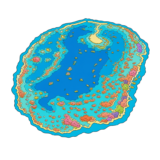
Great Barrier Reef
The Great Barrier Reef is the world's largest coral reef system, stretching over 2,300 kilometres along the northeast coast of Queensland. It is home to thousands of species of fish, corals, turtles, and sharks. The reef is so vast that it can even be seen from outer space.
-
4
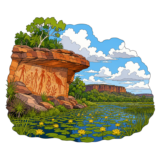
Kakadu National Park
Kakadu National Park is Australia's largest national park, covering nearly 20,000 square kilometres in the Northern Territory. It is a UNESCO World Heritage Site recognised for both its extraordinary biodiversity and its Aboriginal rock art, some of which is over 20,000 years old. The park contains wetlands, waterfalls, floodplains, and an astonishing variety of wildlife including saltwater crocodiles.
-
5
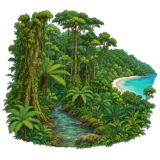
Daintree Rainforest
The Daintree Rainforest in far north Queensland is one of the oldest tropical rainforests on Earth, estimated to be around 180 million years old. It is part of the Wet Tropics World Heritage Area and is home to an extraordinary range of rare plants and animals, including species found nowhere else. Uniquely, the rainforest meets the Great Barrier Reef at the coast, creating two World Heritage environments side by side.
-
6
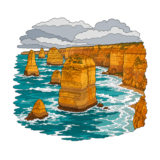
Twelve Apostles
The Twelve Apostles are a collection of dramatic limestone sea stacks rising from the Southern Ocean along Victoria's rugged Great Ocean Road coastline. Carved by the powerful waves and wind over millions of years, these towering pillars reach up to 45 metres high. Despite the name, there were never actually twelve — only eight stacks remain standing today, as the soft limestone slowly erodes.
-
7
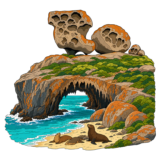
Kangaroo Island
Kangaroo Island is Australia's third-largest island, located off the coast of South Australia, and is renowned as one of the country's best wildlife sanctuaries. Visitors can see kangaroos, sea lions, koalas, echidnas, and penguins in their natural habitat. The island also features striking natural rock formations like Admirals Arch and Remarkable Rocks, where giant boulders have been sculpted into bizarre shapes by wind and sea.
-
8
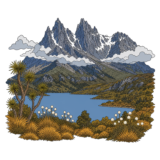
Cradle Mountain
Cradle Mountain is a dramatic jagged peak in Tasmania's Cradle Mountain-Lake St Clair National Park, part of a UNESCO World Heritage wilderness area. It is one of Australia's most iconic alpine landscapes, rising 1,545 metres above sea level and reflected in the still waters of Dove Lake below. The mountain gets its name from its shape, which resembles an old-fashioned gold miner's cradle.
-
9
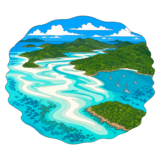
Whitsunday Islands
The Whitsunday Islands are a group of 74 tropical islands scattered in the Coral Sea off the coast of Queensland, sitting within the Great Barrier Reef Marine Park. The islands are famous for their brilliant white silica sand beaches — especially Whitehaven Beach — and vivid turquoise waters teeming with coral and marine life. Whitehaven Beach is considered one of the most beautiful beaches in the world.
-
10
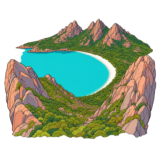
Freycinet National Park
Freycinet National Park is a stunning coastal wilderness on the east coast of Tasmania, known for its dramatic pink granite peaks, pristine beaches, and clear blue waters. The park's most iconic feature is Wineglass Bay, a perfectly curved crescent beach of white sand enclosed by the pink-grey Hazards mountain range. It is one of the most photographed landscapes in Australia.
-
11

Australian War Memorial Canberra
The Australian War Memorial is one of the most visited and revered landmarks in Australia, located at the foot of Mount Ainslie in Canberra. It serves as both a national museum of Australia's military history and a shrine to the Australians who have died in wars. The building's distinctive Byzantine-style copper dome and sandstone facade are instantly recognisable along Canberra's central ANZAC Parade.
-
12
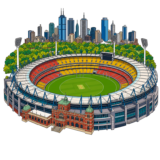
Melbourne Cricket Ground
The Melbourne Cricket Ground, known as the MCG or simply 'the G', is Australia's largest sports stadium and one of the most iconic sporting venues in the world. With a capacity of nearly 100,000 people, it has hosted events including the 1956 Olympics, cricket Test matches, and AFL Grand Finals. The MCG is considered the spiritual home of Australian cricket and Australian rules football.
-
13
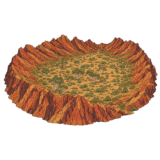
Flinders Ranges National Park
The Flinders Ranges is South Australia's largest mountain range, stretching across rugged, ancient landscapes that are over 800 million years old. At its heart is Wilpena Pound, a natural amphitheatre of curved quartzite peaks that shelters a hidden valley inside. It is a sacred place for the Adnyamathanha people and is famous for its rich Aboriginal culture and stunning red-rock scenery.
-
14
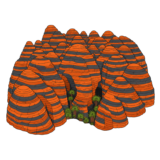
Purnululu National Park (Bungle Bungles)
Purnululu National Park in Western Australia is home to the Bungle Bungle Range, one of the most extraordinary landscapes on Earth. The range is made up of thousands of beehive-shaped sandstone domes striped in alternating bands of orange and black. Hidden within the domes are narrow gorges and palm-filled oases that make it a UNESCO World Heritage Site.
-
15
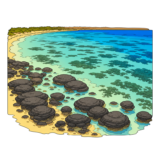
Shark Bay
Shark Bay is a remote bay on the westernmost point of Australia, famous for its incredible marine biodiversity and the world's largest and oldest sea-grass beds. It is home to one of the only places on Earth where you can see living stromatolites — dome-shaped structures built by ancient microbes that are among the oldest life forms known to science. Bottlenose dolphins that voluntarily swim close to shore at Monkey Mia have made the area world-famous.
-
16
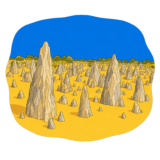
Nambung National Park (Pinnacles Desert)
The Pinnacles Desert inside Nambung National Park in Western Australia is a surreal landscape where thousands of ancient limestone pillars rise up from a golden sandy desert floor. These spires range from tiny nubs to towers over three metres tall and were formed from seashells broken down and cemented by rainwater over thousands of years. Visitors often describe walking through the Pinnacles as feeling like stepping onto another planet.
-
17
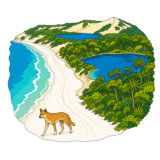
Fraser Island (K'gari)
Fraser Island, known by its traditional name K'gari, is the world's largest sand island and lies just off the Queensland coast. Despite being made almost entirely of sand, it supports a remarkable rainforest, freshwater lakes of crystal-clear perched water, and wide open beaches where dingoes still roam freely. Its Butchulla name K'gari means 'paradise,' and the island is a UNESCO World Heritage Site.
-
18
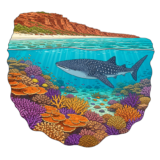
Ningaloo Reef
Ningaloo Reef is a stunning fringing coral reef that runs along the remote northwest coast of Western Australia for over 300 kilometres. Unlike the Great Barrier Reef, Ningaloo sits so close to shore that you can wade directly from the beach into the reef, making it incredibly easy to snorkel. It is world-famous as one of the most reliable places on Earth to swim with whale sharks, the largest fish in the ocean.
-
19
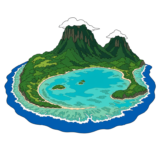
Lord Howe Island
Lord Howe Island is a tiny, crescent-shaped volcanic island in the Tasman Sea about 600 kilometres east of Port Macquarie, New South Wales. It is dominated by two dramatic basalt peaks — Mount Gower and Mount Lidgbird — that rise steeply from a sheltered lagoon enclosed by the world's southernmost coral reef. The island is so pristine and carefully protected that only 400 tourists are allowed to visit at any one time.
-
20
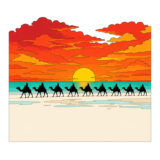
Cable Beach Broome
Cable Beach is a spectacular 22-kilometre stretch of white sand and turquoise water in the remote pearling town of Broome in Western Australia's Kimberley region. The beach is most famous for its breathtaking sunsets, when the sky turns deep red and gold and camel trains are silhouetted along the shore's edge. Broome was once the world's pearling capital, and the area still has a rich multicultural heritage tied to that history.
-
21
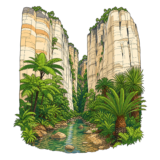
Carnarvon Gorge
Carnarvon Gorge is a dramatic sandstone gorge in central Queensland, carved over millions of years by Carnarvon Creek through the sandstone plateau of the Carnarvon National Park. Its towering white and cream cliff walls soar up to 200 metres high and shelter a lush, cool microclimate of ferns, mosses, and ancient cycads. The gorge is one of Queensland's most significant Aboriginal cultural sites, with spectacular rock art galleries featuring stencils and engravings left by the Bidjara people.
-
22
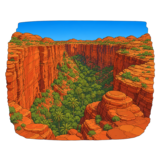
Kings Canyon (Watarrka National Park)
Kings Canyon is a dramatic gorge in the Northern Territory, with towering sandstone walls that rise up to 270 metres high. It is part of Watarrka National Park and holds deep spiritual significance for the local Luritja Aboriginal people. The canyon's rim walk rewards visitors with stunning views over a hidden valley nicknamed the 'Garden of Eden.'
-
23
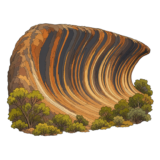
Wave Rock Hyden
Wave Rock is a natural granite formation near the small town of Hyden in Western Australia that looks exactly like a giant frozen ocean wave. It stands about 15 metres tall and stretches 110 metres long, with curved stripes of grey, red, and cream caused by mineral-rich water runoff over millions of years. It is one of Australia's most unusual and photographed natural landmarks.
-
24
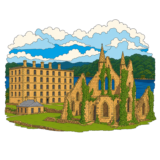
Port Arthur Historic Site
Port Arthur is a remarkably intact convict settlement on the Tasman Peninsula in Tasmania, operating from 1833 to 1877 as one of Australia's most notorious penal colonies. The site includes over 30 buildings and ruins, including a large penitentiary, a church, and a model prison, all set in beautiful but haunting coastal scenery. It is now a UNESCO World Heritage Site and one of Australia's most visited historic places.
More interesting landmarks
-
25
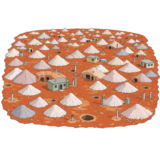
Coober Pedy Opal Fields
Coober Pedy is a remote outback town in South Australia known as the opal capital of the world, producing more than half of the world's opals. The landscape is covered in thousands of white mounds of excavated earth called mullock heaps, left behind by miners digging for precious stones. Because the desert heat is so extreme, many residents live underground in homes called dugouts.
-
26
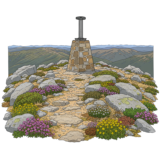
Mount Kosciuszko Summit
Mount Kosciuszko is the highest mountain in Australia, reaching 2,228 metres above sea level in the Snowy Mountains of New South Wales. Despite being Australia's tallest peak, its summit is a gentle rounded plateau covered in alpine wildflowers, low shrubs, and rocks, making it accessible to most walkers via a well-maintained path. On clear days, the panoramic views across the surrounding alpine national park are spectacular.
-
27
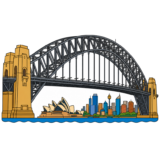
Sydney Harbour Bridge
The Sydney Harbour Bridge is a massive steel arch bridge that stretches across Sydney Harbour, connecting the city centre to the North Shore. Completed in 1932, it was the world's widest long-span bridge for many decades. Locals affectionately call it 'the Coathanger' because of its distinctive curved arch shape.
-
28
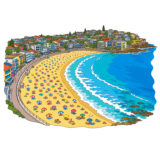
Bondi Beach
Bondi Beach is one of Australia's most famous beaches, located just a short drive from Sydney's city centre. Its golden crescent-shaped sandy shore attracts millions of visitors each year and is a hub of surf culture. The beach is also known for its lively promenade lined with cafés, shops, and the famous Bondi Icebergs ocean pool.
-
29
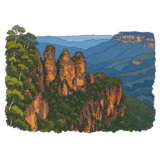
Blue Mountains National Park
Blue Mountains National Park is a stunning wilderness area located about 80 kilometres west of Sydney, featuring deep sandstone gorges, eucalyptus forests, and dramatic cliff-top lookouts. The mountains appear blue because of a fine mist of eucalyptus oil released by the millions of gum trees. The park is home to famous rock formations, waterfalls, and Aboriginal heritage sites.
-
30
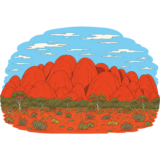
Kata Tjuta (The Olgas)
Kata Tjuta is a group of 36 large, ancient rock domes rising from the flat red desert of Australia's Northern Territory, located about 25 kilometres west of the more famous Uluru. Sacred to the Anangu Aboriginal people, the site holds deep spiritual and cultural significance and is part of Uluru-Kata Tjuta National Park. The name Kata Tjuta means 'many heads' in the Anangu language.
-
31
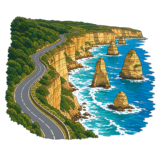
Great Ocean Road
The Great Ocean Road is a spectacular coastal highway stretching 243 kilometres along the south-eastern coast of Victoria, hugging dramatic cliffs and surf beaches. It was built by returned soldiers after World War I and is dedicated to those who lost their lives, making it the world's largest war memorial. The road is most famous for passing the Twelve Apostles, a series of towering limestone sea stacks rising from the Southern Ocean.
-
32
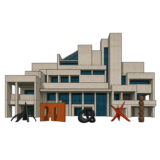
National Gallery of Australia Canberra
The National Gallery of Australia is the country's premier art museum, located on the shores of Lake Burley Griffin in Canberra. It houses over 160,000 works of art spanning Australian, Aboriginal, and international collections, including Jackson Pollock's famous 'Blue Poles'. The building itself is an impressive example of brutalist architecture, featuring bold geometric concrete forms.
-
33

Federation Square Melbourne
Federation Square is Melbourne's vibrant cultural and civic heart, opened in 2002 on the site of a former railway yard in the heart of the city. The complex hosts galleries, restaurants, cinemas, and public events, and is famous for its bold and unconventional architecture. Its buildings are covered in a striking geometric pattern of triangular sandstone, zinc, and glass panels.
-
34
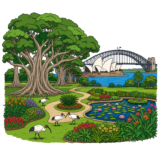
Royal Botanic Gardens Sydney
The Royal Botanic Garden Sydney is a beautiful 30-hectare garden located right in the heart of the city, stretching along the harbour foreshore next to the Sydney Opera House and the CBD. Established in 1816, it is the oldest scientific institution in Australia and is home to thousands of plant species from Australia and around the world. Visitors can enjoy stunning views of Sydney Harbour Bridge and the Opera House from within the gardens.
-
35
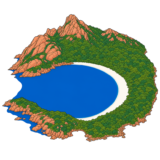
Wineglass Bay
Wineglass Bay is a famously photogenic beach in the Freycinet National Park on the east coast of Tasmania. Its near-perfect semicircular shape, squeezed between pink granite peaks and the deep blue Tasman Sea, gives it the distinctive wineglass outline that inspired its name. The beach is consistently ranked among the most beautiful in the world for its pure white silica sand and strikingly clear water.
-
36
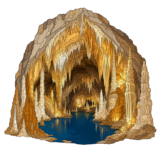
Jenolan Caves
Jenolan Caves is one of the world's most impressive and oldest cave systems, located in the Blue Mountains of New South Wales. The network of limestone caverns is filled with spectacular stalactites, stalagmites, and crystal formations that have been growing for hundreds of millions of years. The caves also feature a natural blue lake and a dramatic arch through which visitors enter.
-
37
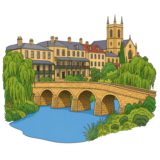
Richmond Historic Town Tasmania
Richmond is a beautifully preserved colonial town in Tasmania, famous for its sandstone buildings dating back to the early 1800s. It is home to Richmond Bridge, built by convict labour in 1823 and the oldest intact bridge still in use in Australia. Walking through Richmond feels like stepping back in time to the earliest days of European settlement.
-
38
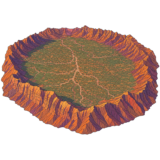
Wilpena Pound
Wilpena Pound is a natural amphitheatre of ancient mountain ridges in the Flinders Ranges of South Australia, forming a giant oval basin roughly 17 kilometres long. The jagged quartzite peaks rise sharply from the flat surrounding plains and glow purple and orange at sunrise and sunset. It is a sacred place for the local Adnyamathanha Aboriginal people, who call it Ikara, meaning 'meeting place.'
-
39

Australian Museum Sydney
The Australian Museum in Sydney is the oldest museum in Australia, founded in 1827, and holds one of the most important natural history and cultural collections in the Southern Hemisphere. Its exhibits include dinosaur skeletons, Aboriginal and Pacific Islander cultural artefacts, and an extraordinary collection of minerals and gemstones. The grand sandstone building itself, with its classical columns and modern extension, is a landmark in the heart of Sydney.
-
40
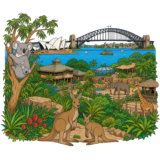
Taronga Zoo Sydney
Taronga Zoo is one of Australia's most famous zoos, perched on a hillside at Mosman on Sydney Harbour with breathtaking views of the Sydney Opera House and Harbour Bridge as a backdrop. Home to over 4,000 animals including koalas, platypuses, gorillas, and giraffes, it is also a leader in wildlife conservation and breeding programs for endangered species. Visitors can arrive by ferry directly from Circular Quay, making the trip itself an adventure.
Ten Largest Cities
Puzzles