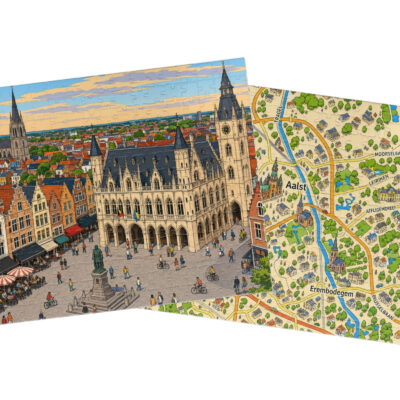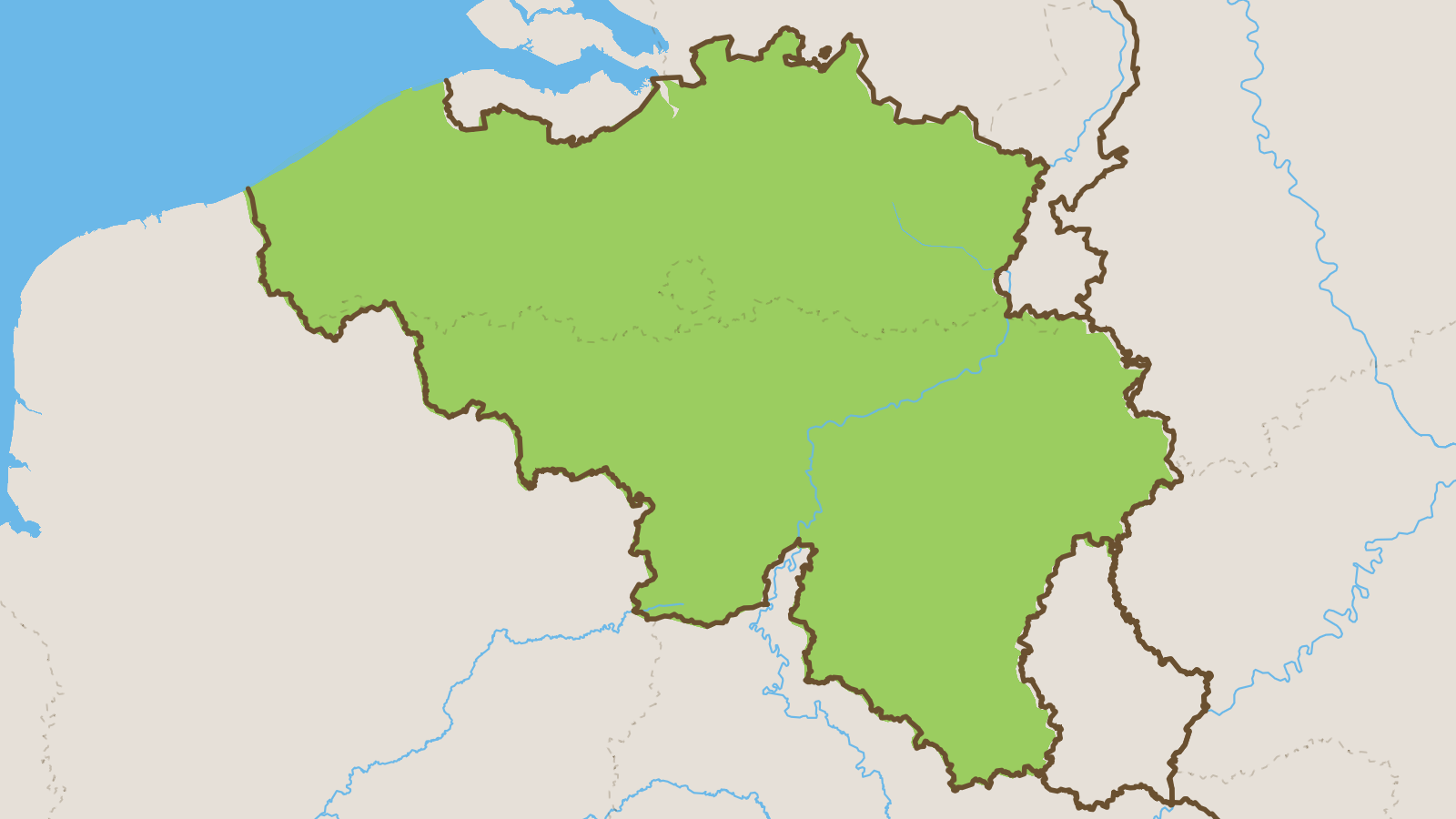
Belgium is a small but mighty country tucked into the heart of Western Europe, bordered by France, Germany, the Netherlands, and Luxembourg. Do not let its size fool you, because this place is absolutely packed with history, charm, and surprises. Medieval castles, cobblestone town squares, and beautiful canals give Belgium a fairy-tale atmosphere that feels like stepping back in time.
Belgium is famous for two things that will definitely get your attention: chocolate and waffles. Belgian chocolatiers are considered some of the best in the entire world, and people travel from everywhere just to taste their creations. The country is also home to Brussels, its lively capital, which is actually the headquarters for the European Union. With three official languages, German, French, and Dutch, Belgium is a wonderfully diverse place where different cultures blend together to create something truly unique.
Landmarks
-
1
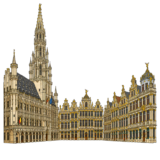
Grand Place Brussels
The Grand Place is the central square of Brussels and one of the most beautiful city squares in the world. It is surrounded by ornate guild houses, the towering Gothic Town Hall, and the King's House, all decorated with golden details. Every two years, the square is carpeted with over 600,000 flowers in a stunning geometric pattern.
-
2
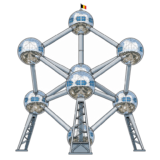
Atomium Brussels
The Atomium is a massive structure in Brussels built for the 1958 World's Fair, shaped like a unit cell of an iron crystal magnified 165 billion times. Its nine giant steel spheres are connected by tubes you can walk through, and they glitter in the sunlight. It stands 102 metres tall and is one of Belgium's most recognisable modern landmarks.
-
3
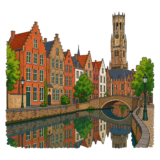
Bruges Historic City Centre
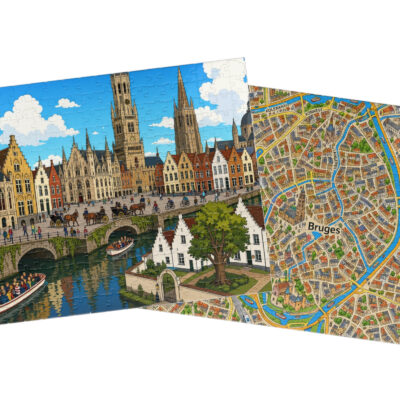
The historic centre of Bruges is a beautifully preserved medieval city in northwest Belgium, often called the 'Venice of the North' because of its network of picturesque canals. The city features Gothic churches, old merchant houses with stepped gabled roofs, and cobblestone streets that look much as they did 500 years ago. The entire city centre is a UNESCO World Heritage Site.
-
4
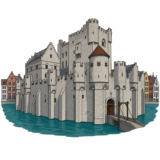
Ghent Gravensteen Castle
Gravensteen, meaning 'Castle of the Counts,' is a formidable medieval stone castle rising dramatically in the middle of the city of Ghent. It was built in 1180 by Philip of Alsace, the Count of Flanders, and is one of the best-preserved medieval castles in Belgium. The castle features a large stone keep, a moat, and battlements that visitors can walk along for great city views.
-
5
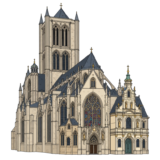
Ghent Saint Bavo's Cathedral
Saint Bavo's Cathedral is a magnificent Gothic cathedral in the heart of Ghent, begun in the 10th century and completed over several hundred years. It is home to one of the most important artworks in Western history — the Ghent Altarpiece, also called 'The Adoration of the Mystic Lamb,' painted by Jan van Eyck in 1432. The cathedral's soaring interior, stained glass windows, and Baroque high altar make it breathtaking to visit.
-
6
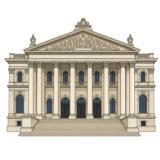
Antwerp Royal Museum of Fine Arts
The Royal Museum of Fine Arts in Antwerp is one of Belgium's most important art museums, housing an outstanding collection of Flemish paintings from the 14th century to the 20th century. It features masterworks by Rubens, Van Dyck, and Jan van Eyck, making it essential for anyone interested in European art history. The museum building itself is an impressive neoclassical structure with grand colonnaded facades.
-
7

Antwerp MAS Museum aan de Stroom
The MAS, or Museum aan de Stroom, is a striking modern museum in the port district of Antwerp, opened in 2011. The building is a 60-metre-tall tower made of stacked curved blocks of red sandstone and glass, designed to evoke the idea of hands stacking objects. Its rooftop offers a panoramic view of the city and the busy River Scheldt, and the museum explores Antwerp's history as a great port city.
-
8
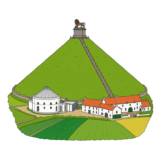
Battlefield of Waterloo
The Battlefield of Waterloo, located about 15 kilometres south of Brussels, is where the famous Battle of Waterloo was fought on 18 June 1815, ending Napoleon Bonaparte's rule in Europe. The centrepiece of the site today is the Lion's Mound, a large artificial grass-covered hill topped with a giant cast-iron lion statue, built to mark where the Prince of Orange was wounded in battle. Visitors can climb 226 steps to the top of the mound for a sweeping view over the entire battlefield.
-
9
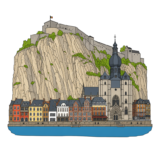
Dinant Citadel
The Dinant Citadel is a fortress perched dramatically on a sheer limestone cliff 100 meters above the Meuse River in the small Belgian city of Dinant. It has guarded the valley for centuries, with origins dating back to the 11th century. Visitors can reach it by cable car and enjoy sweeping views of the river and the colorful town below, including Dinant's famous onion-domed church.
-
10
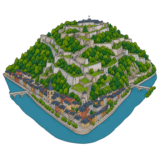
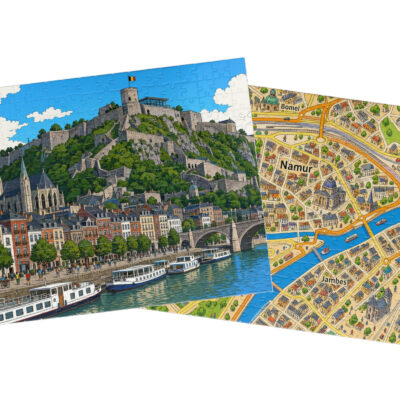
Namur Citadel
The Namur Citadel is one of Europe's largest fortresses, sitting on a rocky hilltop where the Sambre and Meuse rivers meet in the city of Namur. Built and expanded over many centuries, it played a key role in countless European wars due to its commanding strategic position. Today it is a popular tourist site where visitors can explore tunnels, ramparts, and enjoy views over two rivers.
-
11
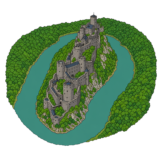
Bouillon Castle
Bouillon Castle is a striking medieval fortress built on a narrow rocky ridge that curves around a tight horseshoe bend of the Semois River in the Ardennes. It is one of Belgium's oldest and best-preserved castles, linked to the legendary Crusader Godfrey of Bouillon, who sold it to fund the First Crusade in 1096. The castle's dramatic position, almost entirely surrounded by water, makes it look like it floats on an island.
-
12
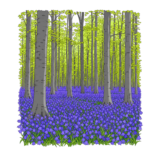
Hallerbos Blue Forest
Hallerbos, known as the Blue Forest, is a magical woodland near Brussels that transforms into a stunning carpet of violet-blue bluebells every spring, usually in April. The bluebells cover the forest floor beneath tall beech trees, creating one of the most photographed natural spectacles in Belgium. This phenomenon only lasts for a few weeks each year, making it a truly special seasonal event.
-
13
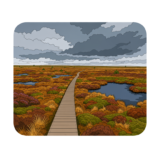
High Fens Nature Reserve
The High Fens is a vast, wild plateau nature reserve in eastern Belgium, famous for its open boggy moorland, wooden boardwalk trails, and unique landscapes that feel unlike anywhere else in the country. The raised peat bogs have formed over thousands of years and support rare plants and wildlife adapted to the wet, cool environment. In winter the area is often blanketed in snow, while in summer purple heather turns the plateau into a colorful sea.
-
14
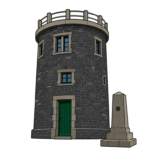
Signal de Botrange
Signal de Botrange is the highest point in Belgium, reaching 694 meters above sea level on the High Fens plateau in the Ardennes. Despite being the country's highest peak, it is a gently rounded hill rather than a dramatic mountain summit. A distinctive stone observation tower was built here so visitors could experience being at the very top of Belgium.
-
15
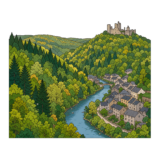
Ardennes Forest Spa Region
The Ardennes is a vast region of forested hills, deep river valleys, and charming stone villages stretching across southern Belgium, famous for its natural beauty and outdoor activities. The nearby town of Spa is so famous for its mineral spring baths that it gave the English word 'spa' to the world. The region mixes dense dark forests, rushing rivers, hilltop castles, and cozy villages that make it a beloved destination for hiking, cycling, and relaxation.
-
16
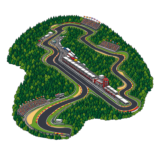
Spa-Francorchamps Circuit
Spa-Francorchamps is one of the most famous Formula 1 racing circuits in the world, carved through the forested hills of the Ardennes region in eastern Belgium. It has hosted Grand Prix races since the 1920s and is legendary among drivers for its challenging corners and unpredictable weather. The iconic Eau Rouge corner, where cars plunge downhill and sweep back up at high speed, is considered one of the most thrilling stretches in motorsport.
-
17
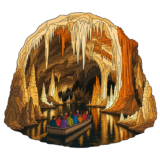
Han-sur-Lesse Caves
The Han-sur-Lesse Caves are a spectacular network of underground caverns in the Walloon region of Belgium, formed over millions of years by the Lesse River carving through limestone rock. The caves are famous for their enormous chambers, underground river, and stunning stalactites and stalagmites. Visitors arrive by tram and travel through the cave on foot and by boat, making it one of Belgium's most popular natural attractions.
-
18
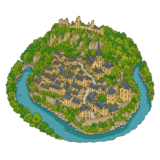
Durbuy Historic Town
Durbuy is often called the smallest city in the world, a charming medieval town nestled in a bend of the Ourthe River in the Belgian Ardennes. Its cobblestone streets are lined with honey-colored stone houses, boutique shops, and cozy restaurants, giving it a perfectly preserved fairy-tale feel. Despite its tiny size, Durbuy holds official city status granted back in the 14th century by Count Louis II of Namur.
-
19
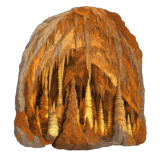
Rochefort Caves
The Rochefort Caves, known in French as the Grottes de Rochefort, are a series of impressive underground caverns hidden beneath the town of Rochefort in the Belgian Ardennes. The caves feature towering domed chambers filled with glittering stalactites, stalagmites, and vivid mineral formations in shades of white, orange, and red. They were first explored scientifically in the 18th century and remain one of Belgium's finest showcases of underground geology.
-
20
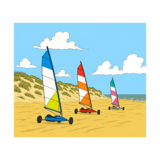
Belgian Coast De Panne Beach
De Panne Beach is a wide, windswept stretch of golden sand on the North Sea coast in the far western corner of Belgium, bordering France. It is one of the broadest beaches on the Belgian coast and is famous for sand yachting, where three-wheeled sail-powered carts race across the flat sands at high speed. The nearby Westhoek nature reserve adds a backdrop of rolling sand dunes covered in grasses and shrubs.
-
21
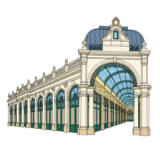
Ostend Royal Galleries
The Royal Galleries of Ostend, known as the Koninklijke Gaanderijen, are an elegant 19th-century covered promenade stretching along the seafront of the Belgian coastal city of Ostend. Built in a grand neoclassical style, the long glass-and-iron arcade with arched colonnades once sheltered strolling royalty and aristocrats from the North Sea winds. The galleries connect the city's luxury hotels and are a symbol of Ostend's golden age as the playground of Belgian high society.
-
22
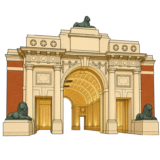
Ypres Menin Gate Memorial
The Menin Gate is a large stone memorial arch in the Belgian city of Ypres, dedicated to the British and Commonwealth soldiers who died in the Ypres Salient during World War I and have no known grave. Completed in 1927, its inner walls are engraved with the names of nearly 55,000 missing soldiers. Every evening since 1928, buglers have sounded the Last Post under the arch at exactly 8 p.m., a tradition that was paused only during World War II.
-
23
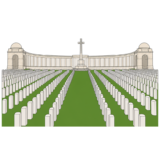
Tyne Cot Cemetery Passchendaele
Tyne Cot is the largest Commonwealth war cemetery in the world, located near the village of Passchendaele in the Belgian province of West Flanders. It contains nearly 12,000 graves of soldiers from Britain, Australia, Canada, New Zealand, and South Africa who died during the brutal battles of World War I. A great curving white stone wall at the rear of the cemetery bears the names of almost 35,000 soldiers who have no known grave.
-
24
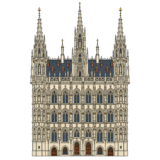
Leuven Town Hall
The Leuven Town Hall is one of the finest examples of Brabantine Gothic architecture in the world, built between 1448 and 1469 in the heart of the Belgian city of Leuven. Its elaborate stone facade is decorated with rows of pinnacled niches containing hundreds of carved statues of saints, nobles, and biblical figures added during the 19th century. The building is so ornate that it has been compared to a piece of intricate lacework carved entirely from stone.
More interesting landmarks
-
25
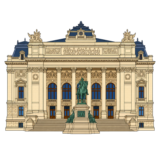
Royal Museums of Fine Arts Brussels
The Royal Museums of Fine Arts in Brussels is one of the most important art museum complexes in the world, housing thousands of paintings, sculptures, and drawings from the 14th century to today. It is especially famous for its vast collection of Flemish Masters, including works by Bruegel and Rubens. The complex actually contains several interconnected museums, making it a treasure chest of European art history.
-
26
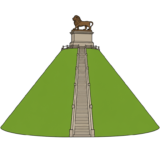
Lion's Mound Waterloo
The Lion's Mound is a giant cone-shaped hill built in 1826 to mark the site of the famous 1815 Battle of Waterloo, where Napoleon Bonaparte was defeated. A large bronze lion statue stands at the top, symbolizing victory. Visitors can climb 226 steps to reach the summit and enjoy a panoramic view over the historic battlefield.
-
27
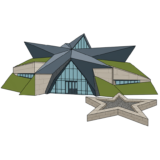
Bastogne War Museum
The Bastogne War Museum is a modern museum in the Belgian Ardennes dedicated to the Battle of the Bulge, the massive World War II winter offensive fought in 1944–1945. The museum uses immersive storytelling, personal objects, and reconstructed scenes to bring the stories of soldiers and civilians to life. It sits right next to the iconic Mardasson Memorial and is considered one of Europe's best WWII museums.
-
28
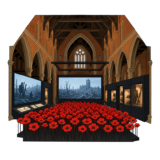
Ypres In Flanders Fields Museum
The In Flanders Fields Museum is a powerful World War I museum located inside the restored Cloth Hall in the center of Ypres, Belgium. It tells the story of the devastating battles fought in the Ypres region between 1914 and 1918 through personal stories, multimedia exhibits, and thousands of preserved artifacts. The museum takes its name from the famous poem by Canadian soldier John McCrae, inspired by the red poppies that bloomed across the war-torn fields.
-
29
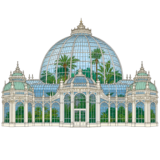
Laeken Royal Greenhouses Brussels
The Laeken Royal Greenhouses are a breathtaking complex of grand glass and iron greenhouses on the grounds of the royal estate in Brussels, built in the late 19th century for King Leopold II. The collection of connected pavilions and domes covers an enormous area and shelters thousands of exotic tropical plants. They are opened to the public for just a few weeks each spring, making a visit feel like a rare and magical event.
-
30
Manneken Pis Brussels
Manneken Pis is a small but world-famous bronze fountain statue in Brussels depicting a little boy urinating into the fountain's basin. Despite being only about 61 centimetres tall, it has become a beloved symbol of Brussels and Belgium's playful sense of humour. The statue has an enormous wardrobe of over 1,000 costumes that are changed regularly throughout the year.
-
31
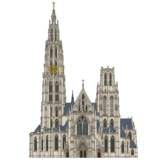
Antwerp Cathedral of Our Lady
The Cathedral of Our Lady in Antwerp is the largest Gothic cathedral in the Low Countries and one of the finest in all of Europe. Its construction took nearly two centuries, from 1352 to 1521, and its single completed tower soars 123 metres into the sky. Inside, visitors can see four major paintings by the famous Flemish artist Peter Paul Rubens.
-
32

Mardasson Memorial Bastogne
The Mardasson Memorial is a large star-shaped monument in Bastogne built to honor the American soldiers who fought and died in the Battle of the Bulge during World War II. Completed in 1950, its five-pointed star shape is 7 meters tall and made of cream-white stone, with the names of all 48 American states inscribed along the walls. Walking inside the star reveals a mosaic-covered crypt below.
-
33
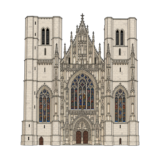
Leuven Saint Peter's Church
Saint Peter's Church is a magnificent Gothic church in the heart of Leuven, Belgium, built between the 14th and 16th centuries. It is famous for its stunning stone carvings, large stained glass windows, and an impressive collection of religious art. The church was never fully completed — its towers were planned to be much taller, making it a fascinating example of an unfinished masterpiece.
-
34
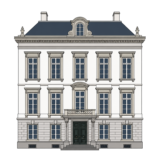
Magritte Museum Brussels
The Magritte Museum in Brussels is dedicated to René Magritte, one of Belgium's most famous artists, known for his mind-bending surrealist paintings. Housed in a handsome 18th-century neoclassical building, the museum holds the largest collection of his works in the world. Magritte loved painting ordinary objects in strange, unexpected ways — like a man in a bowler hat with an apple floating in front of his face.
-
35
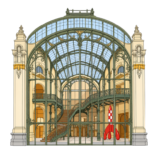
Belgian Comic Strip Center Brussels
The Belgian Comic Strip Center in Brussels celebrates Belgium's amazing tradition of comic book art, which gave the world characters like Tintin and the Smurfs. It is housed in a stunning Art Nouveau building designed by the famous architect Victor Horta in 1903. Inside, visitors can explore original comic artwork, life-size character models, and the full history of Belgian comics.
-
36
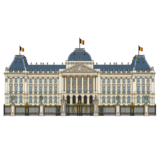
Royal Palace Brussels
The Royal Palace of Brussels is the official palace of the Belgian royal family, used for state ceremonies and official functions, though the royals do not actually live there. The long, elegant neoclassical facade stretches impressively along one side of the Place des Palais. One of its most extraordinary rooms has a ceiling decorated with the shimmering wings of nearly 1.4 million jewel beetles.
-
37
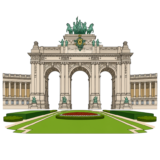
Cinquantenaire Arch Brussels
The Cinquantenaire Arch is a massive triumphal arch in Brussels, built to celebrate the 50th anniversary of Belgian independence in 1880. It stands in a large public park and is flanked by two curved museum wings that frame it on either side. On top of the arch sits a dramatic bronze sculpture of a chariot pulled by four horses, called a quadriga.
-
38
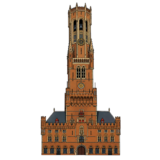
Bruges Belfry
The Bruges Belfry is a tall medieval tower rising above the historic Market Square of Bruges, and it is one of the most iconic sights in all of Belgium. Built between the 13th and 15th centuries, the tower stands about 83 meters tall and contains a famous carillon of 47 bells that still ring out over the city. Climbing its 366 steps rewards visitors with a breathtaking view over the canal-laced rooftops of Bruges.
-
39
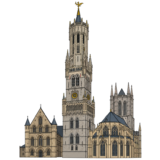
Ghent Belfry
The Ghent Belfry is a soaring medieval tower in the heart of Ghent, standing 91 meters tall and recognized as a UNESCO World Heritage Site. Built in the 14th century, it served as a watchtower and a symbol of the city's power and independence from rulers. A golden dragon weather vane perches dramatically at the very top of the tower.
-
40
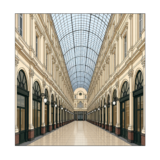
Saint Hubert Royal Galleries Brussels
The Saint Hubert Royal Galleries is one of Europe's oldest and most elegant shopping arcades, opened in Brussels in 1847. It is a long glass-roofed gallery divided into three interconnected sections lined with luxury shops, cafes, chocolatiers, and theaters. The barrel-vaulted glass ceiling floods the marble-floored passageway with beautiful natural light, making it feel like a palace of commerce.
Puzzles