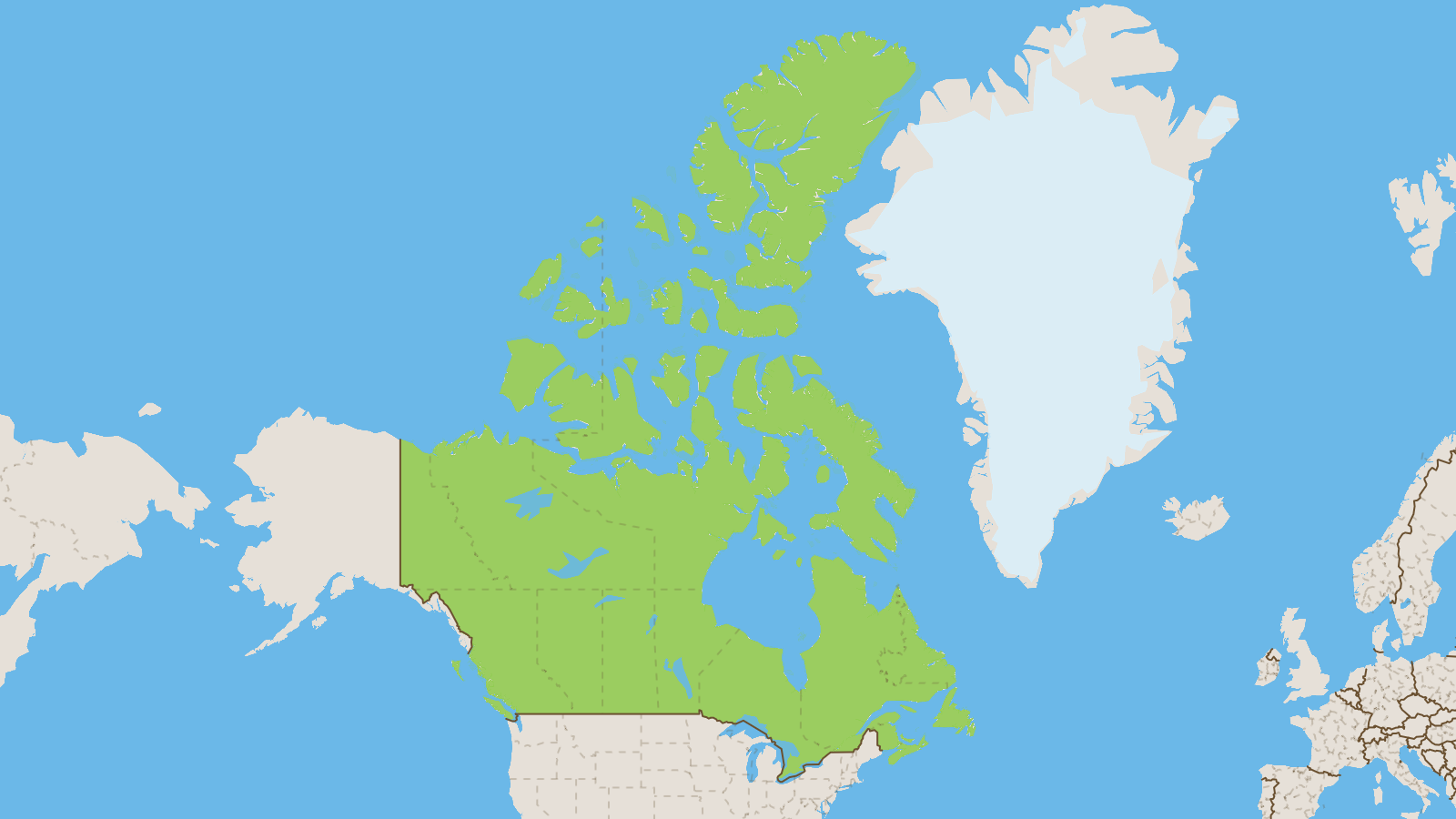
Canada is a massive country in North America, stretching from the Atlantic Ocean in the east all the way to the Pacific Ocean in the west, and reaching deep into the frozen Arctic north. It is actually the second largest country in the entire world by area, yet it has a relatively small population, meaning there is plenty of wide open space filled with stunning forests, mountains, and lakes. With two official languages, English and French, Canada has a wonderfully rich mix of cultures that makes it truly unique.
Canada is famous for its friendly people, its iconic maple leaf flag, and of course maple syrup, which comes from the sap of maple trees that turn brilliant shades of red and orange every autumn. Wildlife lovers will be thrilled by the chance to spot moose, bears, and beavers in the wild. Ottawa is the capital, but cities like Toronto and Vancouver are also buzzing with energy and life.
Landmarks
-
1

Nahanni River Virginia Falls
Virginia Falls on the South Nahanni River in the Northwest Territories is one of Canada's most spectacular and remote waterfalls, plunging about 96 metres — nearly twice the height of Niagara Falls. It sits within Nahanni National Park Reserve, a UNESCO World Heritage Site celebrated for its wild canyons, hot springs, and untouched wilderness. A distinctive rock pillar called Mason's Rock splits the falls dramatically down the middle.
-
2

Wood Buffalo National Park
Wood Buffalo National Park, straddling the border of Alberta and the Northwest Territories, is Canada's largest national park and a UNESCO World Heritage Site. It is the last natural nesting habitat of the endangered whooping crane and is home to the world's largest free-roaming bison herd with over 5,000 animals. The park also contains the world's largest inland river delta and some of the darkest night skies on Earth, perfect for viewing the northern lights.
-
3
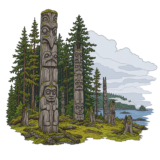
Gwaii Haanas National Park Reserve
Gwaii Haanas is a remote and breathtaking national park reserve on the archipelago of Haida Gwaii off the northern coast of British Columbia, jointly managed by the Haida Nation and Parks Canada. It protects ancient Haida village sites, totemic poles slowly being reclaimed by the rainforest, and incredibly rich marine ecosystems. The park can only be reached by boat or floatplane, making it one of Canada's most adventurous destinations.
-
4
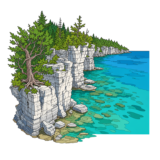
Bruce Peninsula National Park
Bruce Peninsula National Park sits at the tip of a rugged peninsula in Ontario, where ancient white cedar forests meet the crystal-clear turquoise waters of Georgian Bay. It is famous for its dramatic Niagara Escarpment cliffs and is a UNESCO World Biosphere Reserve. The park is home to 43 species of wild orchids, making it a paradise for nature lovers.
-
5

Thousand Islands National Park
Thousand Islands National Park in Ontario protects a stunning archipelago of over 1,800 islands scattered across the St. Lawrence River where it meets Lake Ontario. The islands range from tiny wave-washed rocks to large forested islands with historic cottages and even castles. The park sits in a special ecological zone called the Frontenac Arch, linking two great wilderness areas and supporting remarkable biodiversity.
-
6

Waterton Lakes National Park
Waterton Lakes National Park in southern Alberta is where the Canadian prairies dramatically meet the Rocky Mountains, creating a unique landscape found nowhere else in the parks system. It shares a border with Glacier National Park in Montana and together they form the world's first International Peace Park. The deep, glacier-carved Waterton Lake is famous for its intense blue-green colour and the historic Prince of Wales Hotel perched on a hilltop above it.
-
7

Head-Smashed-In Buffalo Jump
Head-Smashed-In Buffalo Jump in Alberta is one of the oldest, largest, and best-preserved buffalo jumps in the world, used by Indigenous peoples for over 6,000 years. Hunters would drive massive herds of bison over a cliff edge to provide meat, hides, and bones for their communities. Today it is a UNESCO World Heritage Site with an award-winning interpretive centre built into the sandstone cliff itself.
-
8
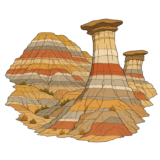
Drumheller Badlands
The Drumheller Badlands in Alberta is a surreal landscape of deeply eroded valleys, gullies, and striking rock formations called hoodoos, carved by wind and water over millions of years. This region is world-famous for its dinosaur fossils, and many of the most complete T. rex skeletons ever found came from nearby. The strange, almost alien terrain is unlike anything else on the Canadian prairies.
-
9

Mount Robson Provincial Park
Mount Robson Provincial Park in British Columbia protects the highest peak in the Canadian Rockies, Mount Robson, which soars to 3,954 metres above sea level. Often called the 'Monarch of the Canadian Rockies,' the mountain is famous for being almost always shrouded in clouds at its summit. The park surrounds the peak with glaciers, turquoise lakes, and old-growth forests.
-
10

Peggy's Cove Lighthouse
Peggy's Cove Lighthouse is one of the most photographed landmarks in Canada, perched on the rocky Atlantic coast of Nova Scotia. Built in 1914, the compact octagonal white tower with a red lantern top sits dramatically on smooth, wave-worn granite boulders. The rugged scenery and the small fishing village nearby make it a classic symbol of Maritime Canada.
-
11

Canadian Museum for Human Rights Winnipeg
The Canadian Museum for Human Rights in Winnipeg, Manitoba, is the first museum in the world dedicated entirely to the history and future of human rights. It houses galleries exploring topics like Indigenous rights, the Holocaust, and global freedoms, making it a powerful place of learning and reflection. The building itself is a stunning work of architecture, rising like a frozen wave from the prairie landscape.
-
12

Kluane National Park
Kluane National Park is a remote wilderness in the southwestern corner of Yukon, containing Canada's highest mountain, Mount Logan, which rises 5,959 metres above sea level. The park is dominated by the world's largest non-polar icefield, the Kluane Icefields, covering thousands of square kilometres of ancient glaciers. Grizzly bears, Dall's sheep, and golden eagles roam this vast, largely untouched landscape.
-
13

Gros Morne National Park
Gros Morne National Park, a UNESCO World Heritage Site in Newfoundland, is famous for its rare exposed mantle rock, called the Tablelands, which gives scientists a window into Earth's interior. The park features dramatic fjords, flat-topped mountains, and turquoise glacier-carved lakes. Its unusual geology tells a 500-million-year-old story about the movement of continents.
-
14

Victoria Inner Harbour
Victoria Inner Harbour is the scenic waterfront heart of Victoria, the capital city of British Columbia, situated on the southern tip of Vancouver Island. The harbour is surrounded by grand heritage buildings, including the ornate British Columbia Parliament Buildings and the ivy-covered Fairmont Empress Hotel, which give it a distinctly British colonial charm. Float planes, whale-watching boats, and kayaks fill the busy blue waters of the harbour throughout the day.
-
15

Whistler Mountain
Whistler Mountain is part of the Whistler Blackcomb ski resort in British Columbia, which is the largest ski resort in North America by area. The mountain and its twin peak, Blackcomb, hosted several events during the 2010 Winter Olympics in Vancouver. Beyond winter skiing, Whistler is also a world-class destination for mountain biking, hiking, and zip-lining in the summer months.
-
16
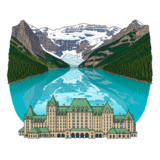
Lake Louise
Lake Louise is a breathtakingly beautiful glacial lake nestled in the Rocky Mountains within Banff National Park, Alberta. Its water has a striking bright turquoise color caused by light reflecting off fine rock flour — tiny mineral particles ground up by the Victoria Glacier that feeds the lake. The elegant Fairmont Chateau Lake Louise hotel sits at its shore, making it one of the most photographed spots in all of Canada.
-
17

Old Quebec City Historic District
Old Quebec City is the only walled city north of Mexico in North America, and it is a UNESCO World Heritage Site recognized for its exceptional historic value. The district is filled with centuries-old stone buildings, cobblestone streets, fortified walls, and French colonial architecture dating back to the 1600s. Walking through its narrow lanes feels like stepping into a European village transplanted to Canada.
-
18

Niagara Falls
Niagara Falls is one of the most powerful and famous waterfalls in the world, located on the border between Ontario, Canada, and New York, USA. It is actually made up of three waterfalls — the Horseshoe Falls, the American Falls, and the Bridal Veil Falls — with Horseshoe Falls being the largest and most impressive. Millions of liters of water thunder over the edge every second, creating a massive mist cloud visible from kilometers away.
-
19

Cabot Trail Cape Breton
The Cabot Trail is a legendary 298-kilometre scenic highway that loops around the northern tip of Cape Breton Island in Nova Scotia, passing through Cape Breton Highlands National Park. The road hugs dramatic Atlantic coastal cliffs, dips through lush river valleys, and winds over highland plateaus covered in boreal forest that turns fiery red and orange in autumn. Named after explorer John Cabot, it is consistently ranked among the world's top scenic drives.
-
20

Nahanni National Park Reserve
Nahanni National Park Reserve is a remote and wild UNESCO World Heritage Site in the Northwest Territories, carved by the powerful South Nahanni River. The park is famous for Virginia Falls, a waterfall almost twice the height of Niagara Falls, and for dramatic canyons up to 1,000 metres deep. Indigenous Dene peoples have called this mystical wilderness home for thousands of years.
-
21

Tofino Pacific Rim National Park Reserve
Located on the wild west coast of Vancouver Island in British Columbia, Pacific Rim National Park Reserve is a stunning stretch of old-growth rainforest, misty mountains, and long sandy beaches pounded by powerful Pacific Ocean waves. It is one of Canada's top surfing destinations despite its cool waters. Grey whales migrate through the area each spring, delighting visitors with their massive presence.
-
22

Banff National Park
Banff National Park is Canada's oldest national park, established in 1885 in the heart of the Rocky Mountains in Alberta. It is famous for its stunning turquoise lakes, towering mountain peaks, and abundant wildlife including elk, grizzly bears, and wolves. Covering over 6,600 square kilometers, it attracts more than four million visitors every year.
-
23
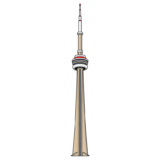
CN Tower Toronto
The CN Tower is a soaring communications and observation tower in downtown Toronto, Ontario, standing at 553 meters tall. When it was completed in 1976, it was the tallest freestanding structure in the world, a record it held for over 30 years. Visitors can walk on a glass floor near the top and dine in a revolving restaurant with sweeping views of the city and Lake Ontario.
-
24

Jasper National Park
Jasper National Park is the largest national park in the Canadian Rockies, covering a vast wilderness of mountains, glaciers, hot springs, and crystal-clear lakes in Alberta. It is part of a UNESCO World Heritage Site shared with Banff, Yoho, and Kootenay parks, and is renowned for some of the darkest night skies in North America, making it a Gold-tier Dark Sky Preserve. The famous Icefields Parkway, one of the world's most scenic drives, connects Jasper to Banff.
More interesting landmarks
-
25

Royal Ontario Museum Toronto
The Royal Ontario Museum, known as the ROM, is Canada's largest museum of world culture and natural history, located in downtown Toronto. It houses more than six million objects spanning art, science, and history from ancient civilizations to modern times. What makes it immediately recognizable is its bold modern addition called the Michael Lee-Chin Crystal — a dramatic structure of interlocking angular glass and aluminum forms that burst out from the original historic building.
-
26

Château Frontenac Quebec City
The Château Frontenac is a grand historic hotel in Old Quebec City that is one of the most photographed hotels in the entire world. Built in 1893, it was designed by architect Bruce Price to look like a French medieval castle, with its dramatic copper-green turreted roofline soaring above the cliffs of Cape Diamond overlooking the Saint Lawrence River. It is a National Historic Site of Canada and a defining symbol of Quebec City's skyline.
-
27

Parliament Hill Ottawa
Parliament Hill is the heart of Canada's federal government, sitting high above the Ottawa River in the capital city. The complex of Gothic Revival stone buildings is where Canada's Senate and House of Commons meet to make laws. The Centre Block's tall Peace Tower, which stands 92 metres high, is one of the most recognized symbols of Canada.
-
28
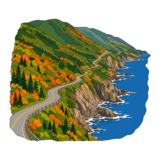
Cape Breton Highlands National Park
Cape Breton Highlands National Park is located on the northern tip of Cape Breton Island in Nova Scotia, where rugged highlands meet the Atlantic Ocean. The famous Cabot Trail highway winds dramatically along steep coastal cliffs and through lush valleys, making it one of Canada's most scenic drives. The park is also home to moose, bald eagles, and stunning fall foliage.
-
29

Stanley Park Vancouver
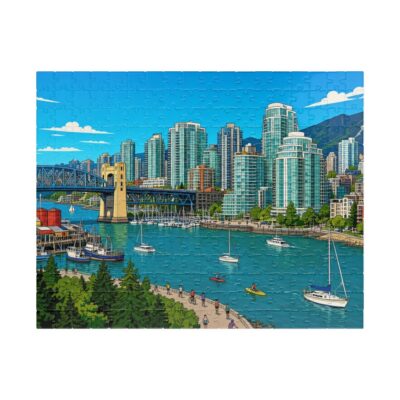
Stanley Park is a massive urban forest and park on a peninsula in Vancouver, British Columbia, surrounded almost entirely by the waters of the Pacific Ocean. The park covers over 400 hectares and is home to towering Douglas fir and cedar trees, scenic seawall paths, beaches, and a famous collection of Indigenous totem poles. It is one of North America's largest urban parks and a beloved symbol of Vancouver.
-
30

Yoho National Park
Yoho National Park sits in the Canadian Rockies of British Columbia, just west of the famous Banff National Park, and is known for its spectacular waterfalls and impossibly turquoise lakes. Takakkaw Falls, one of Canada's highest waterfalls, plunges over 373 metres down a sheer cliff fed by glacial meltwater. The park is also home to the Burgess Shale fossil beds, where some of the world's best-preserved ancient sea creatures have been found.
-
31

Rideau Canal Ottawa
The Rideau Canal is a 202-kilometre-long historic waterway connecting Ottawa to Kingston, Ontario, and is a UNESCO World Heritage Site built between 1826 and 1832. In winter, the section running through downtown Ottawa transforms into the world's largest naturally frozen skating rink, drawing thousands of skaters each year. The canal is lined with stone lockstations, parks, and historic buildings that reflect early Canadian engineering.
-
32

Montreal Biosphere
The Montreal Biosphere is a striking environmental museum housed inside a massive geodesic dome on Saint Helen's Island in the St. Lawrence River. The dome was originally built as the United States Pavilion for the 1967 World Exposition in Montreal and was designed by the visionary architect Buckminster Fuller. Its spectacular open lattice steel sphere, 76 metres wide, makes it one of the most unusual and eye-catching buildings in Canada.
-
33
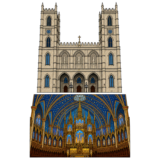
Notre-Dame Basilica Montreal
The Notre-Dame Basilica in Old Montreal is one of the most breathtaking churches in North America, famous for its stunning blue and gold interior decorated with intricate wood carvings, stained glass, and thousands of gold stars on a deep blue ceiling. Built in the Gothic Revival style and completed in 1829, it can hold up to 2,700 worshippers. The basilica's nightly Aura light show, which illuminates its interior with moving colors and music, draws visitors from around the world.
-
34
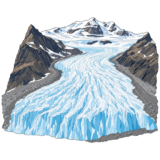
Athabasca Glacier Columbia Icefield
The Athabasca Glacier is one of the most accessible glaciers in North America, located in the Columbia Icefield along the Icefields Parkway in Alberta. It is a tongue of ancient ice flowing down from a massive icefield that feeds rivers draining into three different oceans. Visitors can actually walk onto the glacier, though it has been shrinking noticeably due to climate change.
-
35

Fundy National Park
Fundy National Park in New Brunswick protects a rugged stretch of coastline along the Bay of Fundy, home to the highest tides in the world — sometimes over 12 metres in a single day. Twice a day the ocean dramatically floods and empties the bay, revealing vast mudflats teeming with life when the tide goes out. The park also features thick Acadian forests, tumbling waterfalls, and sea stacks carved by the powerful tides.
-
36

Prince Edward Island National Park
Prince Edward Island National Park protects a beautiful stretch of the island's north shore, featuring some of the warmest ocean waters north of Virginia and the province's famous red sand beaches. The park is also home to green rolling dunes, salt marshes, and the iconic Green Gables Heritage Place, connected to Anne of Green Gables. The striking red soil and sand are caused by iron oxide in the local sandstone.
-
37
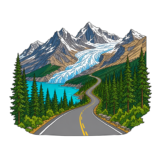
Icefields Parkway Highway
The Icefields Parkway is a 232-kilometre highway in Alberta that winds through the Canadian Rockies between Lake Louise and Jasper, widely considered one of the most scenic drives in the world. Travellers are treated to towering snow-capped peaks, enormous ancient glaciers, turquoise glacial lakes, and abundant wildlife including elk, bears, and mountain goats. The Columbia Icefield, one of the largest ice masses in North America south of the Arctic, is one of its most awe-inspiring highlights.
-
38

Haida Heritage Centre at Kay Llnagaay
The Haida Heritage Centre at Kay Llnagaay is a stunning cultural complex in Skidegate on Haida Gwaii, British Columbia, dedicated to preserving and celebrating the art, language, and history of the Haida people. Its architecture is inspired by traditional Haida longhouses and is set along the shoreline overlooking Hecate Strait. The centre houses an extraordinary collection of monumental totem poles, canoes, and artworks, and is a living place of cultural education and revival.
-
39

Canadian Museum of History Gatineau
The Canadian Museum of History in Gatineau, Quebec, sits dramatically on the banks of the Ottawa River directly across from Parliament Hill, and is one of Canada's most visited museums. Its iconic building was designed by Blackfoot-Siksika architect Douglas Cardinal, featuring sweeping curved walls meant to evoke the natural Canadian landscape carved by wind and water. Inside, the Grand Hall houses the world's largest collection of standing totem poles from the Indigenous peoples of Canada's Pacific Northwest coast.
-
40

Old Strathcona Historic District Edmonton
Old Strathcona is a vibrant historic neighbourhood in Edmonton, Alberta, filled with beautifully preserved early 20th-century red brick buildings that once formed the heart of a separate town before it merged with Edmonton. Today it is Edmonton's arts and entertainment hub, bursting with independent shops, theatres, cafes, and the famous year-round Strathcona Farmers Market. The area's brick-paved streets and heritage storefronts give it a charming, old-fashioned atmosphere unique in prairie Canada.
Ten Largest Cities
Puzzles