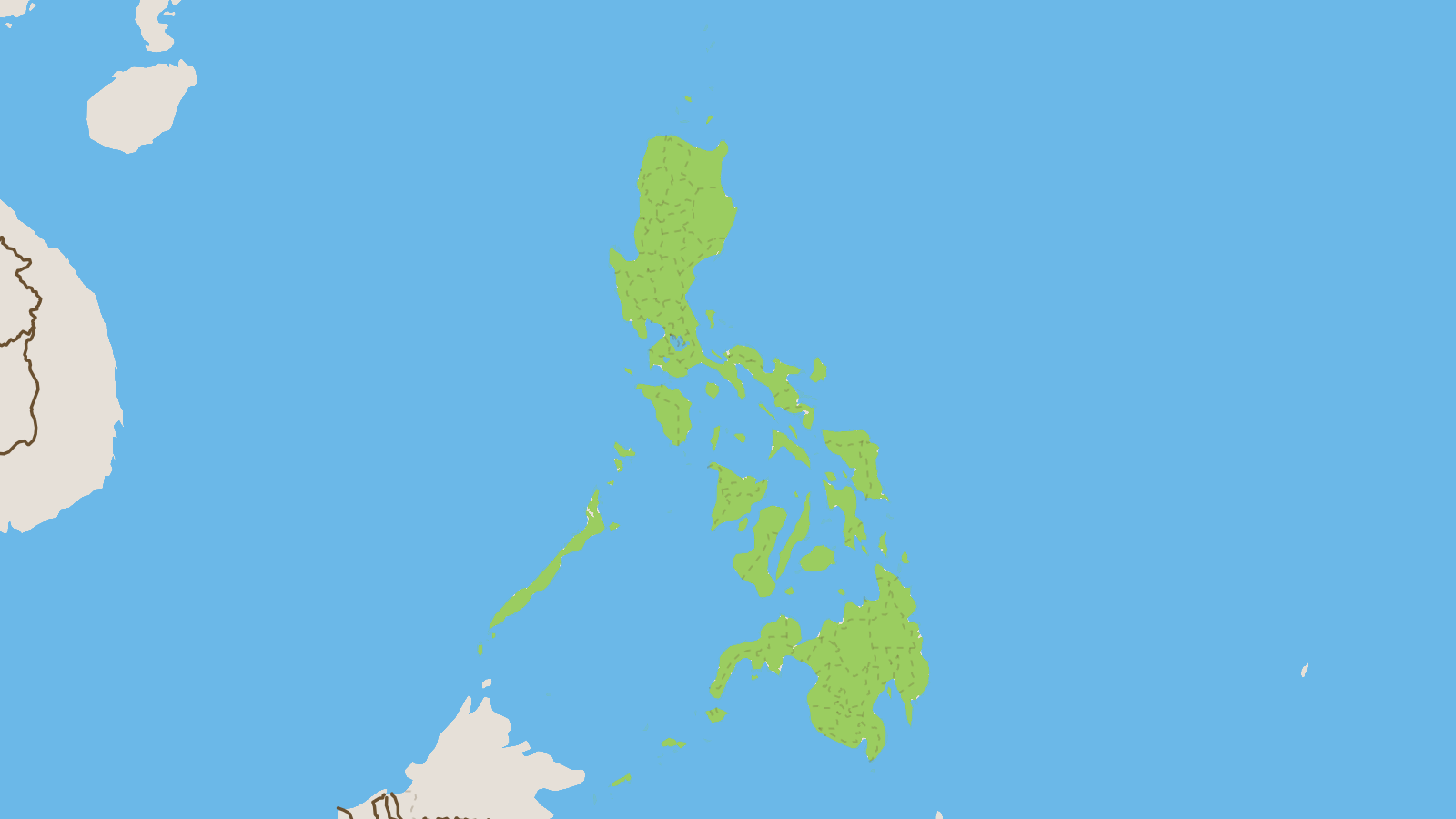
The Philippines is a stunning island nation in South-Eastern Asia, sitting between the Pacific Ocean and the South China Sea. It is made up of over 7,600 islands, which makes it one of the largest archipelagos on Earth. With warm tropical weather, thick rainforests, and some of the most beautiful beaches and coral reefs in the world, it is a place that feels truly alive with colour and energy.
The people of the Philippines are known for being incredibly warm, friendly, and welcoming to visitors. Two official languages are spoken here, Filipino and English, making it one of the largest English-speaking countries in Asia. The country is famous for its incredible biodiversity, with rare animals like the tiny tarsier and the magnificent Philippine eagle found nowhere else on the planet. From its vibrant festivals bursting with music and dancing to its sparkling turquoise waters, the Philippines is an unforgettable place.
Landmarks
-
1
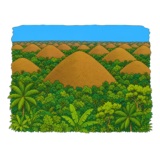
Chocolate Hills Bohol
The Chocolate Hills are a stunning collection of more than 1,200 perfectly cone-shaped limestone hills spread across the island of Bohol. They are one of the Philippines' most iconic natural wonders and a UNESCO World Heritage Site candidate. During the dry season, the grass covering the hills turns brown, making them look just like giant chocolate candies — that's how they got their delicious name!
-
2

Mayon Volcano Albay
Mayon Volcano is considered one of the world's most perfectly symmetrical volcanoes, rising 2,463 meters above the province of Albay in the Philippines. It is an active stratovolcano famous for its near-perfect cone shape, which has made it a symbol of beauty and natural power. A thin plume of smoke often drifts from its crater, reminding visitors that this gorgeous mountain is very much alive.
-
3
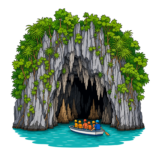
Puerto Princesa Subterranean River National Park
This UNESCO World Heritage Site features one of the world's longest navigable underground rivers, stretching about 8.2 kilometers beneath limestone mountains in Palawan. Visitors ride small boats into a dramatic cave system filled with massive stalactites and stalagmites that hang from cathedral-like ceilings. The park is also home to a rich rainforest and rare wildlife, making it one of the Philippines' greatest natural treasures.
-
4

Tubbataha Reefs Natural Park
Located in the middle of the Sulu Sea, Tubbataha Reefs Natural Park is a remote and pristine UNESCO World Heritage marine sanctuary protecting two coral atolls and a coral islet. It is one of the most biodiverse marine ecosystems in the world, home to hundreds of species of fish, sharks, rays, sea turtles, and dolphins. Because it can only be reached by liveaboard dive boats during a short season, it remains wonderfully untouched.
-
5

Mount Apo Summit
Mount Apo is the highest peak in the Philippines, standing at 2,954 meters above sea level in Mindanao, and is considered a sacred mountain by indigenous Lumad communities. It is an active volcano with fumaroles and sulfuric vents near its summit, surrounded by one of the country's most biodiverse forests. The mountain is also the last stronghold of the critically endangered Philippine Eagle, the national bird of the Philippines.
-
6

Coron Island Palawan
Coron Island is a spectacular island in northern Palawan known for its dramatic jagged limestone cliffs that rise sharply from crystal-clear turquoise waters. The island is famous for its secret saltwater lakes hidden within the cliffs — most notably Kayangan Lake, often called the cleanest lake in Asia — as well as some of the world's best wreck diving from World War II Japanese shipwrecks. The entire island is considered sacred ancestral land of the indigenous Tagbanua people.
-
7

El Nido Bacuit Bay Palawan
El Nido's Bacuit Bay is a breathtaking seascape in northern Palawan featuring hundreds of towering limestone karst islands and cliffs rising from warm, crystal-clear turquoise waters. Hidden within the islands are secret lagoons, white sand beaches, and vibrant coral reefs teeming with marine life. It is consistently ranked among the world's most beautiful bays and is a gateway to the UNESCO-listed Puerto Princesa area.
-
8
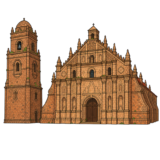
Paoay Church Ilocos Norte
Paoay Church, officially Saint Augustine Church, is a UNESCO World Heritage Site in Ilocos Norte built in 1710 and famous for its dramatic earthquake Baroque architecture. Its most striking feature is the row of massive coral stone buttresses jutting out along its sides, which helped it survive centuries of earthquakes. The church is so iconic it even appeared on the old Philippine 50-peso bill.
-
9
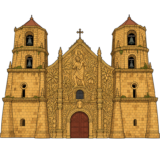
Miagao Church Iloilo
Miagao Church, formally the Santo Tomás de Villanueva Parish Church, is a UNESCO World Heritage Site in Iloilo province built in 1797 and known for its extraordinary facade that blends Baroque architecture with local Filipino imagery. The carved stone front panel uniquely depicts Saint Christopher surrounded by coconut trees, papaya plants, and local figures — a fusion of European and Philippine cultures. Its golden-brown sandstone walls glow warmly in sunlight.
-
10

Santa Maria Church Ilocos Sur
Santa Maria Church, also called Nuestra Señora de la Asuncion, is a UNESCO World Heritage Site perched dramatically on top of a hill in Ilocos Sur, making it one of the most visually striking churches in the Philippines. Built in 1769, the hilltop location gave it a dual role as a place of worship and a defensive fortress. A long staircase of over 80 steps winds up to the church entrance, adding to its commanding presence.
-
11

Taal Volcano Island
Taal Volcano is one of the world's most unusual volcanoes — it sits on an island inside a lake, which itself sits inside a larger volcanic crater in Batangas, Luzon. Despite being one of the smallest active volcanoes in the world, it is considered one of the most dangerous due to its history of violent eruptions. At its center is a crater lake with striking turquoise-yellow water filled with sulfuric acid.
-
12

Malapascua Island
Malapascua is a small, remote island at the northern tip of Cebu province, famous worldwide among divers for being one of the few places where thresher sharks can be reliably spotted close to shore. Above the water, the island is equally stunning, with powdery white sand beaches, crystal-clear turquoise water, and a laid-back fishing village atmosphere. The island's main beach, Bounty Beach, is a favorite spot for watching brilliant tropical sunsets.
-
13

Camiguin Island
Camiguin is a small volcanic island province in northern Mindanao often called the Island Born of Fire because it has more volcanoes per square kilometer than almost anywhere else on Earth — seven volcanoes for a tiny island. These volcanoes have created a spectacular landscape of hot springs, waterfalls, and lush forests, while a sunken cemetery just offshore marks where a volcanic eruption swallowed an entire village in the 1870s. A large white cross floating on a pontoon marks the underwater cemetery, making it one of the Philippines' most haunting and memorable sights.
-
14

Mount Pulag National Park
Mount Pulag is the highest mountain in Luzon and the third highest in the Philippines, rising to 2,922 meters in the Cordillera mountain range. It is famous for its magical sea of clouds that rolls through the valleys below the summit at dawn, creating a breathtaking view above the mist. The mountain's upper slopes are covered in rare dwarf bamboo and mossy forests, and it is home to the endangered Philippine brown deer.
-
15
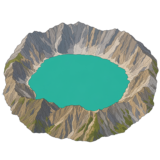
Mount Pinatubo Crater Lake
Mount Pinatubo is a volcano in Luzon that produced one of the largest volcanic eruptions of the 20th century in 1991. After the eruption, a stunning crater lake formed inside the caldera, filled with turquoise-green water surrounded by ash-gray cliffs. The hike to the lake takes visitors through a dramatic lahar landscape of hardened volcanic rock and river canyons.
-
16

Hundred Islands National Park Pangasinan
Hundred Islands National Park in Pangasinan province contains 124 small limestone islands scattered across Lingayen Gulf, though only about three are developed for tourism. The islands are covered in dense green vegetation and surrounded by coral reefs, making them ideal for snorkeling, kayaking, and island hopping. The cluster of mushroom-shaped limestone formations rising from the sea creates a uniquely dramatic seascape.
-
17

Batanes Island Landscape
Batanes is the northernmost province of the Philippines, made up of ten small islands known for their dramatic rolling green hills, rocky coastlines, and stone-walled Ivatan houses built to withstand powerful typhoons. The landscape looks almost Celtic or Irish in character, with lush grass-covered hills plunging into rugged cliffs above the Pacific Ocean. The Ivatan people's unique traditional houses, built from limestone and cogon grass, are iconic to the region.
-
18

Sohoton Natural Bridge National Park Samar
Sohoton Natural Bridge National Park is a stunning protected area in Samar featuring massive natural limestone arches carved by rivers over millions of years. It is one of the few natural stone bridges in the Philippines and is surrounded by dense rainforest, hidden caves, and crystal-clear lagoons. Visitors must travel by boat through narrow river passages to reach its magical interior.
-
19

Lake Lanao
Lake Lanao is the second largest lake in the Philippines and one of the oldest lakes in the world, located in the highlands of Lanao del Sur, Mindanao. It is an ancient crater lake of extraordinary ecological importance, home to numerous fish species found nowhere else on Earth. The lake holds deep cultural significance for the Maranao people, whose rich traditions and art are closely tied to its shores.
-
20

Tinuy-an Falls Bislig Surigao del Sur
Tinuy-an Falls in Bislig, Surigao del Sur, is often called the 'Niagara Falls of the Philippines' because of its impressively wide multi-tiered curtain of cascading white water stretching up to 95 meters across. The falls drop in three magnificent tiers through a lush rainforest setting, with mist creating frequent rainbows near the base. It is considered one of the widest waterfalls in the Philippines and a spectacular natural treasure of Mindanao.
-
21

Siargao Island Cloud 9 Surf Break
Cloud 9 is one of Asia's most famous surf breaks, located off Siargao Island in the Philippines and named after the candy bar wrappers surfers once found washed ashore. It is known for its powerful, hollow, right-hand barrel waves that attract professional surfers from around the world. A wooden boardwalk tower built over the reef gives spectators a perfect elevated view of the action.
-
22

Rice Terraces of the Philippine Cordilleras Banaue
Carved into the mountains of Ifugao by indigenous people over 2,000 years ago, these stunning stepped rice terraces climb thousands of meters up the Cordillera mountain range. Often called the "Eighth Wonder of the World," they are a living UNESCO World Heritage Site still farmed by local communities today. If all the terraces were laid end to end, they would stretch halfway around the Earth!
-
23
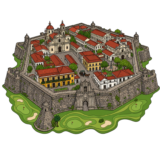
Intramuros Manila
Intramuros, meaning "within the walls" in Spanish, is a historic walled city built by Spanish colonial rulers in the late 1500s on the banks of the Pasig River in Manila. It served as the political, military, and religious heart of the Philippines for over 300 years. Today visitors can walk along its massive stone walls, explore centuries-old churches, and discover the rich history that shaped the modern Philippines.
-
24

Rizal Park Luneta Manila
Rizal Park, also known as Luneta, is the most important national park in the Philippines, located in the heart of Manila along Manila Bay. It is named after Dr. José Rizal, the Philippine national hero who was executed at this very site by Spanish colonial authorities in 1896, sparking the Philippine Revolution. The park features a prominent monument of Rizal, beautifully landscaped gardens, fountains, and a stunning view of Manila Bay's famous sunset.
More interesting landmarks
-
25
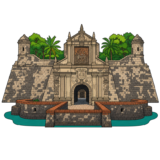
Fort Santiago Manila
Fort Santiago is a historic citadel built by Spanish colonizers in 1593 inside the walled city of Intramuros in Manila. It served as a military fortress and prison, and is most famous as the place where national hero José Rizal was imprisoned before his execution in 1896. Visitors can follow brass footprints marking the path Rizal walked on his final day.
-
26

San Agustin Church Manila
San Agustin Church is the oldest stone church in the Philippines, completed in 1607 and located inside the historic walled district of Intramuros in Manila. It is a UNESCO World Heritage Site and survived multiple earthquakes and wars, making it one of the most resilient structures in the country. Its interior is famous for stunning trompe-l'oeil ceiling paintings that create a dramatic 3D illusion.
-
27

Vigan Heritage City
Vigan is a UNESCO World Heritage city in Ilocos Sur that preserves one of the best-surviving examples of a planned Spanish colonial town in Asia. Its cobblestone streets and rows of ancestral houses blending Spanish and Filipino architecture give it a uniquely old-world atmosphere. Horse-drawn carriages called kalesas still clatter along the famous Calle Crisologo, taking visitors back in time.
-
28
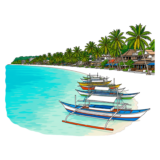
White Beach Boracay
White Beach on Boracay Island is one of the most visited beaches in the Philippines, stretching about four kilometers of powdery white sand along the island's western coast. The beach is lined with resorts, restaurants, and colorful bangka outrigger boats that offer island-hopping tours. Its calm, crystal-clear turquoise water and brilliant white sand make it a classic tropical paradise destination.
-
29

Hinagdanan Cave Bohol
Hinagdanan Cave is a natural limestone cave on Bohol Island famous for its crystal-clear underground lagoon lit by rays of light filtering through openings in the cave ceiling. The name means 'laddered' in Cebuano, referring to the ladders once used to enter the cave before stairs were built. Stalactites hang dramatically from the cave roof above the glowing green-blue subterranean pool.
-
30

Kawasan Falls Cebu
Kawasan Falls is a multi-tiered waterfall located in Badian, Cebu, famous for its strikingly vivid turquoise-blue water that flows into natural swimming pools surrounded by lush tropical jungle. The brilliant color of the water comes from minerals dissolved from the surrounding limestone rock. It is the endpoint of the popular Canyoneering adventure trail, where visitors cliff-jump and swim through canyons to reach the falls.
-
31

Magellan's Cross Cebu City
Magellan's Cross is a historic wooden Christian cross planted in Cebu City in 1521 by Portuguese explorer Ferdinand Magellan and Spanish colonizers to mark their arrival and the baptism of the local Filipino royalty. Today the original cross is encased inside a hollow wooden cross displayed in a small octagonal chapel near the Cebu City Hall. It is considered one of the most important symbols of Christianity's arrival in the Philippines.
-
32
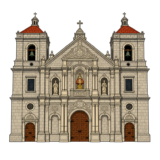
Basilica Minore del Santo Nino Cebu City
The Basilica Minore del Santo Niño in Cebu City is the oldest Roman Catholic church in the Philippines, built by the Spanish Augustinian friars and completed in its stone form in 1737. It houses the Santo Niño de Cebu, a small statue of the Child Jesus believed to have been given by Magellan to the local queen in 1521. The basilica is a major pilgrimage site drawing millions of devotees, especially during the Sinulog Festival each January.
-
33
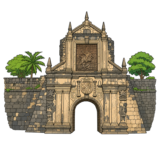
Rajah Sulayman Ruins Fort Santiago Area Manila
Fort Santiago in Manila's historic Intramuros district was originally the site of a wooden fortress built by local ruler Rajah Sulayman before Spanish colonizers converted it into a stone fortification in the 16th century. Today its ruins include weathered stone walls, a moat, and the iconic arched main gate bearing King Philip II's coat of arms. The fort is also remembered as the place where Filipino national hero José Rizal was imprisoned before his execution in 1896.
-
34

Mount Dulang Dulang Summit
Mount Dulang-dulang is the second highest peak in the Philippines, rising 2,938 meters above sea level in the Kitanglad Range of Bukidnon, Mindanao. It is a sacred mountain for indigenous Bukidnon communities and is part of a protected natural reserve rich in mossy forests and rare wildlife. The summit is often shrouded in mist, giving it an otherworldly and dramatic appearance.
-
35
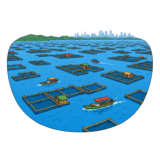
Laguna de Bay
Laguna de Bay is the largest lake in the Philippines and Southeast Asia's largest freshwater lake, stretching across the provinces of Laguna and Rizal just southeast of Manila. It plays a vital role in supporting millions of Filipinos through fishing, aquaculture, and water supply. The lake is famously dotted with floating fish pens that create a patchwork pattern visible even from above.
-
36
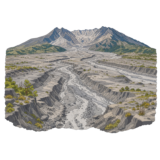
Pinatubo Lahar Fields Tarlac
The Pinatubo Lahar Fields in Tarlac are the dramatic aftermath of the 1991 eruption of Mount Pinatubo, one of the largest volcanic eruptions of the 20th century. Rivers of volcanic ash and debris called lahar buried entire towns and reshaped the landscape into an eerie moonlike terrain of grey and beige. Today the hardened lahar plains are slowly being reclaimed by nature and have become a striking and historically significant attraction.
-
37

National Museum of the Philippines Manila
The National Museum of the Philippines in Manila is the country's premier institution dedicated to art, natural history, and cultural heritage, housed in a grand neoclassical building facing Rizal Park. It is home to priceless national treasures including Juan Luna's massive painting 'Spoliarium' and a wealth of pre-colonial gold artifacts. The beautifully restored domed building itself is a national cultural property and an architectural landmark.
-
38

Burnham Park Baguio City
Burnham Park is the beloved central park of Baguio City, the cool mountain summer capital of the Philippines, designed by American urban planner Daniel Burnham in the early 1900s. The park features a scenic man-made lake where visitors can rent rowboats and paddle leisurely surrounded by pine trees and flower gardens. It is the social heart of Baguio and a refreshing green escape at over 1,500 meters above sea level.
-
39
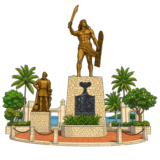
Mactan Shrine Lapu-Lapu City
The Mactan Shrine in Lapu-Lapu City, Cebu, marks the site of the 1521 Battle of Mactan, where Filipino chieftain Lapu-Lapu defeated the Portuguese explorer Ferdinand Magellan. The shrine features two prominent bronze statues — one of Lapu-Lapu wielding a kampilan sword and a smaller one of Magellan — placed facing each other in a symbolic historical confrontation. It is considered one of the most important patriotic sites in the Philippines, celebrating the first Filipino resistance against foreign colonization.
-
40
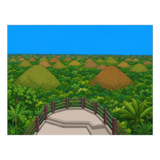
Chocolate Hills Adventure Park
The Chocolate Hills Adventure Park sits at the heart of Bohol's most famous natural wonder — the Chocolate Hills, a geological formation of over 1,200 perfectly cone-shaped limestone hills that turn chocolate brown during the dry season. The main viewing deck offers a breathtaking panoramic view of hundreds of these symmetrical mounds rolling to the horizon in every direction. This unique landscape is so iconic it appears on the Bohol provincial flag.
Ten Largest Cities
Puzzles