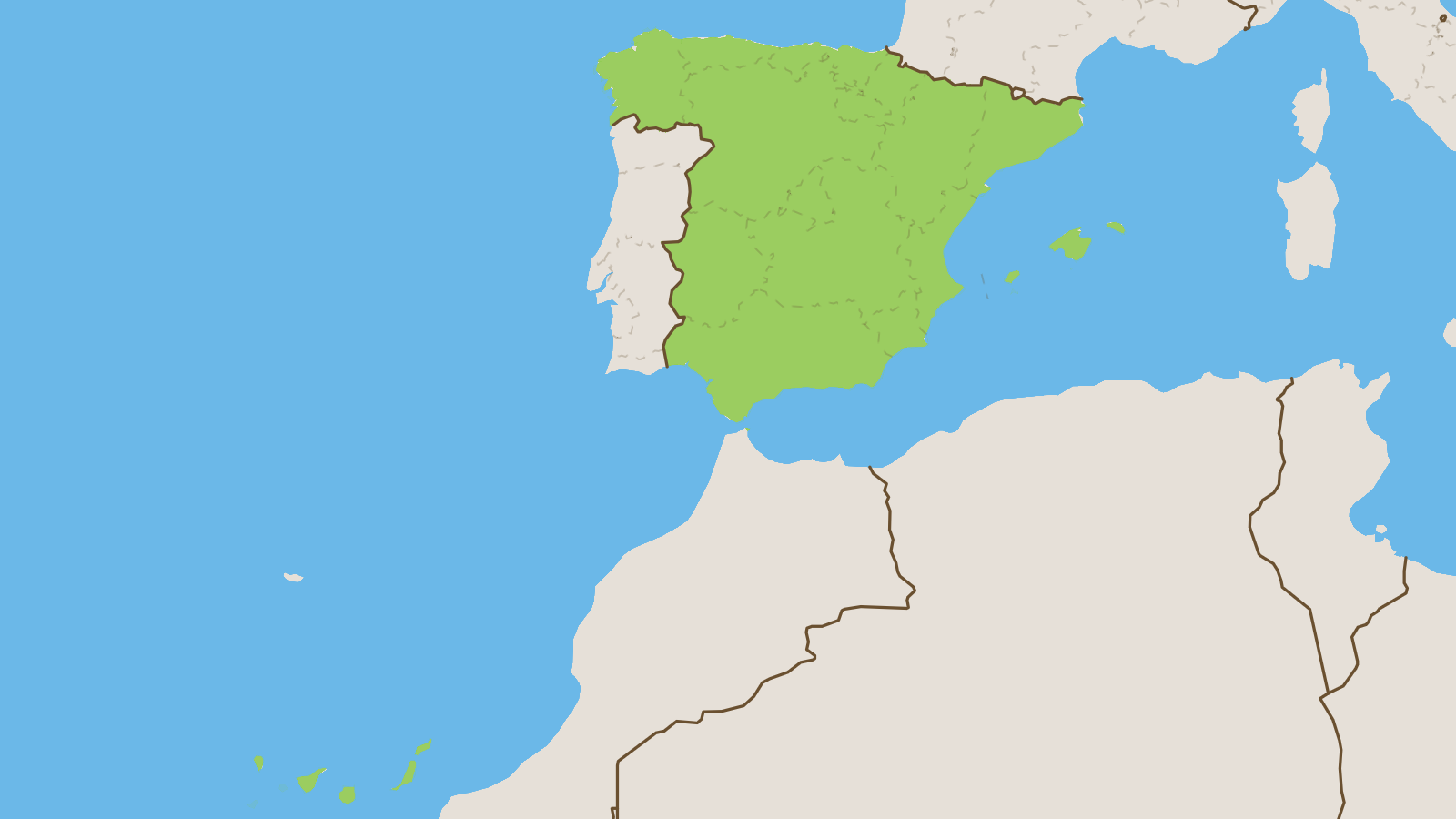
Spain sits in southwestern Europe on the Iberian Peninsula, sharing the continent with countries like France and Portugal. It is a land of incredible variety, where snowy mountains, sunny beaches, and vast golden plains can all be found within the same country. With nearly 50 million people, Spain buzzes with energy, color, and a deep love of culture, food, and celebration. The Spanish take their fiestas seriously, and festivals featuring music, dancing, and even tomato fights draw visitors from all over the world.
Spain is famous for flamenco, a passionate style of music and dance that captures the Spanish spirit perfectly. Food lovers adore Spanish dishes like paella, a delicious rice dish packed with seafood or meat. The capital, Madrid, is home to world-class art museums and a lively city atmosphere that keeps going late into the night. Spain is simply a place that makes you feel alive.
Landmarks
-
1
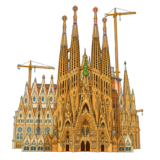
Sagrada Família Barcelona
The Sagrada Família is a massive Roman Catholic basilica in Barcelona designed by the famous architect Antoni Gaudí. It has been under construction since 1882 and is still being built today, making it one of the longest construction projects in history. Its towering spires covered in intricate stone carvings make it one of the most unique churches in the world.
-
2
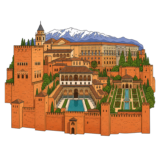
Alhambra Granada
The Alhambra is a stunning palace and fortress complex built by Moorish rulers in Granada during the 13th and 14th centuries. It sits on a hilltop overlooking the city and the Sierra Nevada mountains, combining stunning Islamic architecture with lush gardens. Its intricate geometric tilework, carved stucco walls, and reflective pools make it one of the finest examples of Moorish art in the world.
-
3

Prado Museum Madrid
The Prado Museum is Spain's national art museum and one of the greatest art museums in the entire world, located in the heart of Madrid. It holds thousands of European masterpieces, including famous works by Velázquez, Goya, and El Bosco. Founded in 1819, the museum attracts millions of visitors each year who come to see its priceless collection.
-
4
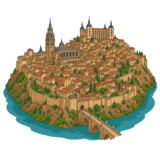
Toledo Historic City
Toledo is an ancient walled city perched dramatically on a rocky hill above a bend in the Tagus River in central Spain. Known as the City of Three Cultures, it was home to Christians, Muslims, and Jews living side by side during the Middle Ages, leaving behind a rich mix of architecture. Its skyline is dominated by a towering Gothic cathedral and a hilltop fortress called the Alcázar.
-
5
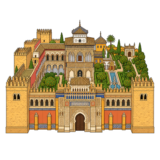
Alcázar of Seville
The Alcázar of Seville is a breathtaking royal palace complex in Seville that has been used by Spanish royalty for over 600 years, making it one of the oldest royal palaces still in use today. Built and expanded by both Moorish and Christian rulers, it blends Islamic Mudéjar architecture with Gothic and Renaissance styles beautifully. Its lush palace gardens, horseshoe arches, and dazzling tilework halls are truly unforgettable.
-
6
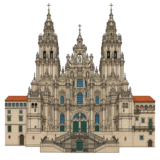
Santiago de Compostela Cathedral
The Cathedral of Santiago de Compostela, in the city of Santiago de Compostela in northwest Spain, is one of the most important pilgrimage sites in the entire world. According to tradition, it contains the tomb of Saint James the Apostle, drawing hundreds of thousands of pilgrims each year who travel the famous Camino de Santiago trail to reach it. The cathedral's ornate Baroque twin towers dominate the grand Plaza del Obradoiro.
-
7
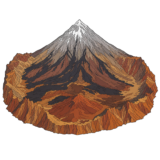
Teide Volcano Tenerife
Mount Teide is a massive volcano located on the island of Tenerife in Spain's Canary Islands, rising 3,715 meters above sea level — making it the highest peak in Spain and the third tallest volcanic structure on Earth. It is an active volcano, though its last significant eruption was in 1909. Its snow-dusted summit rises dramatically from a vast ancient volcanic crater called Las Cañadas.
-
8
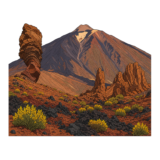
Teide National Park
Teide National Park surrounds Mount Teide on the island of Tenerife and is a UNESCO World Heritage Site recognized for its extraordinary volcanic landscape. The park contains some of the most unusual and otherworldly scenery in Europe, including vast fields of hardened lava, towering rock formations called Los Roques de García, and a range of rare plant species found nowhere else. It is also one of the world's best places for stargazing due to its high altitude and clear skies.
-
9
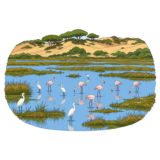
Doñana National Park
Doñana National Park is one of Europe's most important wetland nature reserves, located in southern Spain where the Guadalquivir River meets the Atlantic Ocean. It protects a vast mosaic of marshes, sand dunes, pine forests, and beaches, making it a crucial stopover for millions of migratory birds traveling between Europe and Africa each year. It is also one of the last refuges of the critically endangered Iberian lynx and the rare Spanish imperial eagle.
-
10
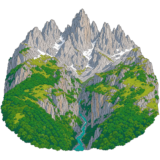
Picos de Europa National Park
Picos de Europa is Spain's first national park, established in 1918, and is located in the Cantabrian Mountains of northern Spain, spanning three regions — Asturias, Cantabria, and Castilla y León. The park features dramatic limestone peaks, deep gorges, alpine meadows, and dense beech and oak forests, making it a haven for wildlife including brown bears and wolves. The famous Cares Gorge, a sheer canyon cutting 1,000 meters deep, is one of Spain's most spectacular hiking routes.
-
11
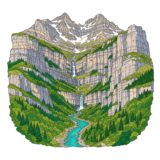
Ordesa y Monte Perdido National Park
Ordesa y Monte Perdido National Park is a UNESCO World Heritage Site tucked in the central Spanish Pyrenees, in the region of Aragon. It is home to Monte Perdido, the third-highest peak in the Pyrenees at 3,355 meters, and is famous for its spectacular canyon — the Ordesa Valley — which has been called the Spanish Grand Canyon for its towering vertical walls. The park shelters rare wildlife including the bearded vulture, Pyrenean chamois, and brown bear.
-
12
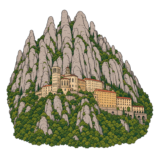
Montserrat Mountain Monastery
Montserrat is a striking multi-peaked mountain rising 1,236 meters above Catalonia in northeast Spain, home to the famous Benedictine monastery of Santa Maria de Montserrat, founded in the 9th century. The monastery clings to the mountain's jagged rocky face and is one of the most visited pilgrimage sites in Spain, housing a revered wooden statue of the Virgin Mary known as La Moreneta, or the Black Madonna. The name Montserrat means "serrated mountain" in Catalan, perfectly describing its saw-toothed silhouette.
-
13
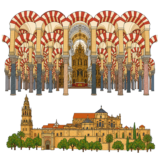
Mezquita Cathedral of Córdoba
The Mezquita-Cathedral of Córdoba is a remarkable building in the Andalusian city of Córdoba that began as a mosque in the 8th century and was later converted into a Roman Catholic cathedral — meaning both a mosque and a cathedral exist within the same walls today. Inside, a breathtaking forest of 856 columns made from marble, granite, and jasper supports distinctive red-and-white striped double arches, creating one of the most unique interiors in the world. It is a UNESCO World Heritage Site and a powerful symbol of Córdoba's rich Islamic and Christian heritage.
-
14
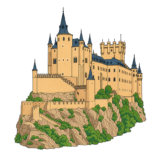
Alcázar of Segovia
The Alcázar of Segovia is a dramatic medieval castle perched on a rocky cliff where two rivers meet in central Spain. It served as a royal palace, a prison, and a military academy over its long history. Its fairy-tale turrets are said to have inspired the design of Disneyland's Cinderella Castle.
-
15
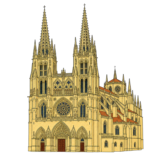
Burgos Cathedral
Burgos Cathedral is a stunning Gothic masterpiece in northern Spain, construction of which began in 1221. It is the only Spanish cathedral to be designated a UNESCO World Heritage Site on its own, separate from the surrounding city. Its famous Golden Staircase inside and its lace-like stone spires outside make it one of Spain's most breathtaking buildings.
-
16
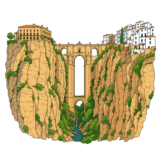
Ronda El Tajo Gorge
El Tajo Gorge is a dramatic natural canyon that slices through the city of Ronda in southern Spain, dropping nearly 120 meters straight down. The famous Puente Nuevo (New Bridge) spans the gorge, connecting the old and new parts of the city in a breathtaking display of 18th-century engineering. The combination of sheer cliff faces, the bridge, and whitewashed buildings at the edge makes it one of Spain's most jaw-dropping sights.
-
17
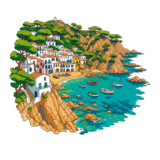
Costa Brava Coastline Girona
The Costa Brava is a rugged and beautiful stretch of coastline in the Catalonia region of northeastern Spain, near the city of Girona. Its name means 'wild coast' in Catalan, which perfectly describes its dramatic cliffs, hidden coves, and crystal-clear blue-green waters. The coastline is dotted with charming fishing villages and ancient ruins, making it both a natural and cultural treasure.
-
18
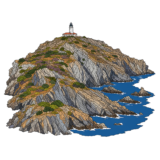
Cap de Creus Natural Park
Cap de Creus is the most easterly point of the Iberian Peninsula, located in Catalonia, Spain, where the Pyrenees mountains meet the Mediterranean Sea. Its wild, wind-sculpted landscape of jagged rocks, heathland, and dramatic seascapes inspired the famous surrealist artist Salvador Dalí, who lived nearby. The park is one of Spain's most unique natural areas, rich in wildlife and strikingly raw beauty.
-
19
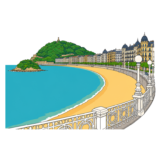
La Concha Beach San Sebastián
La Concha Beach is widely considered one of the most beautiful urban beaches in Europe, curving gracefully along the bay of San Sebastián in the Basque Country of northern Spain. Its name means 'The Shell' in Spanish, referring to the perfect crescent shape of the bay. A grand Belle Époque promenade lined with ornate railings runs along the beach, giving it an elegant, sophisticated atmosphere.
-
20
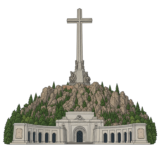
Valle de los Caídos
The Valle de los Caídos, or 'Valley of the Fallen,' is a monumental complex built in the mountains near Madrid between 1940 and 1958 under the orders of Spanish dictator Francisco Franco. It contains a massive underground basilica carved into a granite mountain, topped by a giant cross that stands 150 meters tall and is visible for miles. The site has long been controversial because it was built using forced labor and served as a burial place for Franco himself until 2019.
-
21
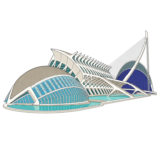
Ciudad de las Artes y las Ciencias Valencia
The City of Arts and Sciences is a stunning futuristic complex in Valencia, Spain, designed by architect Santiago Calatrava. It includes an opera house, science museum, aquarium, and planetarium, all built along a long reflecting pool. The eye-catching buildings are covered in white mosaic tiles that shimmer in the Spanish sun.
-
22
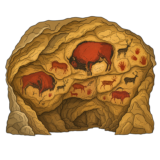
Altamira Cave Museum Santillana del Mar
The Altamira Cave Museum in Santillana del Mar, northern Spain, showcases some of the world's most famous prehistoric cave paintings, dating back around 36,000 years. The original cave is largely closed to protect the art, but a remarkable full-size replica called the Neocave lets visitors experience the paintings up close. The most iconic images are bison painted in rich reds, browns, and blacks on the cave's uneven rocky ceiling.
-
23
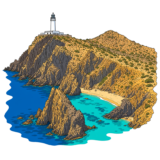
Cabo de Gata Natural Park
Cabo de Gata is a stunning natural park on the southeastern coast of Spain in Almería, home to some of the most unspoiled beaches and dramatic volcanic coastline in the country. It is one of the driest places in Europe, giving the landscape a desert-like feel with golden cliffs, turquoise waters, and sparse scrubby vegetation. The park also features a picturesque lighthouse perched on rugged volcanic cliffs above the Mediterranean Sea.
-
24
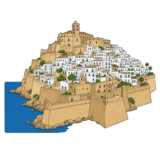
Ibiza Old Town Dalt Vila
Dalt Vila, meaning 'upper town' in Catalan, is the ancient walled old town of Ibiza City, perched on a hilltop and designated a UNESCO World Heritage Site. Its massive Renaissance-era stone walls and bastions were built in the 16th century to defend against pirate attacks and still surround a maze of steep cobblestone streets, whitewashed houses, and a Gothic cathedral at the very top. At night the illuminated walls glow golden above the busy harbor below.
More interesting landmarks
-
25
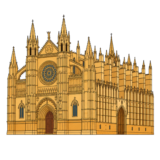
Palma Cathedral La Seu Mallorca
La Seu is a magnificent Gothic Catholic cathedral that dominates the waterfront of Palma, the capital of the island of Mallorca. Construction began in 1229 and took several centuries to complete, resulting in one of the largest Gothic cathedrals in the world. One of its most remarkable features is the enormous rose window, over 11 meters wide, which floods the interior with colored light.
-
26

Caldera de Taburiente National Park La Palma
Caldera de Taburiente is a breathtaking national park on the island of La Palma in the Canary Islands, centered on one of the largest erosion calderas in the world, stretching nearly 10 kilometers across. The steep walls of the caldera are draped in lush Canarian pine forests and carved by dramatic waterfalls and streams fed by the clouds that frequently wrap around the peaks. Standing at the rim, visitors look down into a deep green bowl of volcanic rock that feels almost like another world.
-
27
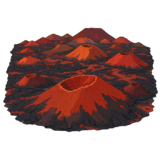
Timanfaya National Park Lanzarote
Timanfaya National Park on the island of Lanzarote in the Canary Islands is a surreal volcanic landscape created by massive eruptions in the 18th century. The park is covered in a sea of hardened black and rust-red lava fields, volcanic cones, and craters, with almost no plants growing — giving it an otherworldly, Mars-like appearance. The ground is still so hot in places that geysers of steam shoot up when water is poured into cracks, and restaurants even cook food using geothermal heat.
-
28
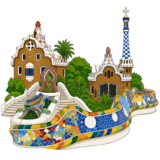
Park Güell Barcelona
Park Güell is a colorful public park in Barcelona designed by Antoni Gaudí, originally planned as a housing development in the early 1900s. The park is famous for its winding mosaic benches, whimsical tiled staircases, and gingerbread-style gatehouses. A mosaic lizard fountain near the entrance has become one of the most photographed symbols of Barcelona.
-
29
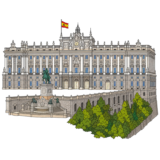
Royal Palace of Madrid
The Royal Palace of Madrid is the official residence of the Spanish Royal Family, though it is used mainly for state ceremonies today. Built in the 18th century, it is the largest royal palace in Western Europe by floor area, with over 3,000 rooms. Its grand white limestone exterior and opulent interior rooms filled with royal treasures leave visitors speechless.
-
30
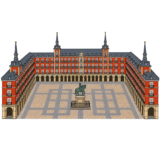
Plaza Mayor Madrid
Plaza Mayor is a large historic square in the center of Madrid that has been the heart of city life for over 400 years. The rectangular plaza is enclosed by elegant three-story buildings painted in deep red with rows of uniform balconies and slate spire towers at the corners. Today it is a lively gathering place for tourists and locals, with cafés, street performers, and seasonal markets.
-
31
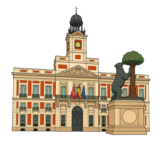
Puerta del Sol Madrid
Puerta del Sol is the most famous public square in Madrid and is considered the very center of Spain, marked by a stone slab known as Kilometre Zero. The square is a busy hub of city life, surrounded by historic buildings including the iconic clock tower of the Casa de Correos. Every New Year's Eve, thousands of Spaniards gather here to ring in the new year by eating twelve grapes at midnight.
-
32
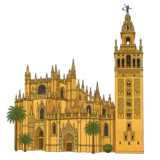
Seville Cathedral and Giralda
Seville Cathedral is the largest Gothic cathedral in the world and is home to the tomb of the explorer Christopher Columbus. Next to it stands the Giralda, a tall tower that was originally built as a minaret for a mosque before being converted into a Christian bell tower in the 16th century. Together they form one of the most striking architectural combinations in all of Spain.
-
33
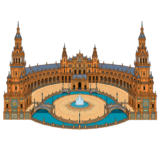
Plaza de España Seville
Plaza de España is a stunning semi-circular square built in 1928 for the Ibero-American Exposition in Seville. It is famous for its grand brick and tile buildings that curve around a central fountain and canal, where visitors can rent rowboats. Each Spanish province is represented by a decorated ceramic bench along the plaza's sweeping walls.
-
34

Guggenheim Museum Bilbao
The Guggenheim Museum Bilbao is a world-famous modern art museum that opened in 1997 on the banks of the Nervión River in the Basque city of Bilbao, Spain. Designed by architect Frank Gehry, it is celebrated as a masterpiece of contemporary architecture and helped transform Bilbao into a major cultural destination. Its swirling, fish-scale exterior is made from shimmering titanium panels that change color in different light.
-
35
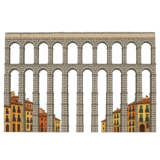
Aqueduct of Segovia
The Aqueduct of Segovia is one of the best-preserved Roman engineering feats in the world, built around the first century AD to carry water into the city. It stretches over 800 meters and reaches nearly 29 meters at its tallest point, using no mortar — just precisely fitted granite blocks. Today it stands proudly in the heart of Segovia as a symbol of ancient Roman ingenuity.
-
36
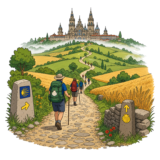
Camino de Santiago Pilgrim Route
The Camino de Santiago, or 'Way of Saint James,' is a network of ancient pilgrimage routes across Europe that lead to the Cathedral of Santiago de Compostela in northwestern Spain. For over a thousand years, pilgrims have walked these paths, marked by the symbol of the scallop shell, to visit the shrine of the apostle Saint James. Today, hundreds of thousands of people from all over the world walk the Camino each year for religious, cultural, or personal reasons.
-
37

El Escorial Monastery
El Escorial is a vast royal monastery, palace, and mausoleum complex located in the foothills of the Sierra de Guadarrama, about 45 kilometers northwest of Madrid. Built by King Philip II of Spain in the 16th century, it served as the spiritual and administrative heart of the Spanish Empire at its height. Its enormous grey granite facade, strict geometric design, and solemn atmosphere make it one of the most impressive Renaissance buildings in the world.
-
38

Las Fallas Valencia
Las Fallas is a spectacular annual festival held in Valencia every March, celebrating Saint Joseph with enormous colorful sculptures called 'fallas' displayed throughout the city. The sculptures can be several stories tall and are crafted from papier-mâché, wood, and foam, often depicting satirical or fantastical scenes. At the end of the festival, nearly all the sculptures are dramatically set on fire in an event called La Cremà.
-
39
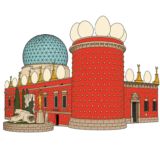
Dalí Theatre-Museum Figueres
The Dalí Theatre-Museum in Figueres, Catalonia, is the largest surrealist object in the world, created by the eccentric artist Salvador Dalí himself. Built inside a ruined theatre, it houses a massive collection of Dalí's bizarre and dreamlike artworks, and Dalí is even buried in a crypt beneath the stage. The building's roofline is topped with giant golden eggs and strange figures that hint at the wild creativity inside.
-
40
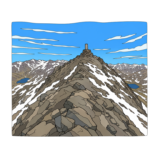
Mulhacén Summit Sierra Nevada
Mulhacén is the highest mountain in mainland Spain, rising 3,479 meters above sea level in the Sierra Nevada range in Andalusia. It is a popular destination for hikers, offering breathtaking panoramic views that on clear days stretch all the way to North Africa. The summit is rocky and often snow-capped, sitting above a landscape of glacial lakes and rugged terrain.
Puzzles