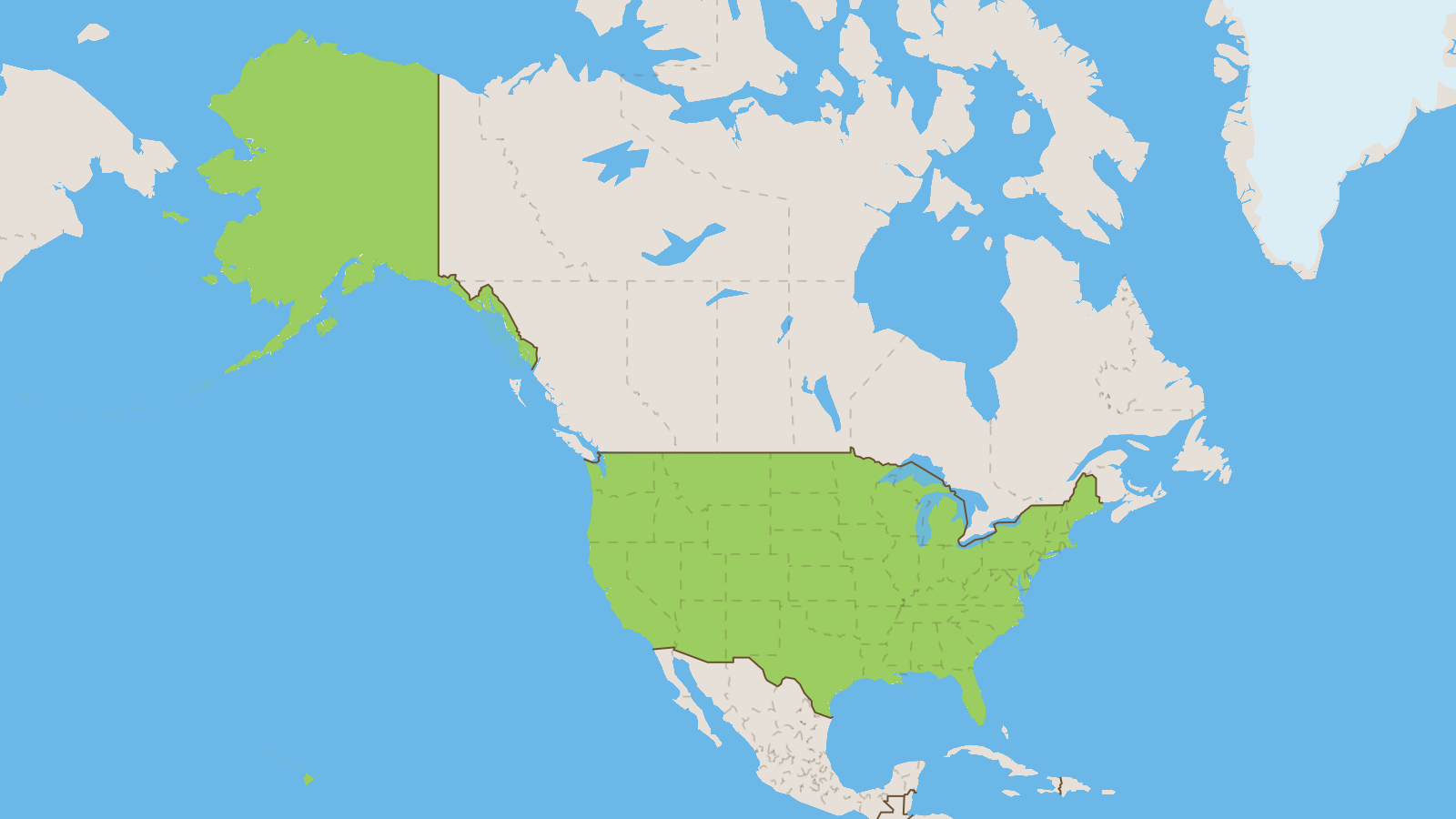
The United States is a massive country in North America, stretching from the Atlantic Ocean in the east all the way to the Pacific Ocean in the west. It is one of the largest and most populated countries on Earth, home to over 340 million people. From snowy mountains to scorching deserts, thick forests to wide open plains, the landscape changes dramatically depending on where you are. That variety makes it one of the most geographically exciting places in the world.
The United States has a bold, energetic character that shows up in its culture, cities, and people. New York City buzzes with millions of people from every corner of the globe, while wide rural roads cut through quiet farmland for hundreds of miles. The country is famous for its film industry in Hollywood and for being a pioneer in space exploration. It is a place of big ideas, big landscapes, and big ambitions.
Landmarks
-
1

Statue of Liberty New York
The Statue of Liberty is a massive copper statue standing on Liberty Island in New York Harbor, gifted to the United States by France in 1886. It represents freedom and democracy, welcoming millions of immigrants who arrived by sea. Lady Liberty stands 305 feet tall from ground to torch tip and has turned a distinctive green color due to oxidation over time.
-
2

Grand Canyon National Park
The Grand Canyon is a breathtaking gorge in Arizona carved by the Colorado River over millions of years, stretching 277 miles long and up to a mile deep. It is one of the Seven Natural Wonders of the World and draws about six million visitors each year. The canyon's layered red, orange, and tan rock walls reveal nearly two billion years of Earth's geological history.
-
3
Yellowstone National Park
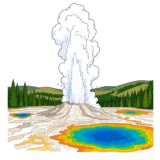
Yellowstone, established in 1872, is the world's first national park and sits atop one of Earth's largest active supervolcanoes, located mostly in Wyoming. It is famous for its incredible geothermal features, including more than 500 geysers. Old Faithful, the park's most iconic geyser, erupts roughly every 90 minutes, shooting hot water up to 185 feet into the air.
-
4
Mount Rushmore National Memorial
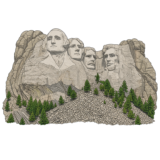
Mount Rushmore is a massive sculpture carved into a granite mountain in the Black Hills of South Dakota, featuring the 60-foot-tall faces of four U.S. presidents: George Washington, Thomas Jefferson, Theodore Roosevelt, and Abraham Lincoln. Sculptor Gutzon Borglum and his crew spent 14 years, from 1927 to 1941, carving the memorial using dynamite and hand tools. It attracts nearly three million visitors each year and is a powerful symbol of American history and democracy.
-
5

Golden Gate Bridge San Francisco
The Golden Gate Bridge is an iconic suspension bridge spanning the Golden Gate strait, the opening of San Francisco Bay into the Pacific Ocean, in California. Completed in 1937, it was the longest suspension bridge in the world at the time, stretching 1.7 miles. The bridge is painted a distinctive orange-red color called International Orange, chosen to make it visible even through San Francisco's famous fog.
-
6

Niagara Falls New York
Niagara Falls is a group of three massive waterfalls—Horseshoe Falls, American Falls, and Bridal Veil Falls—straddling the border between New York State and Ontario, Canada. They are among the most powerful waterfalls in North America, with more than 3,000 tons of water flowing over the edge every second. A permanent rainbow often appears in the mist rising from the base of the falls on sunny days.
-
7

Mauna Kea Summit Hawaii
Mauna Kea is a dormant volcano on the Big Island of Hawaii and, when measured from its base on the ocean floor, is the world's tallest mountain at over 33,000 feet, surpassing even Mount Everest. Its summit sits at 13,796 feet above sea level, above 40% of Earth's atmosphere, making it one of the best places on Earth for astronomical observation. Thirteen countries have built observatories at the summit, whose distinctive silver domes dot the rust-red and barren volcanic landscape.
-
8

Denali Summit Alaska
Denali, formerly known as Mount McKinley, is the highest peak in North America, soaring 20,310 feet above sea level in the Alaska Range in central Alaska. It is renowned for its extreme weather and massive vertical rise from the surrounding lowlands—greater than any other mountain on Earth measured from base to peak. The summit is blanketed in permanent snow and ice, and only about half of climbers who attempt to reach the top are successful.
-
9

Washington Monument Washington DC
The Washington Monument is a towering white obelisk built to honor George Washington, the first President of the United States. Standing 555 feet tall, it was the tallest structure in the world when it was completed in 1884. Visitors can ride an elevator to the top for sweeping views of Washington DC.
-
10

Arches National Park
Arches National Park in Utah contains more than 2,000 natural sandstone arches, the highest concentration of natural arches in the world. The most iconic is Delicate Arch, a freestanding red-orange arch that stands 52 feet tall against the backdrop of the La Sal Mountains. The park's otherworldly red rock landscape was formed over millions of years by erosion, freezing, and thawing.
-
11

Glacier National Park Montana
Glacier National Park in northwestern Montana is known as the "Crown of the Continent" for its stunning alpine scenery, including rugged mountain peaks, deep blue lakes, and ancient glaciers. The park is home to an incredible variety of wildlife, including grizzly bears, mountain goats, and wolverines. The famous Going-to-the-Sun Road winds through the park offering jaw-dropping mountain views.
-
12

Great Smoky Mountains National Park
Great Smoky Mountains National Park straddles the border of Tennessee and North Carolina and is the most visited national park in the United States. The park gets its name from the natural bluish-gray haze that hangs over the ancient, rounded mountain peaks, created by moisture and plant vapors. Its forests are incredibly diverse, earning the region recognition as a UNESCO World Heritage Site.
-
13

Acadia National Park Maine
Acadia National Park on the coast of Maine is the only national park in the northeastern United States, protecting a rugged landscape where mountains meet the Atlantic Ocean. Cadillac Mountain, the park's highest peak, is famous as the first place in the continental US to see the sunrise during certain times of year. The park's rocky pink granite shoreline, dotted with crashing waves and tide pools, is one of its most beloved features.
-
14

Rocky Mountain National Park Colorado
Rocky Mountain National Park in Colorado protects some of the most spectacular high-altitude scenery in North America, with over 60 peaks rising above 12,000 feet. Trail Ridge Road crosses the park at elevations above the treeline, passing through wide-open tundra landscapes where elk and bighorn sheep roam freely. The park offers a dramatic contrast between lush green valleys, dense pine forests, and bare rocky alpine summits.
-
15

Everglades National Park Florida
The Everglades is a vast, slow-moving river of grass covering the southern tip of Florida, and it is the largest subtropical wilderness in the United States. It is home to hundreds of species including American alligators, manatees, and colorful wading birds like roseate spoonbills. What makes it unique is that it is technically a river — just very wide, very shallow, and filled with sawgrass.
-
16

Crater Lake National Park
Crater Lake in Oregon formed about 7,700 years ago when a massive volcano called Mount Mazama erupted and collapsed, leaving behind a deep caldera that filled with rainwater and snowmelt. It is the deepest lake in the United States at about 1,943 feet deep, and its water is so pure and clear that it appears an extraordinary, almost electric blue. A small volcanic island called Wizard Island rises from the center of the lake.
-
17

Mount Rainier Summit Washington
Mount Rainier is a massive glacier-covered stratovolcano in Washington State and the highest peak in the Cascade Range at 14,411 feet above sea level. It is considered one of the most dangerous volcanoes in the world because of the thick glaciers and large population living nearby. On clear days, its snow-capped summit is visible from Seattle, over 50 miles away.
-
18

French Quarter New Orleans
The French Quarter is the oldest neighborhood in New Orleans, Louisiana, filled with colorful buildings, lively music, and rich Creole culture dating back to the 1700s. Famous for its vibrant street life on Bourbon Street and its beautiful iron-lace balconies draped with flowers and hanging plants, it is a feast for the senses. The neighborhood blends French, Spanish, African, and American influences into a one-of-a-kind cultural tapestry.
-
19

Kennedy Space Center Florida
Kennedy Space Center is NASA's primary launch facility, located on Merritt Island on Florida's Atlantic coast, and it has been the departure point for some of humanity's greatest space adventures, including the Apollo moon missions. Visitors can see massive rockets up close, tour launch pads, and watch real rocket launches from the nearby viewing areas. The Vehicle Assembly Building at the site is so large that clouds can actually form inside it.
-
20

Hawaii Volcanoes National Park
Hawaii Volcanoes National Park on the Big Island of Hawaii is home to two of the world's most active volcanoes, Kīlauea and Mauna Loa, which have been continuously reshaping the island with flowing lava for thousands of years. The park offers an extraordinary chance to witness Earth's geological forces in action, from steaming vents and hardened lava fields to rare native wildlife. Kīlauea is considered one of the most studied volcanoes on the planet and sometimes sends bright orange lava flowing directly into the Pacific Ocean.
-
21

Yosemite National Park
Yosemite National Park is a stunning wilderness area in California's Sierra Nevada mountains, famous for its towering granite cliffs, waterfalls, and ancient giant sequoia trees. El Capitan, a sheer granite monolith rising about 3,000 feet from the valley floor, is considered one of the world's greatest rock climbing destinations. The park's Yosemite Valley offers some of the most iconic and photographed landscapes in all of North America.
-
22
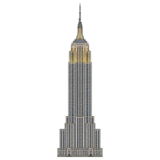
Empire State Building New York
The Empire State Building is a famous Art Deco skyscraper in Midtown Manhattan, New York City, that stood as the world's tallest building from 1931 to 1970. Rising 1,454 feet to the top of its antenna, it has 102 floors and attracts millions of visitors to its observation decks each year. Its stepped, tapered silhouette and illuminated tower tip—lit in different colors for holidays and events—make it one of the most recognizable skylines in the world.
-
23

Times Square New York
Times Square is a bustling commercial hub in Midtown Manhattan, famous for its dazzling electronic billboards and neon signs. It is one of the most visited tourist attractions in the world, drawing millions of people each year. Every New Year's Eve, a glittering ball drops here to ring in the new year, a tradition watched by billions worldwide.
-
24

Lincoln Memorial Washington DC
The Lincoln Memorial is a grand marble monument dedicated to President Abraham Lincoln, who led the United States through the Civil War and worked to end slavery. It features a massive seated statue of Lincoln inside a Greek-style temple with 36 towering columns. The memorial is famous as the site where Dr. Martin Luther King Jr. delivered his "I Have a Dream" speech in 1963.
More interesting landmarks
-
25

Zion National Park
Zion National Park in southwestern Utah is famous for its dramatic canyon scenery carved by the Virgin River over millions of years. The park features soaring red and orange sandstone cliffs that tower thousands of feet above the canyon floor. One of its most thrilling hikes, Angels Landing, takes adventurers along a narrow ridge with breathtaking views.
-
26
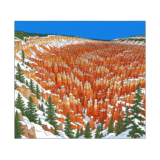
Bryce Canyon National Park
Bryce Canyon National Park in Utah is not actually a canyon but a series of giant natural amphitheaters filled with thousands of tall, thin rock spires called hoodoos. These hoodoos glow in shades of red, orange, and white, creating a landscape that looks almost alien. The park sits at a high elevation, making it one of the best places in the country to stargaze.
-
27

Sequoia National Park
Sequoia National Park in California is home to the largest trees on Earth by volume — the giant sequoias, which can live for over 3,000 years. The park's most famous resident, General Sherman Tree, stands about 275 feet tall and is considered the world's largest living tree. These massive reddish-brown trees have bark so thick it can resist fire.
-
28

Death Valley National Park
Death Valley National Park, located on the California-Nevada border, holds the record for the hottest air temperature ever recorded on Earth — 134°F (56.7°C) in 1913. Despite its harsh name, the valley features stunning landscapes including colorful rock formations, vast salt flats, and rolling sand dunes. Badwater Basin within the park is the lowest point in North America at 282 feet below sea level.
-
29

Monument Valley Navajo Tribal Park
Monument Valley sits on the Arizona-Utah border within the Navajo Nation and is famous for its towering red sandstone buttes and mesas that rise dramatically from the flat desert floor. These iconic formations, called the Mittens and Merrick Butte, have appeared in countless Western movies and advertisements. The valley is sacred to the Navajo people and has been their homeland for centuries.
-
30

Old Faithful Geyser Yellowstone
Old Faithful is one of the world's most famous geysers, located in Yellowstone National Park in Wyoming, and it erupts roughly every 90 minutes, shooting boiling hot water up to 185 feet into the air. It earned its name because of how reliably it performs — park rangers can predict its next eruption within about 10 minutes. Yellowstone sits atop a giant volcanic hotspot that heats the groundwater powering geysers like Old Faithful.
-
31

Antelope Canyon Arizona
Antelope Canyon is a breathtaking slot canyon carved into the red Navajo sandstone on Navajo land near Page, Arizona, created over thousands of years by flash floods and wind erosion. Its narrow, winding passages feature smooth, wave-like walls in stunning shades of orange, red, pink, and purple that shift dramatically with the light. Narrow beams of sunlight sometimes pierce the opening above, creating magical shafts of light inside the canyon.
-
32
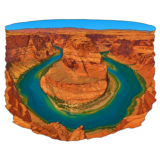
Horseshoe Bend Arizona
Horseshoe Bend is a dramatic horseshoe-shaped meander of the Colorado River located near Page, Arizona, just downstream from Glen Canyon Dam. The river wraps almost completely around a massive sandstone butte, creating a nearly perfect loop when viewed from the overlook 1,000 feet above. It has become one of the most photographed natural landmarks in the American Southwest.
-
33

Smithsonian National Museum of Natural History Washington DC
The Smithsonian National Museum of Natural History in Washington DC is one of the most visited museums in the world, housing over 146 million natural science specimens and artifacts. It is famous for its massive African elephant displayed in the grand rotunda entrance and the dazzling Hope Diamond, one of the world's most famous gemstones. Best of all, admission is completely free.
-
34

Metropolitan Museum of Art New York
The Metropolitan Museum of Art, known as 'the Met,' is one of the largest and most visited art museums in the world, located along Fifth Avenue in New York City. It houses over two million works of art spanning 5,000 years of human history, from ancient Egyptian artifacts to modern paintings. One memorable detail: the museum even has an entire Egyptian temple, the Temple of Dendur, displayed inside a glass-enclosed gallery.
-
35

National Mall Washington DC
The National Mall is a long, open green park in the heart of Washington D.C., stretching about two miles from the U.S. Capitol building to the Lincoln Memorial. It is often called 'America's front yard' because it hosts some of the nation's most iconic monuments, museums, and historic gatherings. Millions of people visit each year, and it was the site of Martin Luther King Jr.'s famous 'I Have a Dream' speech.
-
36

Independence Hall Philadelphia
Independence Hall is a historic red-brick building in Philadelphia, Pennsylvania, where both the Declaration of Independence and the U.S. Constitution were debated and signed. Built in the 1730s, it is considered the birthplace of American democracy and is a UNESCO World Heritage Site. The famous Liberty Bell was once housed in its tower and still rings as a symbol of freedom.
-
37

Alcatraz Island San Francisco
Alcatraz Island sits in the middle of San Francisco Bay and was home to one of America's most famous and feared federal prisons, which operated from 1934 to 1963. Surrounded by cold, swift currents, the island was considered escape-proof, though several prisoners famously tried. Today it is a national park where visitors can tour the crumbling cellblocks and learn about its dramatic history.
-
38

Las Vegas Strip Nevada
The Las Vegas Strip is a roughly four-mile stretch of Las Vegas Boulevard in Nevada, packed with enormous resort hotels, casinos, and entertainment venues that light up the desert night with dazzling neon signs and LED displays. It is one of the most recognizable skylines in the world, featuring replicas of famous global landmarks like the Eiffel Tower, Egyptian pyramids, and the Statue of Liberty. The Strip draws tens of millions of visitors every year, making Las Vegas one of the most visited cities on Earth.
-
39

White House Washington DC
The White House is the official home and workplace of the President of the United States, located at 1600 Pennsylvania Avenue in Washington D.C. It has housed every U.S. president since John Adams in 1800 and stands as one of the most recognized buildings in the world. The building has 132 rooms, 35 bathrooms, and even its own tennis court, bowling alley, and movie theater.
-
40

Chaco Culture National Historical Park
Chaco Culture National Historical Park in northwestern New Mexico preserves the remains of a sophisticated ancient civilization built by the Ancestral Puebloans between roughly 850 and 1150 CE. The site features massive stone buildings called 'great houses,' some rising four to five stories tall, which served as ceremonial, trade, and community centers for the surrounding region. Remarkably, the buildings were carefully aligned with the sun and moon, showing that the Chacoans were skilled astronomers.
Ten Largest Cities
Puzzles