Ronald & Tony
The secret of Sevilla
 The secret of Sevilla
Read the transcript
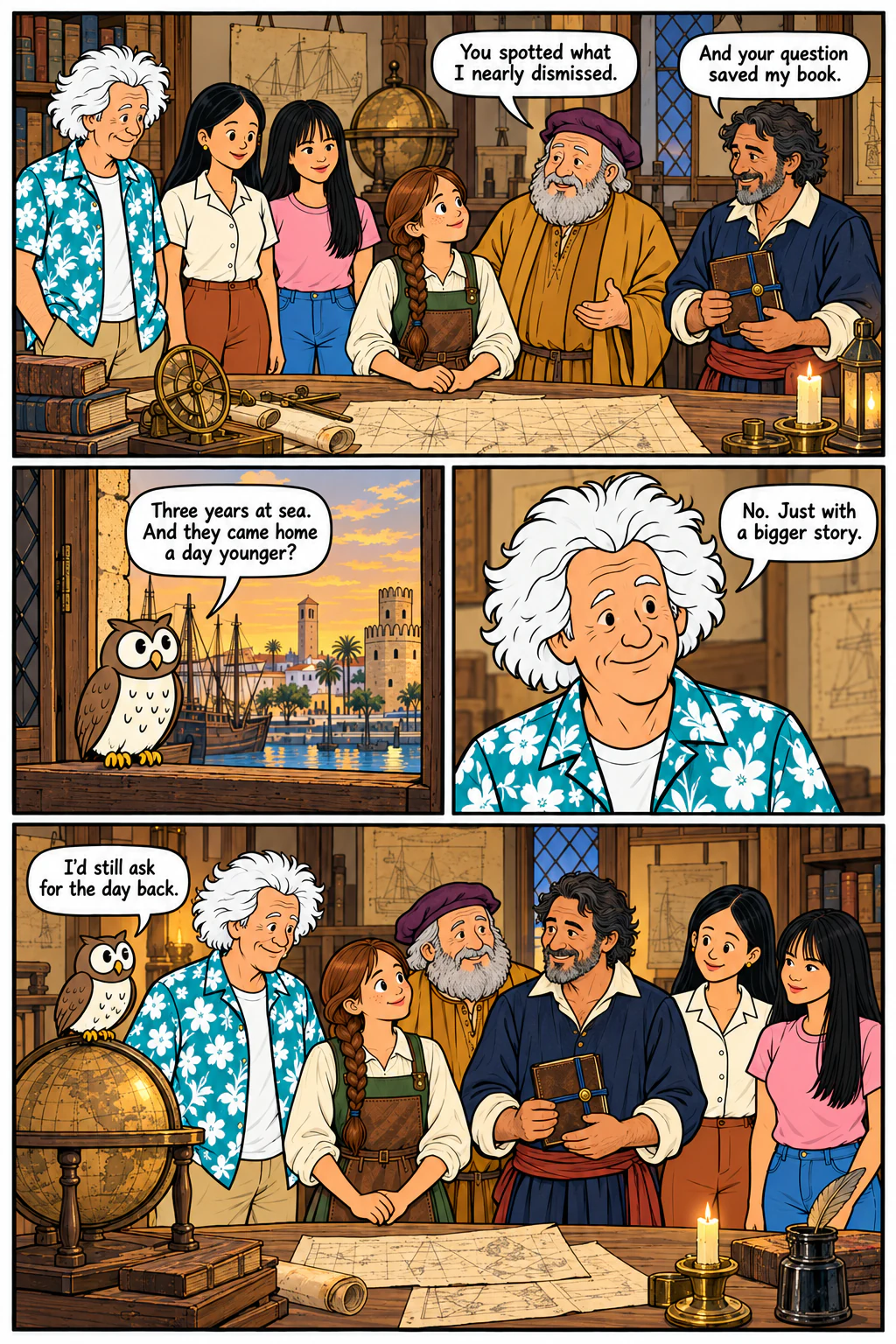
Workshop table, Inés with master Alonso and composite mariner, notebook CLOSED safely in mariner hands. Ronald Karen Harly nearby, globe and lamp background.
Alonso: You spotted what I nearly dismissed. Mariner: And your question saved my book.
Tony ALONE perched on open workshop window sill with simple ochre evening sky and ship masts behind, no humans near balloon.
Tony: Three years at sea. And they came home a day younger?
Close elderly Ronald mature lined face wild white hair, warm smile, no owl in this panel.
Ronald: No. Just with a bigger story.
Warm wide workshop end image. Inés smiles with master and mariner, Karen Harly professional friendly, mature Ronald. Tony perched separate wooden globe stand on LEFT of frame; put his sole balloon directly above owl on left. Globe lamp and closed notebook visible, notebook remains with mariner.
Tony: I’d still ask for the day back.
Behind the adventure
Inés, Alonso, the seller, the theft, notebook and pursuit are fictional. The unnamed mariner is a composite dramatic representative of the returning crew, not an additional documented survivor or a portrait of a named individual. His notebook and daughter’s drawing are invented and are not Pigafetta’s surviving manuscript. Recurring characters appear as imagined visitors to the past. Dialogue is in English for readers. Streets, routes and workshop are simplified fictional staging.
Victoria completed the first circumnavigation under Juan Sebastián Elcano in 1522, returning to Sanlúcar on 6 September and Sevilla on 8 September. Five ships had departed in 1519; only Victoria completed the circuit. The expedition had already discovered its one-day calendar discrepancy at Cape Verde in July 1522, as recorded by Antonio Pigafetta. The fictional Sevilla investigation revisits that known discrepancy; it does not move its historical discovery to Sevilla. Westward travel lengthened the travellers’ local solar days, producing one fewer counted day over a full circuit compared with those who stayed home. The Giralda’s later Renaissance summit, the modern iron Triana bridge and Torre del Oro’s eighteenth-century upper turret are omitted. Spanish Ministry of Culture: first circumnavigation records.
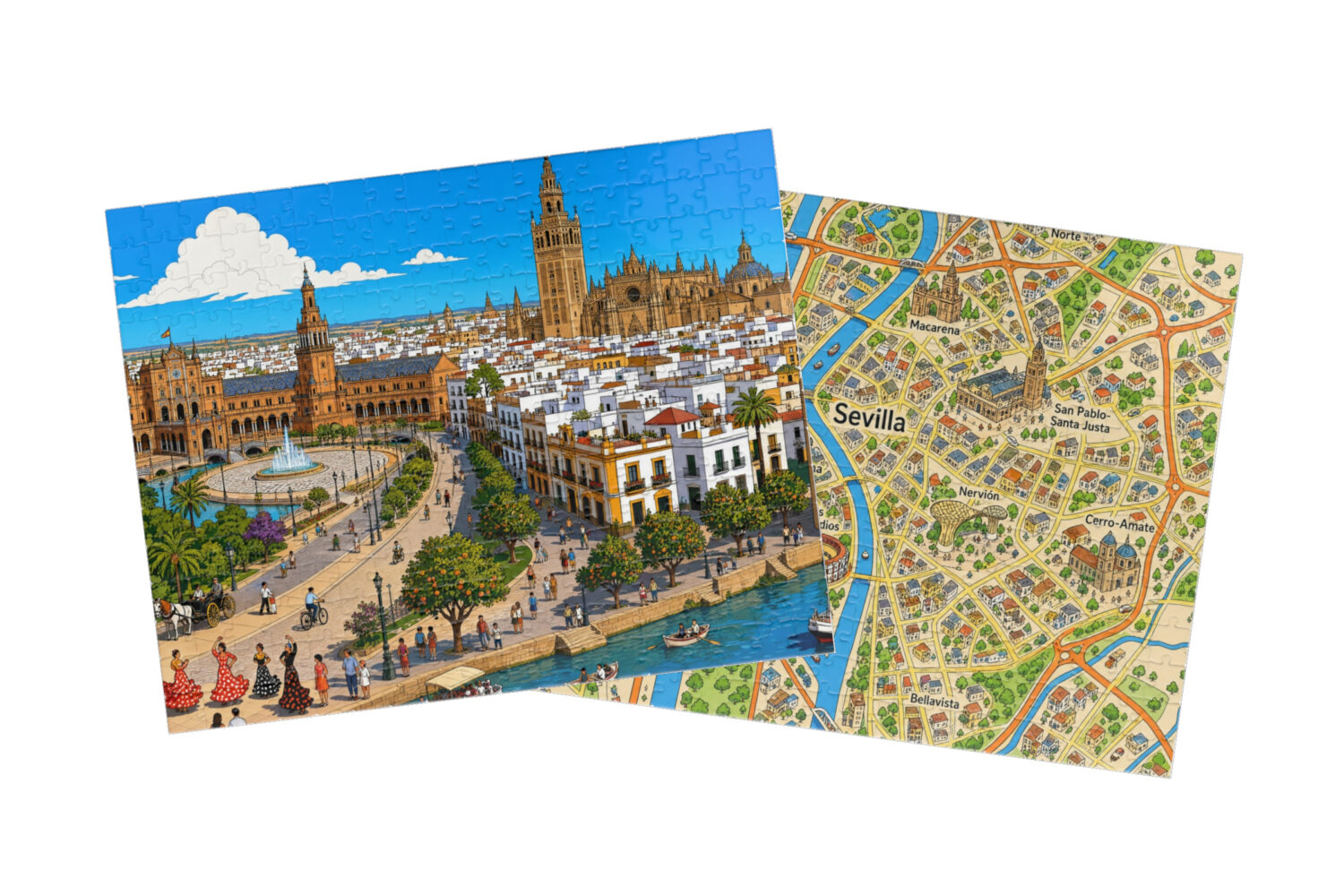
Get the puzzle Free shipping