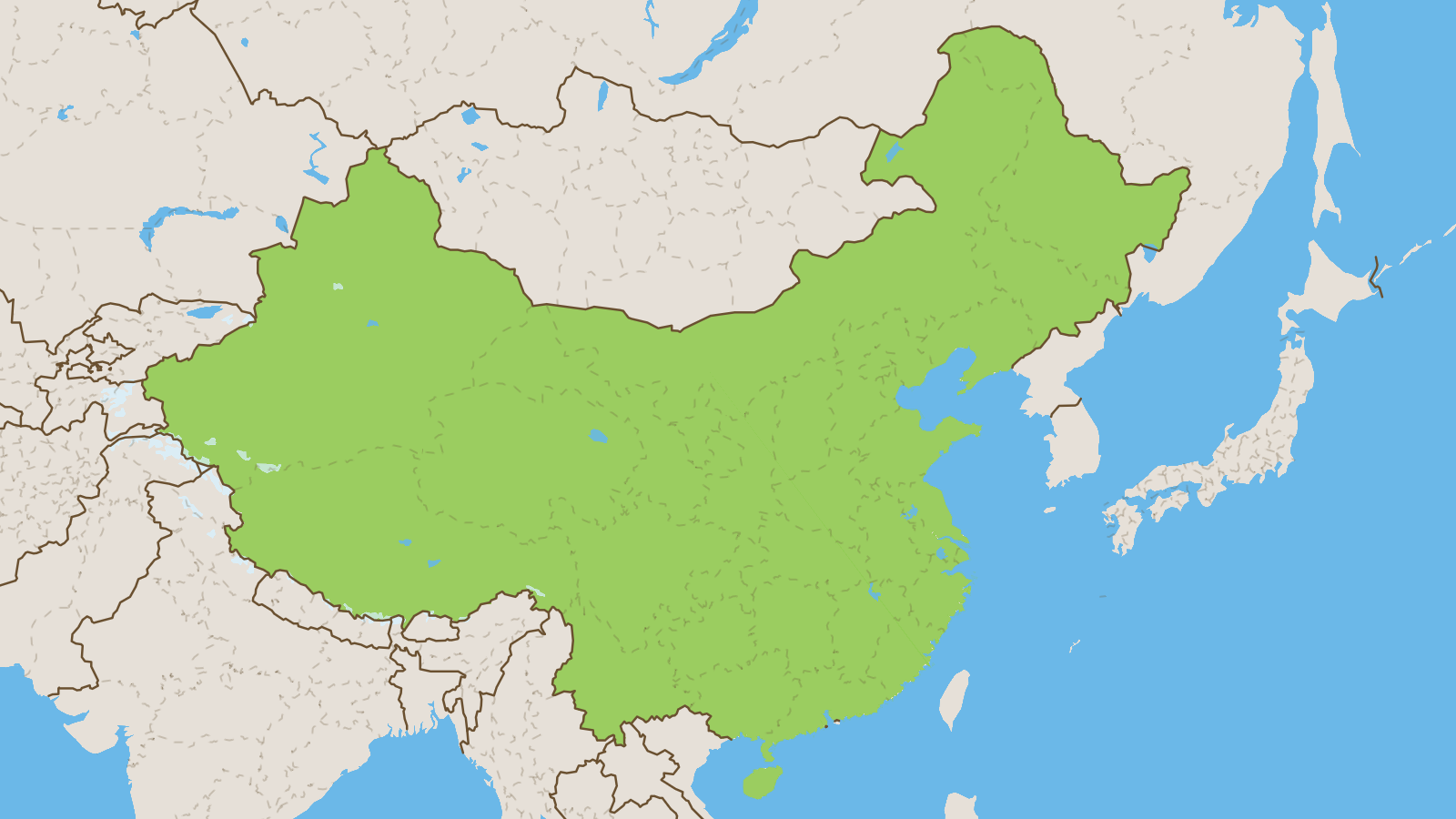
China is a vast and incredible country in Eastern Asia, stretching from frozen northern mountains all the way to tropical southern coastlines. It is the most populous nation on Earth, home to over 1.4 billion people, and one of the oldest civilizations in the world. With thousands of years of history behind it, China has a rich culture full of fascinating traditions, stunning art, and remarkable inventions. Paper, printing, and fireworks were all invented here, and the country continues to be one of the most important and influential places on the planet.
China is famous for the Great Wall, a breathtaking structure that winds across mountains and valleys for thousands of kilometres. Giant pandas, found in the bamboo forests of Sichuan, are beloved symbols of the country. From the buzzing modern cities of Beijing and Shanghai to peaceful ancient temples, China blends the old and new in a way that feels truly magical.
Landmarks
-
1
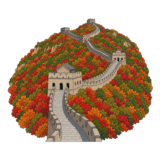
Great Wall of China at Mutianyu
The Great Wall of China is one of the greatest engineering achievements in human history, stretching thousands of miles across northern China to protect ancient Chinese empires from invasion. The Mutianyu section is one of the best-preserved and most scenic stretches, winding dramatically over forested hills. It was built and rebuilt over many centuries, with much of what visitors see today dating from the Ming Dynasty (1368–1644).
-
2

Terracotta Army Xi'an
The Terracotta Army is a collection of thousands of life-sized clay soldier statues buried with China's first emperor, Qin Shi Huang, over 2,000 years ago to protect him in the afterlife. Discovered by farmers in 1974, it is considered one of the greatest archaeological finds of the 20th century. Remarkably, each soldier has a unique face, hairstyle, and expression.
-
3
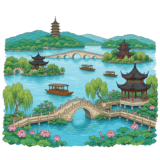
West Lake Hangzhou
West Lake is a beautiful freshwater lake on the edge of Hangzhou city, surrounded by pagodas, temples, gardens, and willow-lined causeways. It has been celebrated in Chinese art, poetry, and legend for more than a thousand years, and was added to the UNESCO World Heritage List in 2011. The lake changes mood dramatically with the seasons, from spring blossoms to winter snow.
-
4
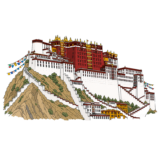
Potala Palace Lhasa
The Potala Palace is a magnificent fortress-like palace perched high on Red Hill in Lhasa, Tibet, at an altitude of about 3,700 meters above sea level. It was the traditional winter home of the Dalai Lamas and the spiritual and political heart of Tibet for centuries. The palace contains over 1,000 rooms, 10,000 shrines, and approximately 200,000 statues.
-
5

Jiuzhaigou Valley National Park
Jiuzhaigou Valley is a spectacular national park in Sichuan Province, China, famous for its chain of vivid, jewel-colored lakes connected by cascading waterfalls and ancient forests. The water gets its extraordinary turquoise, emerald, and sapphire colors from minerals dissolved in it and from the white calcite lake beds underneath. The park is also habitat for endangered giant pandas and Sichuan golden snakes.
-
6
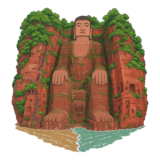
Leshan Giant Buddha
The Leshan Giant Buddha is the world's largest stone Buddha statue, carved directly into a red sandstone cliff face at the confluence of three rivers in Sichuan Province. Standing 71 meters tall — taller than the Statue of Liberty — it was built during the Tang Dynasty over 90 years, from 713 to 803 CE. Legend says the monk who started the project believed the statue would calm the dangerous river currents below.
-
7
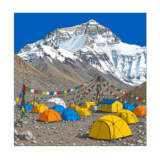
Mount Everest North Base Camp
Mount Everest North Base Camp sits at about 5,200 meters above sea level on the Tibetan Plateau, serving as the starting point for climbers tackling the world's highest mountain from the Chinese side. It is a critical hub where expeditions acclimatize before their grueling ascent toward the 8,849-meter summit. On a clear day, the view of Everest's dramatic north face looming over the camp is unforgettable.
-
8

Chengdu Giant Panda Breeding Research Base
The Chengdu Giant Panda Breeding Research Base is a conservation center dedicated to protecting and breeding one of the world's most beloved and endangered animals, the giant panda. Set across a lush, bamboo-filled landscape, visitors can watch pandas eat, play, and nap in environments carefully designed to mimic their natural habitat. The base has been hugely successful, with dozens of pandas born there, helping to increase the global panda population.
-
9
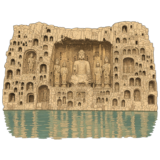
Longmen Grottoes Luoyang
The Longmen Grottoes near Luoyang is an extraordinary collection of thousands of stone carvings and Buddhist sculptures carved into limestone cliffs along the Yi River, created between the 5th and 8th centuries. The site contains over 100,000 individual Buddhist figures ranging from tiny carvings just a few centimeters tall to the colossal 17-meter-tall Vairocana Buddha. It is a UNESCO World Heritage Site and one of China's greatest treasures of ancient religious art.
-
10
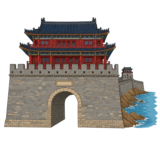
Shanhaiguan Great Wall Pass
Shanhaiguan is the famous eastern gateway of the Great Wall, where the wall meets the Bohai Sea — earning it the nickname 'First Pass Under Heaven.' Built during the Ming Dynasty, it served as a crucial military fortress guarding China's northern frontier. The massive gate tower rises above a stone arch that soldiers and merchants once passed through on their way in and out of China.
-
11

Karst Mountains Yangshuo
Near Yangshuo in Guangxi Province, hundreds of steep, cone-shaped limestone karst hills rise directly from flat rice paddies and the winding Li River. This landscape is so iconic it appears on the back of China's 20-yuan banknote. Bamboo rafts glide along the calm green river while farmers work narrow fields tucked between the dramatic hills.
-
12

Namtso Lake Tibet
Namtso Lake is one of the highest saltwater lakes in the world, sitting at about 4,718 metres above sea level on the Tibetan Plateau. Its name means 'Heavenly Lake' in Tibetan, and it is considered sacred in Tibetan Buddhism, attracting pilgrims who walk a long circuit around its shores. The lake is famous for its almost unreal deep blue and turquoise colours set against snow-capped mountain ranges.
-
13

Qinghai Lake
Qinghai Lake is the largest lake in China, a vast saline lake sitting at about 3,200 metres on the Tibetan-Qinghai Plateau. Each summer the shores burst with vivid yellow canola flower fields that contrast brilliantly with the deep blue water and snow-streaked mountains beyond. The lake is also an important habitat for migratory birds, including thousands of black-necked cranes and bar-headed geese.
-
14
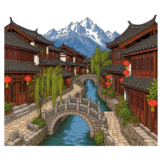
Ancient Town of Lijiang
The Ancient Town of Lijiang in Yunnan Province is a UNESCO World Heritage Site and one of China's best-preserved historic towns, with a history spanning over 800 years. The town is home to the Naxi ethnic minority people and is famous for its intricate network of cobblestone streets, wooden bridge-lined canals, and traditional Naxi courtyard houses with curved tile roofs. Water channels fed by the Yulong Snow Mountain run through every neighborhood, giving it the nickname 'Venice of the Orient.'
-
15
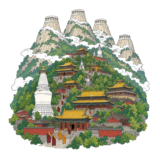
Mount Wutai Shanxi
Mount Wutai in Shanxi Province is one of China's four sacred Buddhist mountains and has been a center of Buddhist worship for nearly 2,000 years. It is home to over 50 monasteries and temples nestled among five flat-topped peaks, which is how it got its name — Wutai means 'five terraces.' The mountain is listed as a UNESCO World Heritage Site and holds some of the oldest wooden Buddhist buildings surviving in the world.
-
16
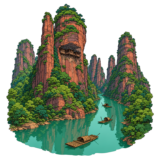
Wuyi Mountains National Park
The Wuyi Mountains in Fujian Province are a stunning landscape of dramatic red sandstone peaks rising above clear, winding rivers, earning it UNESCO World Heritage status for both its natural beauty and cultural heritage. The area is famous for its ancient Taoist and Confucian sites, as well as being the birthplace of some of China's finest teas, including Da Hong Pao oolong. A bamboo raft ride along the Nine-Bend River offers breathtaking views of towering cliffs reflected in emerald water.
-
17
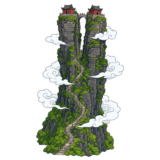
Fanjingshan National Nature Reserve
Fanjingshan, located in Guizhou Province, is a dramatically steep mountain that rises like an island above the surrounding forest and clouds, making it one of China's most visually striking sacred sites. At the very summit, two ancient Buddhist temples perch on a narrow split rock pillar, connected by a small stone bridge, seeming to float in the sky. The reserve is also home to rare wildlife including the endangered golden snub-nosed monkey.
-
18
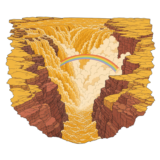
Hukou Waterfall Yellow River
The Hukou Waterfall on the Yellow River, located on the border of Shaanxi and Shanxi provinces, is the largest waterfall on China's Yellow River and the second-largest waterfall in China. The name 'Hukou' means 'mouth of a teapot' because the wide river suddenly funnels into a narrow gorge and plunges down in a thunderous, turbulent rush of orange-yellow water. The waterfall is most spectacular in summer when the river runs high and a permanent mist and rainbow hang in the air above it.
-
19
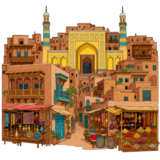
Silk Road Ancient City Kashgar
Kashgar, located in the far west of China's Xinjiang region near the borders of Central Asia, is one of the oldest and most important trading cities of the ancient Silk Road, where merchants, camels, and cultures met for over 2,000 years. The old city is a labyrinth of narrow mud-brick alleyways, flat-roofed adobe houses, bustling bazaars, and beautifully tiled mosques reflecting the city's dominant Uyghur Islamic culture. The enormous Id Kah Mosque at the city center, with its yellow facade and minaret towers, is the largest mosque in China.
-
20
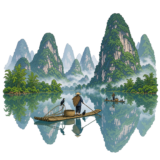
Li River Guilin
The Li River flows through one of the most breathtaking landscapes on Earth, winding between hundreds of tall, rounded limestone hills draped in green vegetation. This karst scenery — where water has slowly dissolved rock into dramatic peaks and caves — has inspired Chinese painters and poets for centuries. The scene is so iconic that a version of it appears on the Chinese 20-yuan banknote.
-
21
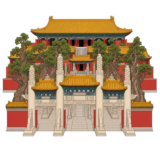
Confucius Temple Qufu
The Confucius Temple in Qufu, Shandong Province, is one of the largest and most important temple complexes in China, built to honor Confucius, the ancient philosopher whose ideas shaped Chinese culture for over 2,500 years. It spans nearly 22 hectares and contains hundreds of rooms, halls, and stone steles carved with inscriptions. The most stunning feature is the Dacheng Hall, a grand yellow-roofed pavilion supported by elaborately carved dragon stone pillars.
-
22

Yulong Snow Mountain Lijiang
Yulong Snow Mountain, also called Jade Dragon Snow Mountain, is a stunning glacier-capped mountain range that looms above the ancient city of Lijiang in Yunnan Province. Its highest peak reaches 5,596 metres and is permanently snow-covered, giving it the appearance of a silver-white dragon when seen from the valley. The mountain is sacred to the Naxi people and is the southernmost glacier in the Northern Hemisphere.
-
23
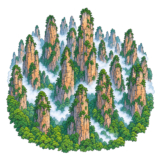
Wulingyuan Scenic Area
Wulingyuan, located in Hunan Province, is a UNESCO World Heritage Site famous for its thousands of towering sandstone and quartz pillars that rise dramatically from forested valleys. These otherworldly columns, some over 200 metres tall, are said to have inspired the floating mountains in the movie Avatar. Narrow gorges, crystal streams, and ancient cave systems wind between the pillars.
-
24
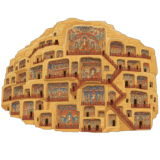
Dunhuang Mogao Caves
The Mogao Caves near Dunhuang in the Gobi Desert are a system of 492 temples carved into a sandstone cliff, filled with some of the world's most remarkable Buddhist art spanning over a thousand years. Inside the caves are spectacular murals covering more than 45,000 square meters of wall space, along with thousands of painted silk scrolls and sculptures. This remote Silk Road oasis was a crucial stopping point for merchants and pilgrims traveling between China and Central Asia.
More interesting landmarks
-
25
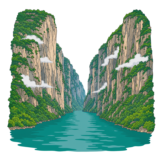
Yangtze River Three Gorges
The Three Gorges is a dramatic 200-kilometer stretch of the Yangtze River where towering limestone cliffs rise steeply on both sides, creating one of China's most breathtaking natural landscapes. This region is also home to the massive Three Gorges Dam, the world's largest hydroelectric power station. Ancient temples, hanging coffins placed by early inhabitants, and misty peaks make this area rich in both natural beauty and history.
-
26
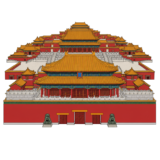
Forbidden City Beijing
The Forbidden City is a vast imperial palace complex in the heart of Beijing that served as the home of Chinese emperors for nearly 500 years. It contains almost 1,000 buildings and is the world's largest collection of preserved ancient wooden structures. Ordinary citizens were once forbidden from entering — which is how it got its dramatic name.
-
27
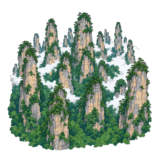
Zhangjiajie National Forest Park
Zhangjiajie National Forest Park features thousands of towering sandstone pillars that rise dramatically from the mist-covered forest floor, creating a landscape unlike anywhere else on Earth. These pillar-shaped mountains inspired the floating Hallelujah Mountains in the movie Avatar. A thrilling glass-bottomed bridge — one of the world's longest — now spans a deep canyon in the park.
-
28
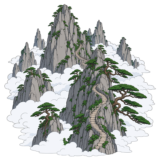
Huangshan Yellow Mountain
Huangshan, or Yellow Mountain, is a famous mountain range in Anhui Province known for its dramatic scenery of jagged granite peaks, ancient twisted pine trees, and a sea of clouds rolling between the summits. It has inspired countless works of Chinese ink painting and is considered one of China's most beautiful natural landscapes. Uniquely shaped granite rocks have poetic names like the Flying-Over Rock and the Celestial Capital Peak.
-
29
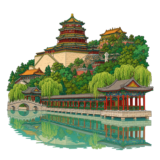
Summer Palace Beijing
The Summer Palace in Beijing is a stunning imperial garden and palace complex that served as a retreat for China's emperors, especially during the Qing Dynasty. At its heart is the vast Kunming Lake, bordered by elegant pavilions, a famous 728-meter Long Corridor painted with thousands of colorful scenes, and the iconic Marble Boat. It is one of the best-preserved royal gardens in the world and a UNESCO World Heritage Site.
-
30
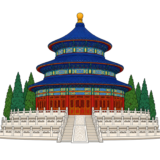
Temple of Heaven Beijing
The Temple of Heaven is a magnificent 15th-century religious complex in Beijing where Chinese emperors once held sacred ceremonies to pray for good harvests and communicate with the heavens. Its most iconic structure is the Hall of Prayer for Good Harvests, a triple-roofed circular building with deep blue glazed tiles sitting atop a white marble terrace. The building is considered a masterpiece of Chinese architecture and symbolism.
-
31
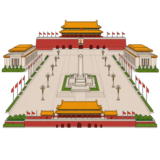
Tiananmen Square Beijing
Tiananmen Square is one of the world's largest public squares, stretching across 440,000 square meters in the heart of Beijing and serving as the symbolic center of China. It is framed by the iconic Tiananmen Gate, which bears a large portrait of Mao Zedong and leads into the Forbidden City, and is flanked by the Great Hall of the People and the National Museum of China. The square is the site of major national ceremonies and is visited by millions of people each year.
-
32

Bund Shanghai
The Bund is Shanghai's famous waterfront promenade stretching along the western bank of the Huangpu River, lined with dozens of grand colonial-era buildings from the early 20th century that once housed banks and trading houses from around the world. It is best known as the place where East meets West — on one side stand European-style neoclassical stone buildings, and across the river glitters the ultra-modern skyline of Pudong with its futuristic skyscrapers. At night, both sides light up in a spectacular display that makes the Bund one of the world's most photographed urban views.
-
33
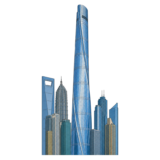
Shanghai Tower
Shanghai Tower is China's tallest building, soaring 632 meters into the sky and ranking as one of the tallest buildings on Earth. What makes it truly special is its spiraling, twisted form — the building rotates 120 degrees as it rises, dramatically reducing wind load and giving it a unique sculptural appearance. Its design incorporates nine cylindrical buildings stacked within a single outer glass skin, and it features the world's highest observation deck at 561 meters.
-
34
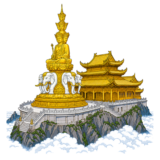
Emei Shan Summit
Emei Shan is one of China's Four Sacred Buddhist Mountains, located in Sichuan Province, and its summit reaches about 3,099 metres above sea level. The mountain is home to dozens of ancient Buddhist temples, golden pavilions, and roaming Tibetan macaque monkeys. At the very top stands the Golden Summit, a gilded ten-faced statue of the Bodhisattva Samantabhadra on the back of elephants, often shrouded in dramatic clouds.
-
35
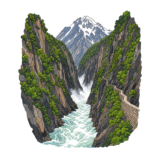
Tiger Leaping Gorge Yunnan
Tiger Leaping Gorge in Yunnan Province is one of the deepest river gorges in the world, where the powerful Jinsha River cuts between Jade Dragon Snow Mountain and Haba Snow Mountain. Legend says a tiger once leaped across the narrowest point of the gorge — only about 30 metres wide — using a midstream boulder as a stepping stone. Hikers travel a famous trail along the gorge's edge with breathtaking views of rushing white water far below.
-
36
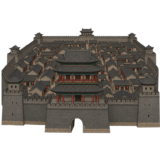
Pingyao Ancient City
Pingyao is a remarkably well-preserved walled city in Shanxi Province, founded over 2,700 years ago and a UNESCO World Heritage Site. Its city walls, about 6 kilometres in total length, are among the best-preserved ancient city walls in China, built from grey brick and punctuated with defensive towers and gates. Inside, the streets are lined with Ming and Qing Dynasty courtyard houses, old banks, and temples, offering a vivid window into merchant life in ancient China.
-
37

Reed Flute Cave Guilin
Reed Flute Cave is a spectacular natural limestone cavern near Guilin in Guangxi Province, filled with extraordinary stalactites, stalagmites, and rock formations that have been forming for hundreds of millions of years. The cave gets its name from the reeds that once grew at its entrance and were used to make musical flutes. Today, colorful artificial lighting illuminates the formations, turning the cave into a dazzling underground world of shapes that resemble animals, plants, and mythical scenes.
-
38
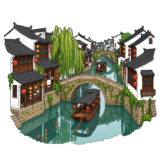
Zhouzhuang Water Town
Zhouzhuang is an ancient canal town in Jiangsu Province, often called the 'Venice of China,' where centuries-old whitewashed houses with dark curved tile roofs line a network of narrow waterways crossed by graceful stone arch bridges. Founded over 900 years ago during the Song Dynasty, it is one of China's best-preserved water towns. The famous Twin Bridges — two stone arch bridges of different sizes that share one bank — are a beloved symbol of the town.
-
39
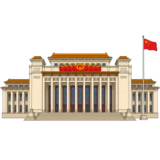
National Museum of China Beijing
The National Museum of China, located on the east side of Tiananmen Square in Beijing, is one of the largest museums in the world, housing over 1.4 million artifacts that tell the story of Chinese civilization across 5,000 years. The massive building stretches nearly 700 meters from north to south and features a grand colonnaded facade in a monumental socialist-classical style. Highlights include ancient bronzeware, jade artifacts, terracotta figures, and historical relics spanning every major Chinese dynasty.
-
40
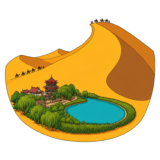
Gobi Desert Dunhuang Sand Dunes
The Singing Sand Dunes — known as Mingsha Shan — near Dunhuang in Gansu Province are a remarkable sea of golden crescent-shaped sand dunes rising up to 250 meters high at the very edge of the Gobi Desert. They get their poetic name from the humming, singing sound the sand makes when wind blows across it or when people slide down the slopes. Nestled between the towering dunes is the tiny, serene Crescent Moon Lake, a freshwater oasis that has miraculously survived surrounded by sand for thousands of years.
Puzzles