1
Terracotta Army
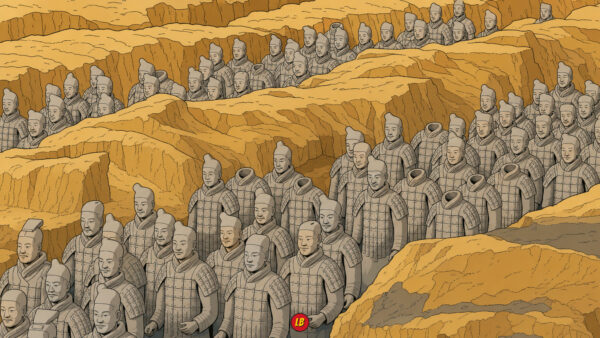
Buried with China's first emperor, this astonishing army of over 8,000 life-sized clay soldiers, horses, and chariots has stood guard underground for more than two millennia.
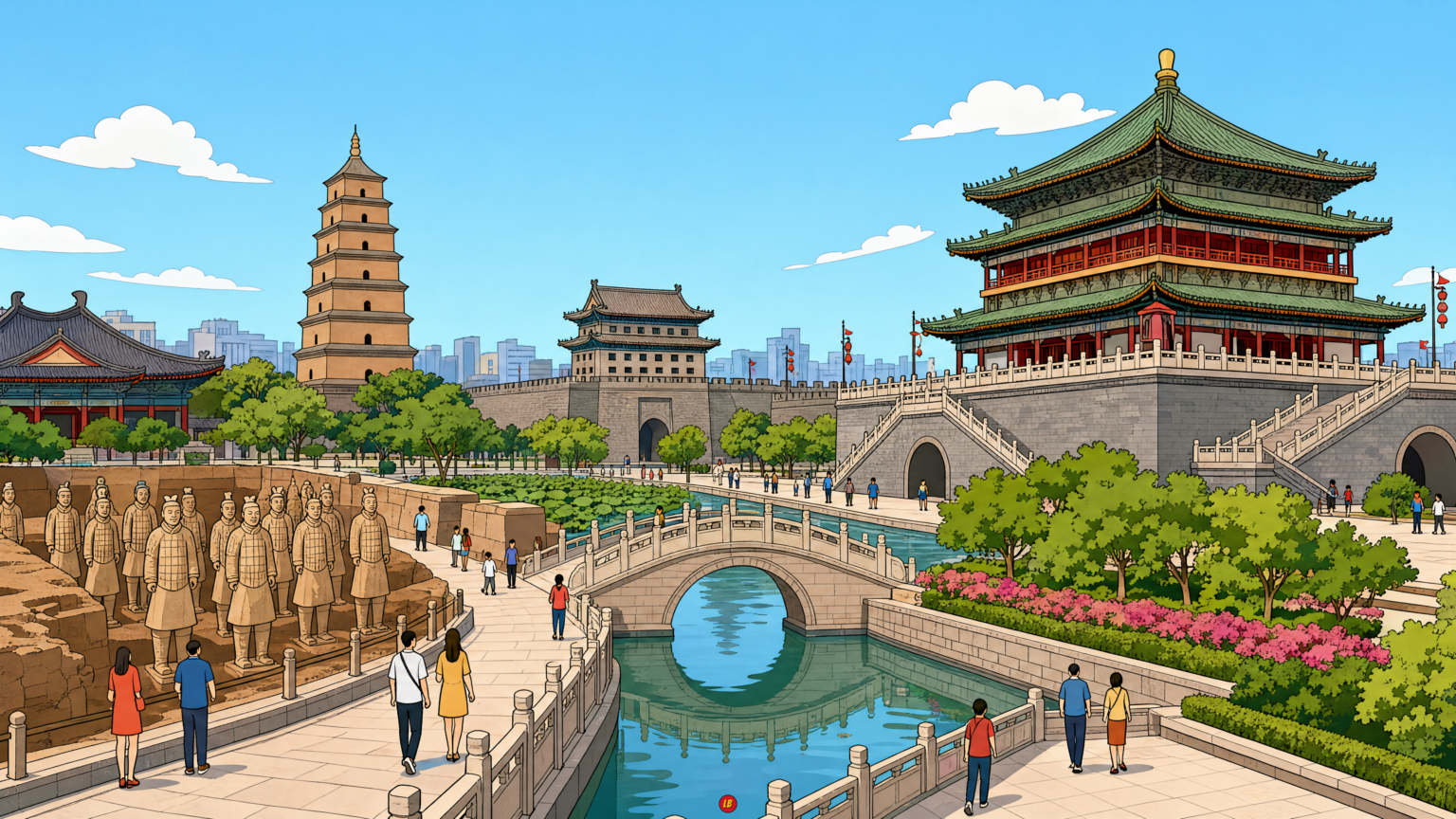
Xi’an is one of those cities that feels like it has seen everything. It served as China’s capital under more dynasties than almost any other city, and traders once set off from here on epic journeys along the Silk Road, carrying silk, spices, and ideas all the way to Europe and beyond. Today, you can still feel that incredible history everywhere you go, from cycling along the top of an ancient city wall that stretches for 14 kilometres, to wandering through the buzzing Muslim Quarter where the smells of street food and centuries of culture fill the air.
Xi’an is also home to one of the most jaw-dropping discoveries in history. Deep underground, an entire army of thousands of life-sized clay soldiers lay hidden for more than two millennia, until farmers stumbled upon them completely by accident in 1974. These warriors were buried to protect China’s very first emperor, and seeing them in person is something you will never forget.
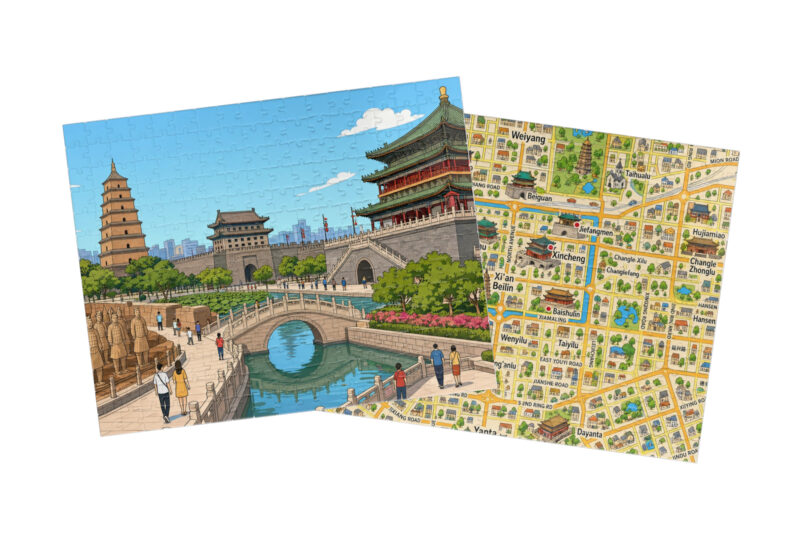
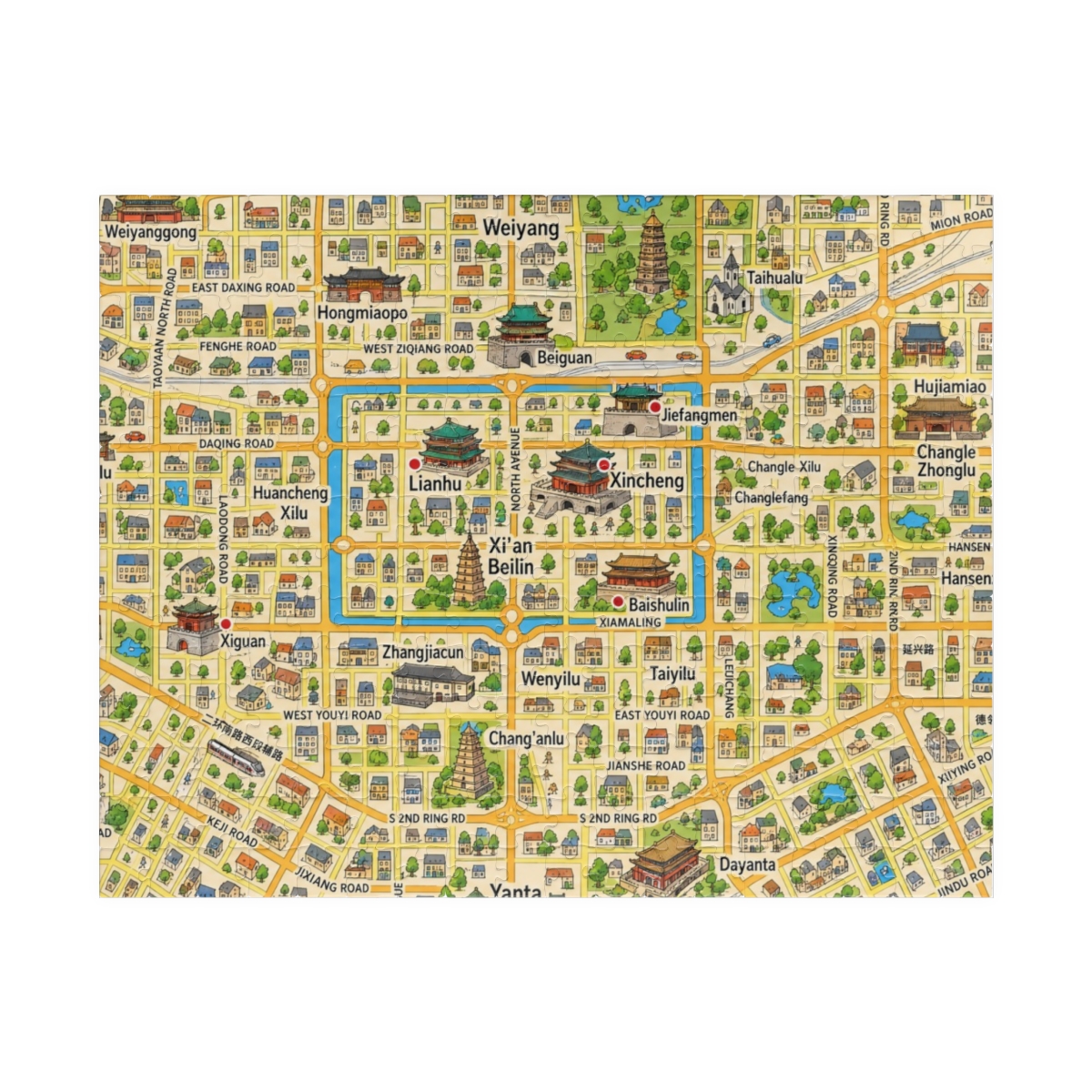
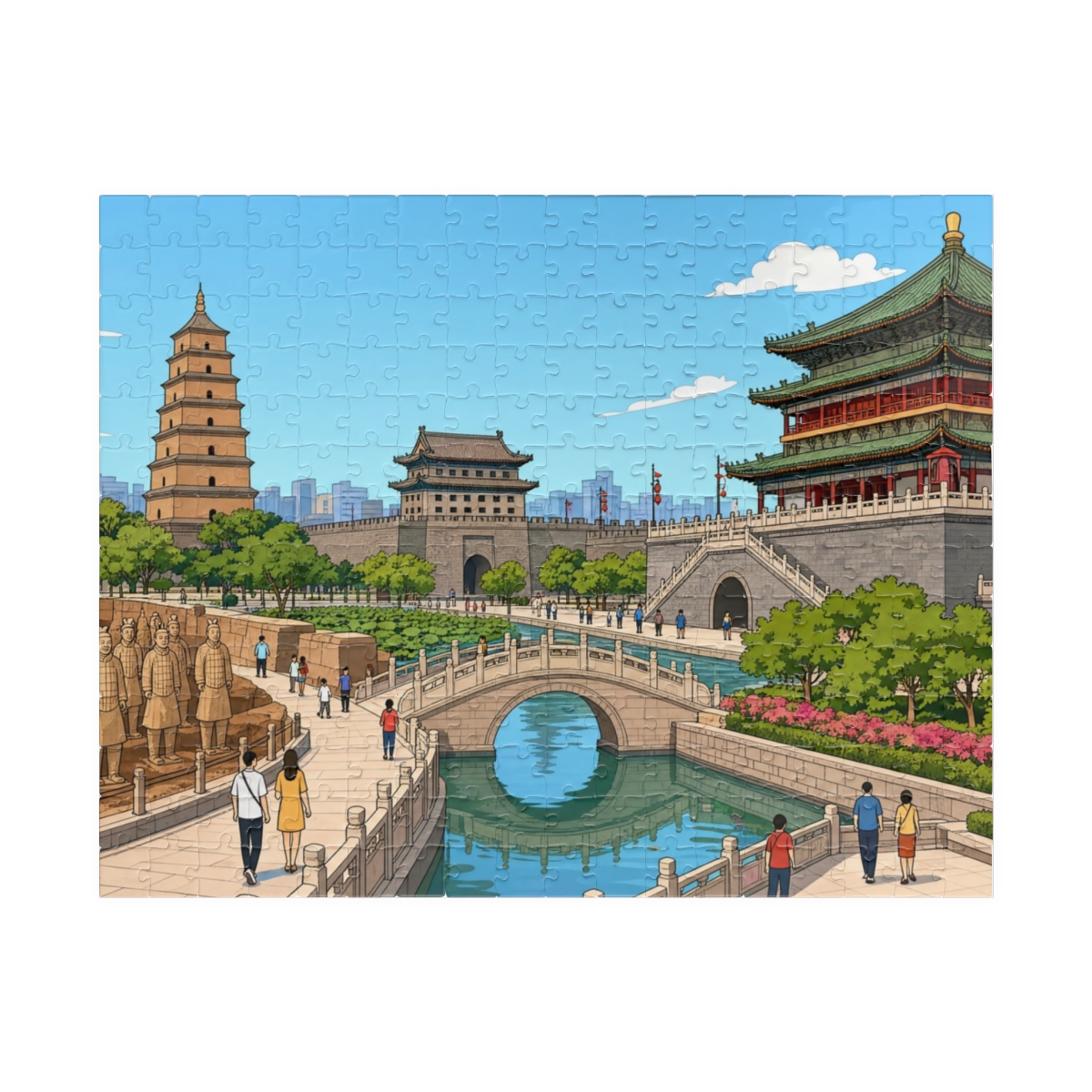
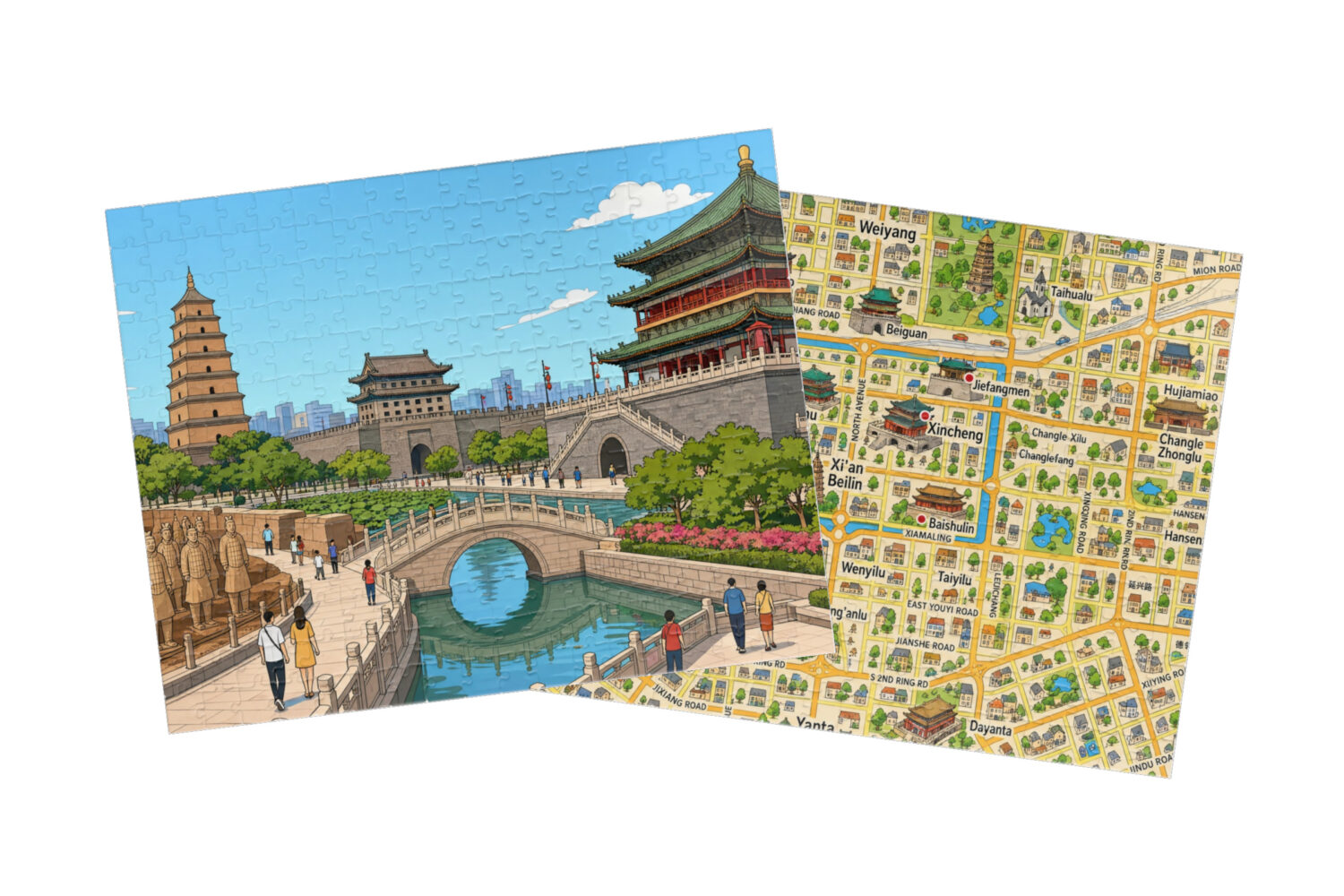
Xi'an Puzzle Set
City illustration + map puzzle, shipped to your door.
Available in 110, 252, 520 and 1,014 pcs
From $44.99
Shop puzzle setXi'an was the starting point of the ancient Silk Road and served as the capital of China under 13 dynasties, making it one of the oldest and most historically rich cities on Earth.
The Terracotta Army was completely hidden underground for over 2,000 years and was only discovered in 1974 by farmers digging a well — they had no idea they were about to uncover one of the greatest archaeological finds in history!
Buried with China's first emperor, this astonishing army of over 8,000 life-sized clay soldiers, horses, and chariots has stood guard underground for more than two millennia.
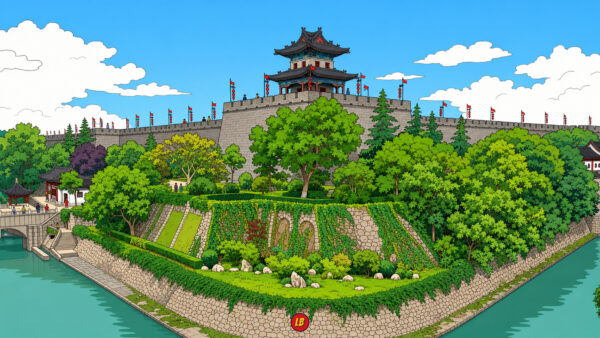
One of the oldest and best-preserved city walls in the world, you can walk or cycle the full 14-kilometre loop right along the top for a brilliant view of the city.
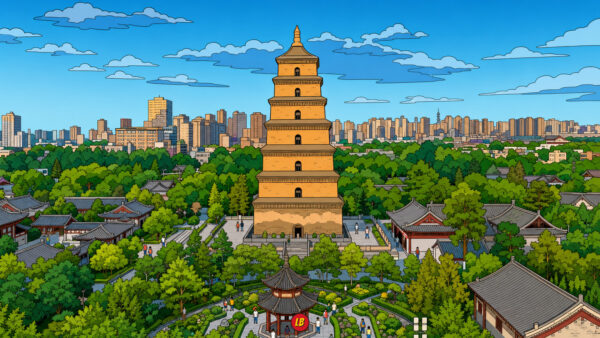
This elegant seven-storey Tang dynasty pagoda was built to store precious Buddhist scriptures brought back from India by the famous monk Xuanzang.
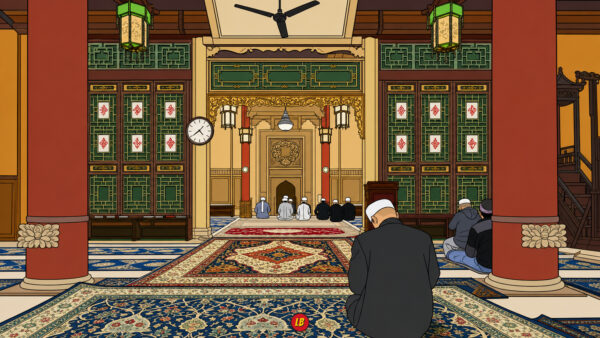
This vibrant neighbourhood near the Great Mosque is a feast for the senses, with sizzling street food, colourful lanterns, and centuries of Silk Road history in every alley.
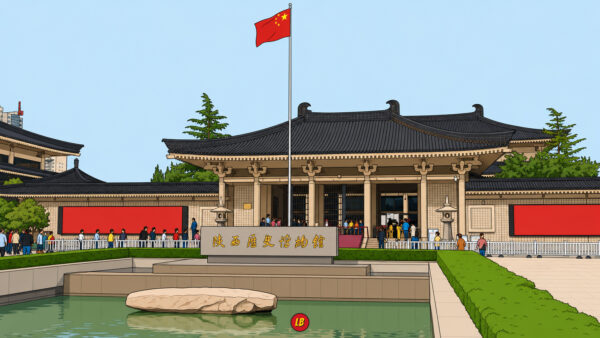
Packed with over 170,000 treasures spanning thousands of years, this free museum is like a treasure chest of Chinese civilisation from ancient times to today.
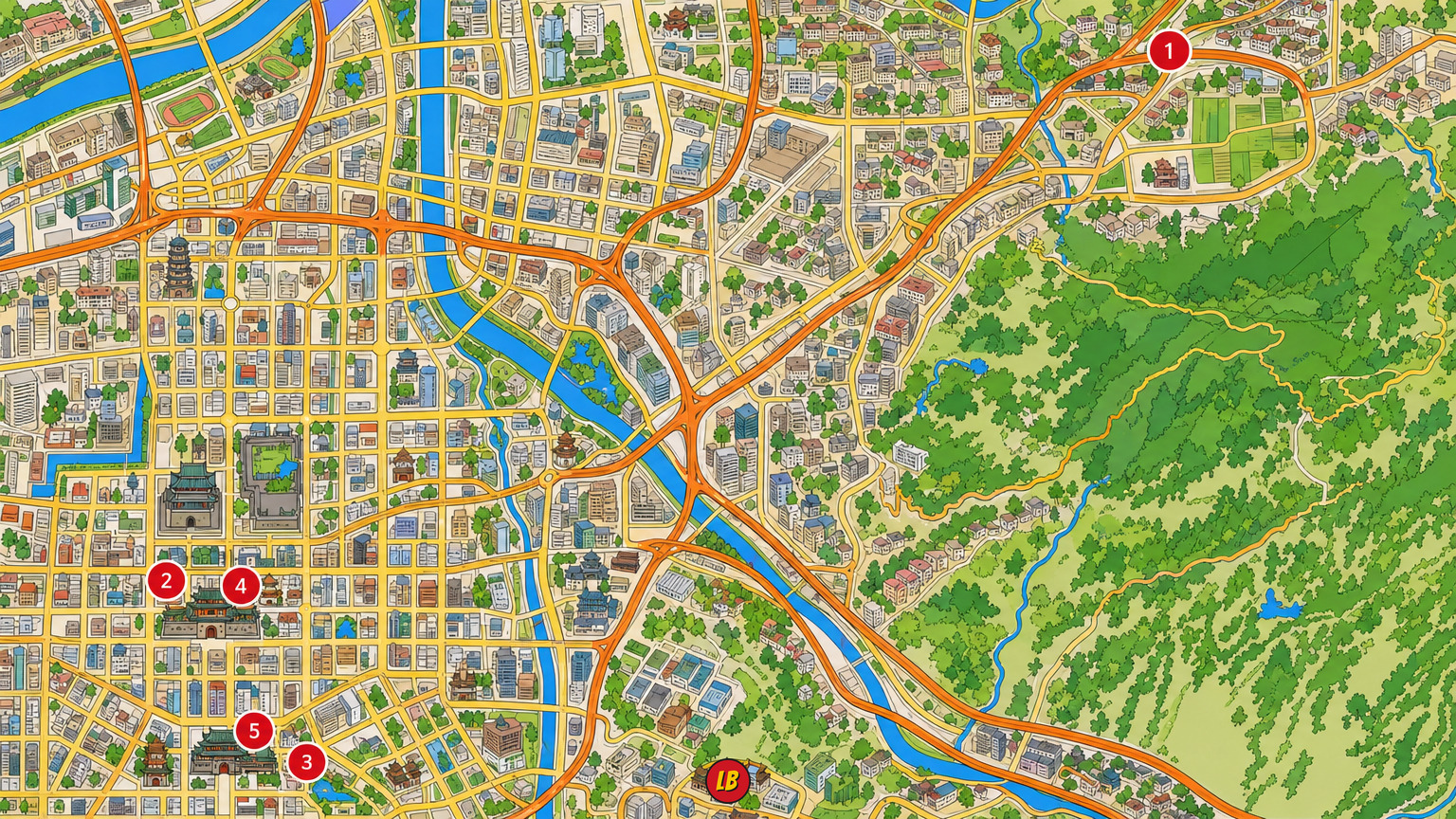
Name the landmarks of Xi'an, put each one on the map, then spot the picture that came from somewhere else. Thirteen questions, no timer and no lives.
Loading the quiz…