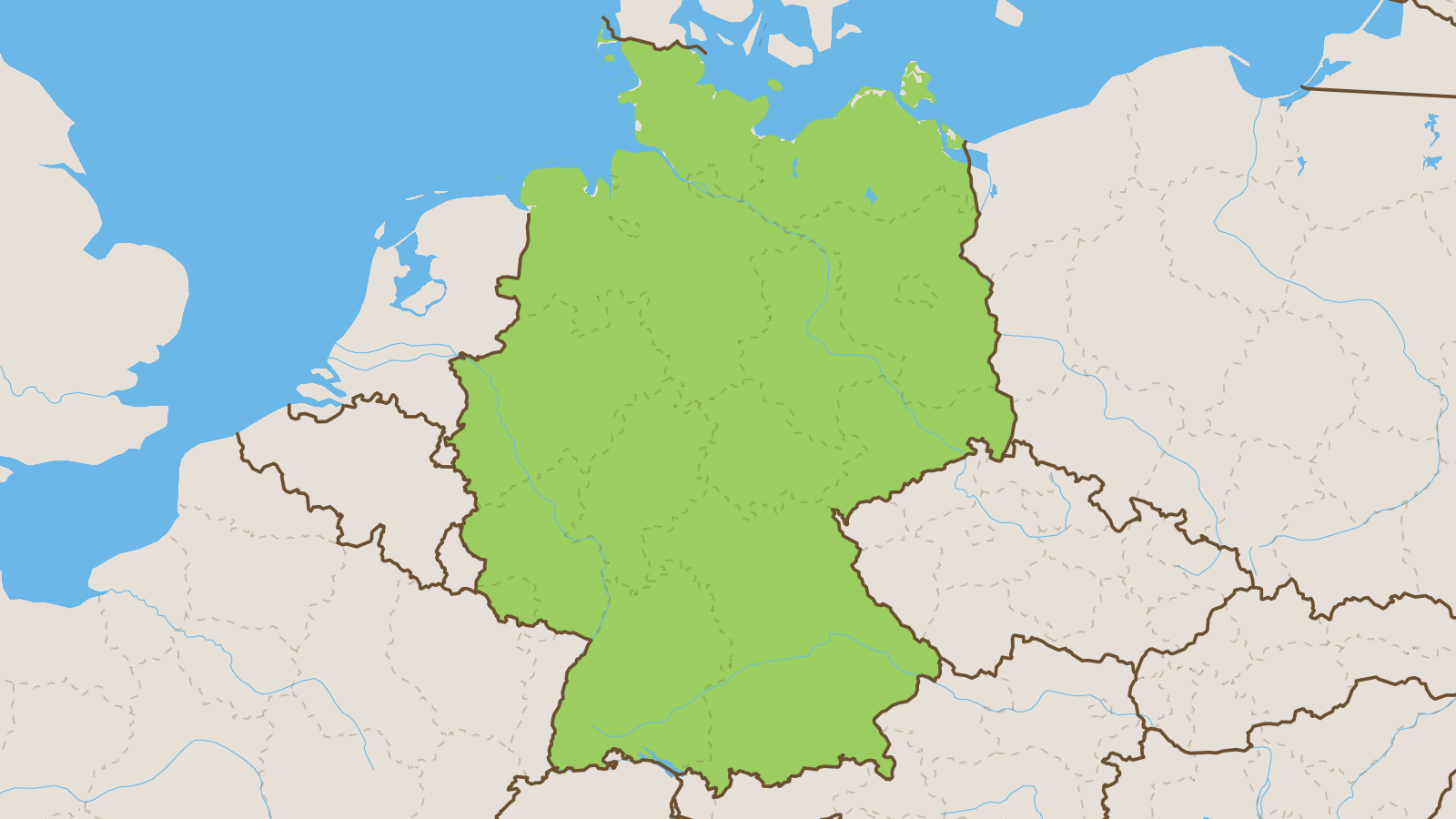
Germany sits in the heart of Europe, sharing borders with nine different countries, which makes it one of the most connected nations on the continent. It is a land of incredible variety, from the snowy peaks of the Bavarian Alps in the south to the wide, breezy plains of the north. With over 83 million people, it is one of Europe's most populated countries, and its capital Berlin is a buzzing, creative city full of history, art, and energy.
Germany is famous for its fairy-tale castles, with Neuschwanstein being one of the most photographed buildings in the entire world. It is also the birthplace of brilliant thinkers like Einstein and Bach, and it gave the world the printing press, the car, and some seriously delicious bread. Germans take great pride in their traditions, their festivals like Oktoberfest, and their reputation for building things that really work.
Landmarks
-
1
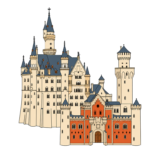
Neuschwanstein Castle
Neuschwanstein Castle is a fairy-tale-like 19th-century palace perched dramatically on a rocky hilltop in the Bavarian Alps. Built for King Ludwig II of Bavaria, it inspired the design of Sleeping Beauty's castle at Disneyland. Its white limestone towers and turrets rise above a backdrop of forested mountains and Alpine lakes.
-
2
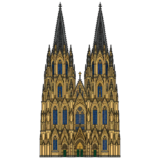
Cologne Cathedral
Cologne Cathedral is a stunning Gothic masterpiece that took over 600 years to complete, finally finished in 1880. It is the largest Gothic church in Northern Europe and is a UNESCO World Heritage Site. Its twin spires soar 157 meters into the sky, making it one of the tallest churches in the world.
-
3
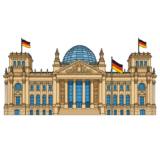
Reichstag Building Berlin
The Reichstag Building is Germany's historic parliament building, first opened in 1894 and rebuilt after significant damage in World War II. Its most striking feature is a modern glass dome added in 1999, designed by architect Norman Foster, which visitors can walk up in a spiraling ramp to enjoy panoramic views of Berlin. The dome symbolizes transparency in German democracy.
-
4
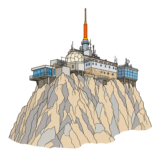
Zugspitze Summit
The Zugspitze is Germany's highest mountain, reaching 2,962 meters above sea level on the border between Germany and Austria. The summit offers breathtaking panoramic views across four countries and is home to Germany's only high-altitude glacier. A bright red cable car carries visitors up to the rocky, snow-covered peak.
-
5
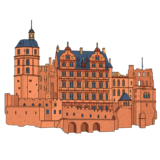
Heidelberg Castle
Heidelberg Castle is a magnificent ruined Renaissance palace overlooking the old city of Heidelberg and the Neckar River valley. Built from red sandstone, it has stood since the 13th century but was largely destroyed by French forces in the late 1600s. One of its most curious attractions is the world's largest wine barrel, the Heidelberg Tun, which holds over 221,000 liters.
-
6
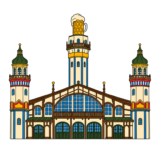
Oktoberfest Grounds Munich
The Oktoberfest Grounds, known as the Theresienwiese or Wiesn, is a large open fairground in Munich that hosts the world-famous Oktoberfest festival each autumn. During the festival, massive decorated beer tents holding thousands of people, colorful carnival rides, and food stalls fill the entire space. The festival draws millions of visitors from around the world every year.
-
7
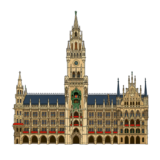
Marienplatz Munich
Marienplatz is the historic central square at the heart of Munich's old town, dating back to 1158 when the city was founded. The square is famous for the towering Neo-Gothic New Town Hall with its world-renowned Glockenspiel, a carillon with 43 bells and 32 life-sized figures that perform twice daily. A golden column topped by a statue of the Virgin Mary stands at the center of the square.
-
8
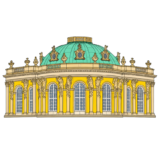
Sanssouci Palace Potsdam
Sanssouci Palace is an elegant 18th-century Rococo summer palace built for Frederick the Great of Prussia in Potsdam, just outside Berlin. The name means 'without worries' in French, reflecting the king's wish for a relaxed retreat. The palace is famous for its curved yellow facade, large arched windows, and stunning terraced vineyard gardens cascading down the hillside below it.
-
9
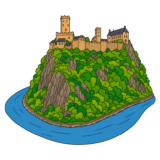
Rhine Valley Middle Rhine
The Middle Rhine Valley is a dramatic stretch of the Rhine River in western Germany, lined with steep vineyard slopes, medieval castles, and charming old towns. This UNESCO World Heritage landscape features over 40 castles and fortresses perched on rocky cliffs above the river. The Loreley rock, a famous steep slate cliff rising 132 meters above the river, is one of its most legendary landmarks.
-
10
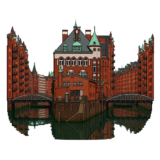
Hamburg Speicherstadt
The Speicherstadt is the world's largest historic warehouse district, sitting on a network of canals in Hamburg's port. Built in the late 1800s, its rows of tall red-brick Gothic-style buildings were used to store goods like coffee, spices, and carpets. Today it is a UNESCO World Heritage Site filled with museums, design studios, and the famous Miniatur Wunderland.
-
11

Berchtesgaden National Park
Berchtesgaden National Park is a stunning alpine wilderness in the far southeast corner of Bavaria, bordering Austria. It contains the dramatic Königssee lake, emerald-green and surrounded by near-vertical rocky cliffs, as well as the Watzmann, one of Germany's highest mountains. The park is known for its extraordinary mix of glaciers, waterfalls, alpine meadows, and crystal-clear waters.
-
12
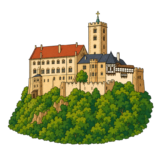
Wartburg Castle Eisenach
Wartburg Castle sits high on a forested hilltop above the town of Eisenach in the state of Thuringia, and it has been one of Germany's most important castles for nearly 1,000 years. It is the place where the reformer Martin Luther hid in 1521 and secretly translated the New Testament into German, helping shape the modern German language. A UNESCO World Heritage Site, its Romanesque great hall and tower make it a symbol of German history and culture.
-
13
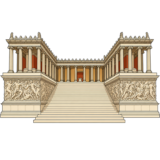
Pergamon Museum Berlin
The Pergamon Museum on Berlin's Museum Island is one of the most visited museums in Germany, housing massive ancient architectural treasures. Its most famous exhibit is the reconstructed Pergamon Altar, a colossal Greek marble monument from the 2nd century BC, along with the stunning blue-tiled Ishtar Gate from ancient Babylon. Visitors can walk through these enormous ancient structures as if stepping back thousands of years in time.
-
14

Saxon Switzerland National Park
Saxon Switzerland National Park in the state of Saxony is famous for its breathtaking landscape of towering sandstone rock formations, deep gorges, and dense pine forests along the Elbe River. The most iconic sight is the Bastei, a dramatic rocky ridge with a historic stone bridge arching between jagged spires high above the valley. The area has inspired painters and writers for centuries and still looks like something from a fantasy world.
-
15
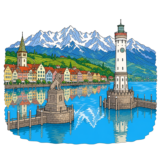
Lake Constance Bodensee
Lake Constance, known in German as the Bodensee, is a vast freshwater lake on the borders of Germany, Austria, and Switzerland, fed by the Rhine River. It is Central Europe's third-largest lake and is surrounded by charming old towns, vineyards, apple orchards, and views of the snow-capped Alps on clear days. The island town of Lindau, with its famous lighthouse and lion statue guarding the harbor, is one of its most beloved spots.
-
16
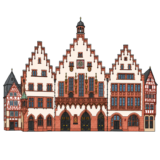
Römer Frankfurt
The Römer is Frankfurt's historic city hall and one of the oldest and most recognizable buildings in the city, dating back to the 15th century. It sits on the Römerberg square and is made up of three medieval step-gabled townhouses joined together, painted in cream and red with ornate decorative facades. For hundreds of years, Holy Roman Emperors celebrated their coronations with banquets inside this landmark building.
-
17
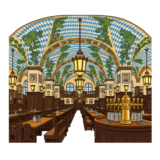
Hofbräuhaus Munich
The Hofbräuhaus is Munich's most famous beer hall, founded by the Duke of Bavaria in 1589 and still serving traditional Bavarian food and beer today. The enormous main hall can seat thousands of people, filled with long wooden benches, vaulted painted ceilings, and the sound of oompah band music. It remains one of the best-known places in Germany to experience Bavarian culture and tradition.
-
18
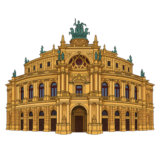
Semperoper Dresden
The Semperoper is Dresden's world-famous opera house, considered one of the most beautiful opera buildings in all of Europe. Designed by architect Gottfried Semper in the 1800s, it features a grand Italian Renaissance and Baroque exterior of warm sandstone with rounded arches and elaborate sculptural decoration. Rebuilt after being destroyed in World War II, it stands beside the Elbe River as a symbol of Dresden's cultural rebirth.
-
19
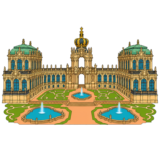
Zwinger Palace Dresden
The Zwinger is a stunning baroque palace complex in Dresden, built in the early 1700s as a royal pleasure garden and exhibition space for the Saxon court. It is famous for housing world-class art collections, including the Old Masters Picture Gallery. Its most dazzling feature is the Kronentor, a grand gateway topped with a gilded Polish crown.
-
20
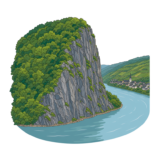
Loreley Rock Rhine
The Loreley is a dramatic slate cliff rising about 132 meters above the Rhine River near the town of Sankt Goarshausen. This narrow bend in the river was historically dangerous for sailors, inspiring the famous German legend of a siren whose song lured boatmen to their doom. The spot is now one of the most visited viewpoints along the UNESCO-listed Rhine Valley.
-
21
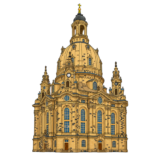
Frauenkirche Dresden
The Frauenkirche, or Church of Our Lady, is a magnificent Lutheran church in the heart of Dresden, famous for its enormous stone dome that dominates the city skyline. Destroyed in the Allied bombing of 1945, it was painstakingly rebuilt using original stones and reopened in 2005 as a symbol of reconciliation and peace. Its dome is sometimes called the Stone Bell because of its distinctive rounded shape.
-
22
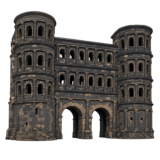
Porta Nigra Trier
The Porta Nigra, meaning Black Gate in Latin, is a massive Roman city gate built around 180 AD in Trier, Germany's oldest city. It is the largest and best-preserved Roman gate north of the Alps, and a UNESCO World Heritage Site. Its dark color comes from centuries of grime and oxidation on the gray sandstone blocks, which are held together without mortar using iron clamps.
-
23
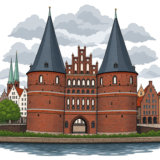
Holstentor Lübeck
The Holstentor is a late-Gothic city gate built in 1478 that served as the western entrance to the wealthy merchant city of Lübeck in northern Germany. It is one of the most iconic medieval landmarks in the country and appears on the old German 500 Deutsche Mark banknote. The gate's two massive round brick towers lean visibly toward each other because they were built on soft ground.
-
24
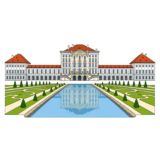
Nymphenburg Palace Munich
Nymphenburg Palace is a grand royal summer residence on the western edge of Munich, originally built in 1664 as a gift to celebrate the birth of the Bavarian crown prince. The palace is famous for its immensely long white facade and the beautiful formal gardens and canals stretching out behind it. Ludwig II, builder of Neuschwanstein Castle, was born here.
More interesting landmarks
-
25
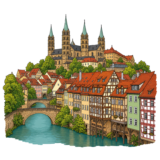
Bamberg Old Town
Bamberg's Old Town is a beautifully preserved medieval city center in Bavaria, built across seven hills on the Regnitz River and recognized as a UNESCO World Heritage Site since 1993. The city is famous for its Little Venice district, where colorful fishermen's houses line the river on stilts, and for its unique smoked beer called Rauchbier. Its historic cathedral contains the only papal tomb north of the Alps.
-
26
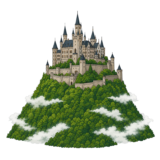
Schloss Hohenzollern
Schloss Hohenzollern is a dramatic hilltop castle that crowns an isolated conical hill in the Swabian Alps of Baden-Württemberg, looking like the ultimate storybook fortress. It is the ancestral home of the Hohenzollern dynasty, which produced the kings of Prussia and the German emperors, and the current castle is actually the third built on this site, completed in 1867. Its silhouette of towers, turrets, and battlements rising above the clouds is one of the most iconic images in all of Germany.
-
27
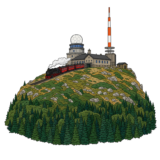
Harz National Park Brocken Summit
The Brocken is the highest peak in the Harz Mountains of central Germany, rising to 1,141 meters, and it is famous for its wild, frequently cloud-shrouded summit that has inspired legends of witches and sorcery for centuries. A historic narrow-gauge steam railway, the Brockenbahn, still chugs up through dense spruce forests to the rocky, windswept top. On clear days the view stretches across much of northern Germany, but the Brocken is more often wrapped in mysterious mist.
-
28

Rügen Chalk Cliffs Jasmund National Park
The chalk cliffs of Rügen on Germany's Baltic Sea coast soar up to 118 meters high and glow a brilliant white against the deep blue of the sea and the dark green of the beech forests on top. Located within Jasmund National Park — Germany's smallest national park — these cliffs were made world-famous by the Romantic painter Caspar David Friedrich in the early 1800s. The most iconic viewpoint, called the Königsstuhl or 'King's Chair,' offers a breathtaking panorama over the Baltic.
-
29
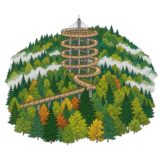
Bavarian Forest National Park
The Bavarian Forest National Park, established in 1970, was Germany's very first national park and stretches along the border with the Czech Republic. It is home to dense ancient forests of spruce, fir, and beech trees, along with wolves, lynx, and rare bird species. The park is famous for its untouched wilderness, misty valleys, and the treetop walkway that lets visitors stroll above the forest canopy.
-
30
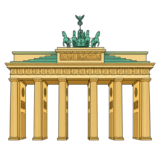
Brandenburg Gate Berlin
The Brandenburg Gate is an 18th-century neoclassical triumphal arch standing at the heart of Berlin. It is one of Germany's most iconic symbols, representing both the division and reunification of the country after the Cold War. Twelve massive Doric columns support the gate, topped by a famous copper Quadriga sculpture of a chariot pulled by four horses.
-
31
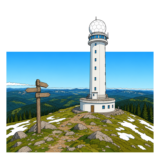
Black Forest Feldberg Summit
At 1,493 meters, the Feldberg is the highest peak in the Black Forest and in all of Germany outside the Alps. The summit offers sweeping views over the forested hills, and on clear days you can even see the Alps and France across the Rhine. A distinctive round weather-monitoring tower sits at the very top, making it easy to spot.
-
32
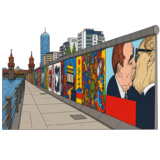
East Side Gallery Berlin
The East Side Gallery is the longest remaining section of the Berlin Wall, stretching about 1.3 kilometers along the Spree River in central Berlin. After German reunification in 1990, more than 100 artists from around the world painted colorful murals directly onto the concrete wall, turning it into an open-air gallery celebrating freedom. The most famous image is the painting of two leaders kissing, called the Fraternal Kiss.
-
33
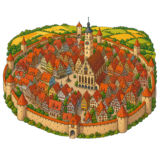
Rothenburg ob der Tauber
Rothenburg ob der Tauber is a remarkably well-preserved medieval walled town in Bavaria, often described as the most perfectly intact medieval city in Germany. Its complete ring of ancient stone walls with walkable ramparts and towers still surrounds the old town center, which is filled with half-timbered buildings and cobblestone streets. Every December it transforms into one of Germany's most famous Christmas markets.
-
34
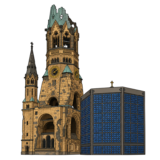
Kaiser Wilhelm Memorial Church Berlin
The Kaiser Wilhelm Memorial Church in Berlin is a bombed-out church tower that was deliberately left in ruins as a powerful reminder of the destruction of World War II. Built in the 1890s and heavily damaged during Allied bombing in 1943, it now stands alongside a modern octagonal chapel completed in 1963. The jagged, blackened spire rising next to the glowing blue honeycomb-glass modern chapel makes it one of the most striking and thought-provoking sights in Berlin.
-
35
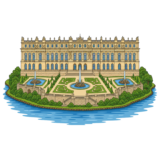
Herrenchiemsee Palace
Herrenchiemsee Palace is a stunning royal palace built by King Ludwig II of Bavaria on a peaceful island in Lake Chiemsee, inspired by the famous Palace of Versailles in France. Construction began in 1878 but was never fully finished, yet the completed rooms — especially the dazzling Hall of Mirrors — are among the most lavish in all of Germany. Visitors reach this island palace by boat, making the arrival feel truly magical.
-
36
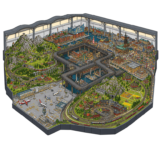
Miniatur Wunderland Hamburg
Miniatur Wunderland in Hamburg is the world's largest model railway exhibition, packed with incredibly detailed miniature scenes of cities, airports, mountains, and coastlines from all over the world. Thousands of tiny trains, cars, ships, and even miniature aircraft run through meticulously crafted landscapes spanning entire warehouses in the historic Speicherstadt district. Day turns to night every few minutes as the lights dim across the whole layout, delighting visitors of every age.
-
37
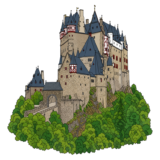
Eltz Castle Moselle
Eltz Castle is a breathtaking medieval castle nestled deep in a forested valley above the Moselle River, looking like it stepped straight out of a fairy tale. What makes it especially remarkable is that it has been owned by the same family — the Eltz family — for over 850 years and was never destroyed in war. The castle's many towers and half-timbered upper stories seem to grow organically from the rocky outcrop beneath them.
-
38
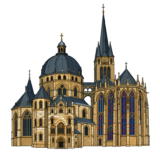
Aachen Cathedral
Aachen Cathedral is one of the oldest and most important churches in all of Europe, built over 1,200 years ago on the orders of the great emperor Charlemagne, who is also buried here. It was the first site in Germany to be named a UNESCO World Heritage Site, recognized in 1978, and its octagonal core is one of the finest examples of Carolingian architecture in the world. Inside, breathtaking golden mosaics shimmer beneath soaring Gothic windows added in the 14th century.
-
39
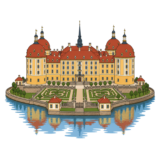
Moritzburg Castle
Moritzburg Castle is a magnificent baroque hunting palace that seems to float on a large artificial lake in the forests near Dresden, Saxony. Built for the flamboyant Elector August the Strong and completed in its current form around 1733, the palace is famous for its four round towers reflected perfectly in the surrounding water. It is also beloved by German children as the filming location for the classic fairy tale movie 'Three Wishes for Cinderella.'
-
40
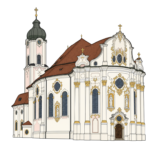
Wieskirche Steingaden
The Wieskirche, or 'Church in the Meadow,' is a small but extraordinarily ornate pilgrimage church tucked into a quiet alpine meadow in Bavaria, and it is a UNESCO World Heritage Site. Built between 1745 and 1754, its plain white exterior gives no hint of the explosion of Rococo art inside — gilded stucco, vibrant ceiling frescoes, and swirling pastel decorations cover every surface. Pilgrims have been visiting for centuries to see a revered statue of the Scourged Christ kept inside.
Ten Largest Cities
Puzzles