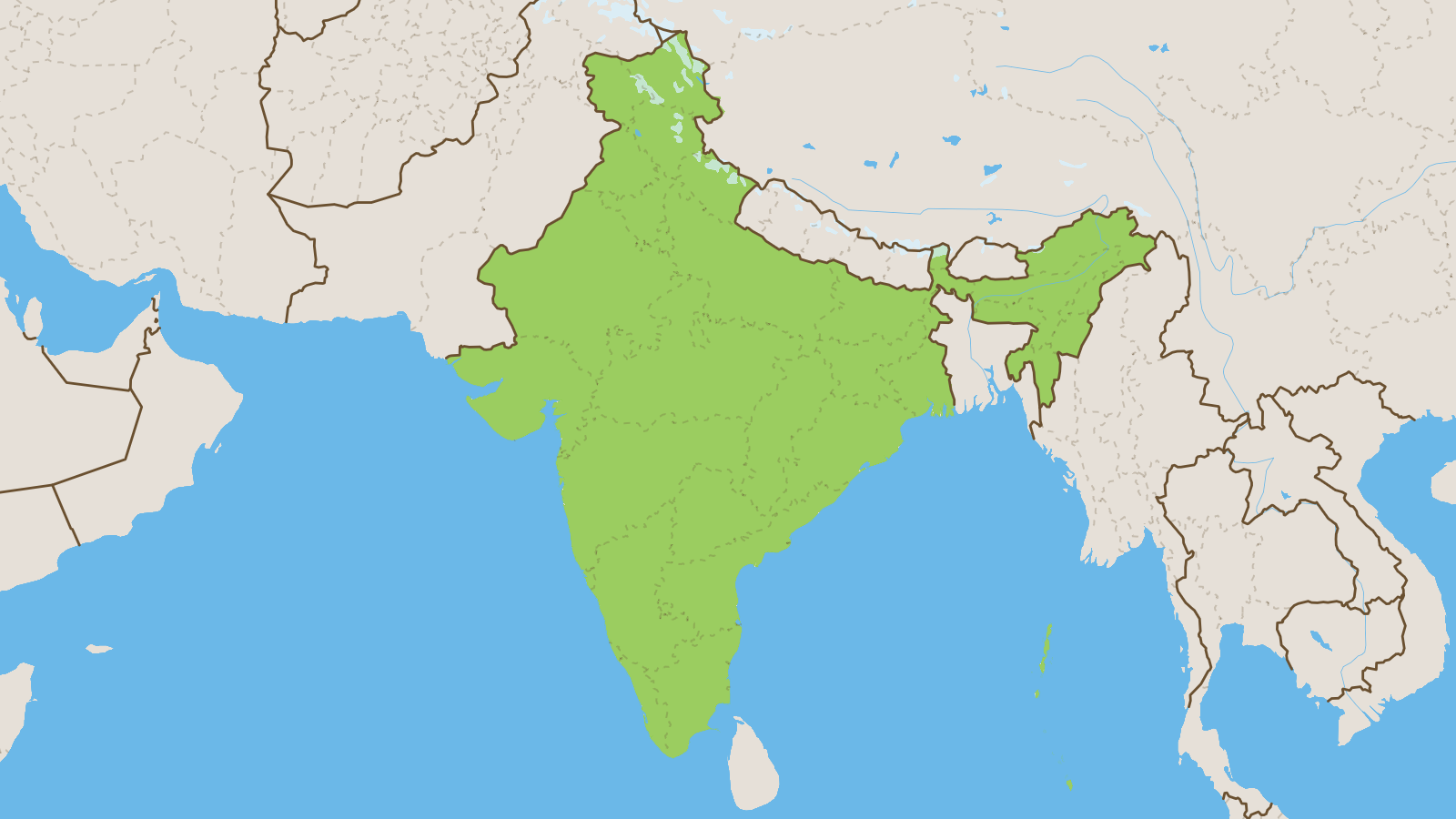
India is a vast and incredible country in Southern Asia, home to nearly 1.5 billion people, making it the most populous nation on Earth. It stretches from the snowy peaks of the Himalayas in the north all the way down to warm tropical beaches in the south. With so many landscapes packed into one country, India feels like several worlds existing side by side. Its capital, New Delhi, is a busy, buzzing city full of history and energy.
What truly makes India special is its amazing mix of cultures, languages, and traditions. People across the country speak hundreds of different languages, including Hindi, Tamil, and English. India is famous for its colorful festivals like Diwali, the dazzling festival of lights, and for its delicious spiced foods enjoyed around the world. Ancient temples, magnificent wildlife, and a history stretching back thousands of years make India one of the most fascinating places on the planet.
Landmarks
-
1
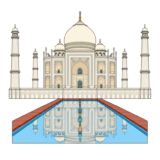
Taj Mahal Agra
The Taj Mahal is a stunning white marble mausoleum built by Mughal Emperor Shah Jahan in memory of his beloved wife Mumtaz Mahal, completed around 1653. It is considered one of the greatest examples of Mughal architecture and is a UNESCO World Heritage Site visited by millions every year. Its perfectly symmetrical design and the way it glows pink at sunrise and golden at sunset make it truly unforgettable.
-
2
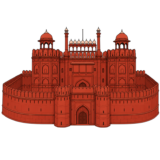
Red Fort Delhi
The Red Fort is a massive 17th-century fortress in the heart of Delhi, built by Mughal Emperor Shah Jahan when he moved his capital there. Its towering red sandstone walls stretch for over two kilometers and enclose beautiful palaces, gardens, and halls. Every year on India's Independence Day, the Prime Minister hoists the national flag from its iconic Lahori Gate.
-
3
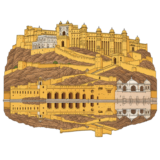
Amber Fort Jaipur
Amber Fort is a magnificent hilltop fortress near Jaipur, built mostly in the 16th and 17th centuries by the Rajput rulers. It blends Rajput and Mughal architectural styles, featuring ornate palaces, mirrored halls, and a series of defensive walls snaking across the rocky hills. Visitors can ride elephants up the winding cobblestone path to the main gate, making for an unforgettable entrance.
-
4

Gateway of India Mumbai
The Gateway of India is a grand archway standing on the waterfront of Mumbai Harbor, built in 1924 to commemorate the visit of King George V and Queen Mary to India. It combines Indo-Saracenic and Islamic architectural styles and has become the most iconic symbol of Mumbai. Ferries to the famous Elephanta Caves depart from right beside it, and it is a beloved gathering spot for locals and tourists alike.
-
5
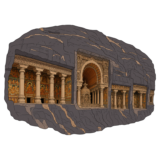
Ajanta Caves
The Ajanta Caves are a group of 30 rock-cut Buddhist cave monuments carved into a horseshoe-shaped cliff face in Maharashtra, dating from the 2nd century BCE to about 480 CE. They are world-famous for their extraordinary ancient paintings and sculptures depicting the life of the Buddha and scenes from Buddhist stories. The vivid colors of the murals have survived for over 1,500 years, giving us a rare window into ancient Indian art.
-
6
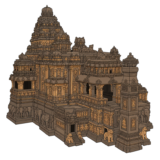
Ellora Caves
The Ellora Caves are a spectacular series of 34 monasteries and temples carved directly into a basalt cliff in Maharashtra, representing Hindu, Buddhist, and Jain faiths side by side. The most jaw-dropping structure is the Kailasa Temple, a massive freestanding temple carved top-down out of a single rock, making it one of the largest monolithic structures in the world. This UNESCO World Heritage Site took centuries to complete and stands as one of humanity's greatest engineering achievements.
-
7
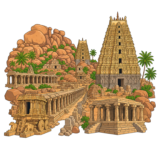
Hampi Ruins
Hampi is a UNESCO World Heritage Site in Karnataka containing the magnificent ruins of Vijayanagara, once one of the richest and largest cities in the world during the 14th to 16th centuries. Spread across a surreal landscape of giant rounded boulders and banana plantations, the ruins include grand temples, royal enclosures, market streets, and elephant stables. The massive Virupaksha Temple with its towering gopuram gateway still stands active and is the heart of this ancient city.
-
8
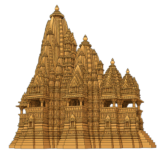
Khajuraho Temples
The Khajuraho Temples are a group of medieval Hindu and Jain temples in Madhya Pradesh, built between 950 and 1050 CE by the Chandela dynasty. They are famous worldwide for their intricate stone sculptures covering the outer walls, which depict a dazzling variety of figures including gods, celestial beings, and scenes of daily life. The temples rise in a series of curving towers called shikharas that cluster together like a mountain range, making the skyline instantly recognizable.
-
9
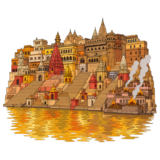
Varanasi Ghats
The Varanasi Ghats are a long series of stone staircases leading down to the sacred Ganges River in one of the world's oldest continuously inhabited cities. They are deeply significant to Hindus, who come here to bathe, pray, and perform religious ceremonies. At dawn, the ghats come alive with thousands of pilgrims, oil lamps, and the sound of temple bells.
-
10
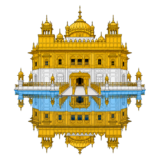
Golden Temple Amritsar
The Golden Temple, also called Harmandir Sahib, is the holiest shrine in the Sikh religion, located in Amritsar in the state of Punjab. Its lower half is clad in white marble and its upper half is covered in gleaming real gold, making it instantly recognizable. It sits in the middle of a large sacred pool called the Amrit Sarovar, connected to the shore by a long marble causeway.
-
11
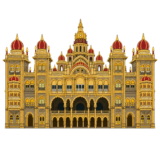
Mysore Palace
Mysore Palace is a magnificent royal palace in the city of Mysore in Karnataka, and one of the largest palaces in India. It was built in the early 1900s and blends Hindu, Muslim, Rajput, and Gothic architectural styles into a spectacular design. On Sunday nights and during the Dasara festival, the palace is lit up with nearly 100,000 light bulbs, creating a dazzling display.
-
12
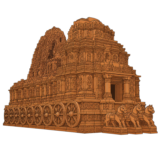
Konark Sun Temple
The Konark Sun Temple is an ancient Hindu temple built in the 13th century on the coast of Odisha, designed to look like a giant stone chariot carrying the sun god Surya across the sky. It features 24 enormous intricately carved stone wheels and seven stone horses pulling the chariot, all carved from dark khaki-colored sandstone. The temple is a UNESCO World Heritage Site and is celebrated for the extraordinary detail and artistry of its stone carvings.
-
13

Kaziranga National Park
Kaziranga National Park in Assam is home to the world's largest population of the endangered Indian one-horned rhinoceros, making it one of the most important wildlife reserves on Earth. The park stretches across the floodplains of the Brahmaputra River and is a patchwork of tall elephant grass, marshes, and forests. It is also a UNESCO World Heritage Site and shelters significant populations of elephants, tigers, and wild water buffalo.
-
14

Sundarbans National Park
The Sundarbans is the world's largest mangrove forest, stretching across the delta where the Ganges, Brahmaputra, and Meghna rivers meet the Bay of Bengal, spanning India and Bangladesh. It is the only place on Earth where tigers live in a mangrove habitat, making it home to the famous and elusive Royal Bengal tiger. The landscape is a maze of tidal rivers, muddy creeks, and dense mangrove trees whose tangled roots rise from the water.
-
15

Periyar National Park
Periyar National Park is a lush wildlife sanctuary in the Western Ghats mountains of Kerala, built around a large man-made lake called Periyar Lake. It is famous for its scenic boat safaris on the lake, where visitors can watch herds of wild Asian elephants and other animals come to the water's edge. The park is surrounded by rolling hills covered in dense tropical rainforest and fragrant spice and tea plantations.
-
16

Gir National Park
Gir National Park in Gujarat is the last wild home of the Asiatic lion, making it one of the most important wildlife sanctuaries in the world. Spread across dry deciduous forests and grasslands, it protects over 600 lions along with leopards, deer, and crocodiles. It is a true conservation success story, as the Asiatic lion was once nearly extinct.
-
17

Nanda Devi Peak
Nanda Devi is the second highest mountain in India, rising to 7,816 meters in the Garhwal Himalayas of Uttarakhand. It is considered sacred by local people and is the centerpiece of the Nanda Devi Biosphere Reserve, a UNESCO World Heritage Site. Its twin summits are surrounded by a ring of protective peaks called the Nanda Devi Sanctuary.
-
18

Kangchenjunga Base Camp Sikkim
Kangchenjunga Base Camp in Sikkim sits at the foot of the world's third highest mountain, Kangchenjunga, which soars to 8,586 meters. The trek to base camp passes through ancient forests, Buddhist monasteries, and remote alpine meadows. The mountain is considered sacred by the people of Sikkim and is officially left unclimbed to its very summit out of respect.
-
19

Rohtang Pass
Rohtang Pass is a high mountain pass in Himachal Pradesh sitting at about 3,978 meters in the Pir Panjal range of the Himalayas. It connects the Kullu Valley to the Lahaul and Spiti valleys and is famous for its dramatic, often snow-covered landscape even in summer. The pass offers breathtaking views and is a popular destination for travelers wanting to experience Himalayan snow.
-
20

Dal Lake Srinagar
Dal Lake is a stunning lake in the heart of Srinagar, the capital of Jammu and Kashmir, often called the 'Jewel in the Crown of Kashmir.' It is famous for its colorful shikaras — traditional wooden rowboats — and the iconic houseboats where tourists can stay right on the water. Snow-capped Himalayan mountains frame the lake, making it one of India's most picturesque destinations.
-
21

Pangong Lake Ladakh
Pangong Lake is a stunning high-altitude lake in Ladakh sitting at about 4,350 meters, stretching 134 kilometers long across the India-China border. It is famous for its water that dramatically shifts through shades of blue, turquoise, and green throughout the day. The lake became globally famous after featuring in the popular Bollywood film 3 Idiots.
-
22
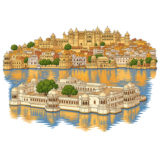
Pichola Lake Udaipur
Pichola Lake is a beautiful artificial lake in Udaipur, Rajasthan, created in 1362 CE and surrounded by palaces, temples, and the colorful city known as the City of Lakes. At its center sit two island palaces — the Jag Niwas and Jag Mandir — which appear to float magically on the water. The lake and its palaces are considered one of the most romantic and regal sights in all of India.
-
23
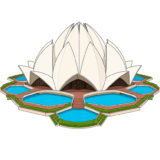
Lotus Temple Delhi
The Lotus Temple in Delhi is a stunning Bahai House of Worship completed in 1986 and shaped like a giant blooming lotus flower. Made of white marble, it has 27 free-standing petals arranged in clusters and welcomes people of all religions to pray and meditate inside. It is one of the most visited buildings in the world, attracting millions of visitors every year.
-
24

India Gate Delhi
India Gate is a towering war memorial arch standing 42 meters tall in the heart of New Delhi, built to honor the 70,000 Indian soldiers who died fighting in World War I. Designed by British architect Edwin Lutyens and completed in 1931, it resembles the Arc de Triomphe in Paris. At its base burns the Amar Jawan Jyoti, an eternal flame honoring soldiers who died in the 1971 India-Pakistan war.
More interesting landmarks
-
25
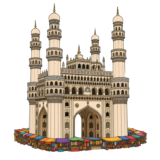
Charminar Hyderabad
The Charminar is a magnificent mosque and monument built in 1591 in Hyderabad by Muhammad Quli Qutb Shah to celebrate the end of a deadly plague. Its name means 'Four Towers' in Urdu, referring to the four grand minarets that rise 56 meters high at each corner of the square structure. It stands at the center of the old city and is surrounded by famous bazaars selling bangles, pearls, and street food.
-
26
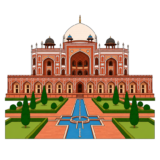
Humayun's Tomb Delhi
Humayun's Tomb in Delhi is the resting place of the Mughal Emperor Humayun, completed in 1572 and recognized as a UNESCO World Heritage Site. It was the first garden-tomb in the Indian subcontinent and directly inspired the design of the Taj Mahal. Its perfectly symmetrical layout and red sandstone and white marble construction make it one of India's most stunning monuments.
-
27
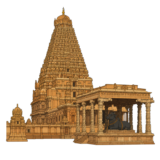
Brihadeeswara Temple Thanjavur
The Brihadeeswara Temple in Thanjavur, Tamil Nadu, is a masterpiece of Dravidian architecture built by the Chola king Raja Raja I around 1010 CE. It is dedicated to the Hindu god Shiva and is a UNESCO World Heritage Site. Its towering vimana, or shikhara, rises about 66 meters high and is one of the tallest temple towers in India.
-
28
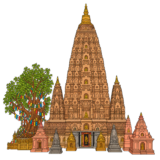
Mahabodhi Temple Bodh Gaya
The Mahabodhi Temple in Bodh Gaya, Bihar, marks the exact spot where Siddhartha Gautama attained enlightenment and became the Buddha over 2,500 years ago. The towering pyramidal spire of the temple is one of the oldest brick structures in India, and the sacred Bodhi Tree growing beside it is a direct descendant of the original tree under which the Buddha meditated. It is a UNESCO World Heritage Site and one of the most important pilgrimage destinations for Buddhists worldwide.
-
29

Sanchi Stupa
The Sanchi Stupa in Madhya Pradesh is one of the oldest stone structures in India, originally commissioned by Emperor Ashoka in the 3rd century BCE to enshrine relics of the Buddha. It is a large hemispherical dome mounted on a circular base, surrounded by an ornate stone railing and four elaborately carved gateways called toranas. The carvings on the toranas depict stories from the Buddha's life and are considered some of the finest examples of early Indian art.
-
30
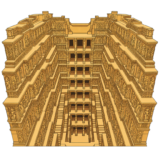
Rani ki Vav Patan
Rani ki Vav, meaning the Queen's Stepwell, is an intricately designed stepwell in Patan, Gujarat, built in the 11th century CE in memory of King Bhimdev I. It descends seven levels underground and is adorned with over 500 principal sculptures and around 1,000 minor ones depicting gods, celestial beings, and mythological scenes. A UNESCO World Heritage Site, its sheer scale and artistic detail make it one of the most extraordinary examples of subterranean architecture in the world.
-
31

Goa Beaches and Old Goa Churches
Goa, on India's western coast, is famous for its golden sandy beaches lined with swaying palm trees and its remarkable collection of 16th and 17th century Portuguese baroque churches. The Basilica of Bom Jesus in Old Goa, a UNESCO World Heritage Site, contains the preserved body of St. Francis Xavier and is one of the finest examples of baroque architecture in Asia. This blend of tropical beaches and European-style churches gives Goa a uniquely colorful and relaxed character unlike anywhere else in India.
-
32

Marine Drive Mumbai
Marine Drive is a sweeping 3.6-kilometer-long boulevard that curves along the Arabian Sea coastline in Mumbai, nicknamed the Queen's Necklace because its string of streetlights resembles a sparkling necklace when viewed from above at night. Built in the 1920s and 1930s, it is lined with beautiful Art Deco apartment buildings that form one of the largest surviving clusters of Art Deco architecture in the world. It is a beloved gathering spot for Mumbai's residents and a symbol of the city's vibrant, cosmopolitan spirit.
-
33
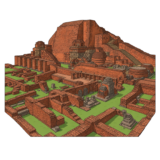
Nalanda University Ruins
The ruins of Nalanda, in Bihar, are what remain of one of the greatest centers of learning in the ancient world, a massive Buddhist university that flourished from the 5th to the 12th century CE and attracted scholars from across Asia. At its peak it housed over 10,000 students and 2,000 teachers and had a legendary library said to contain millions of manuscripts. Today, excavated red brick ruins of monasteries, lecture halls, and temples spread across a vast site, offering a fascinating window into ancient Indian scholarship.
-
34

Victoria Memorial Kolkata
The Victoria Memorial is a grand white marble building in Kolkata, built between 1906 and 1921 to honor Queen Victoria of Britain. It now serves as a museum showcasing art, weapons, and artifacts from the colonial era. The building is surrounded by beautiful gardens and features a famous bronze angel on top of its central dome.
-
35

Ranthambore National Park
Ranthambore National Park in Rajasthan is one of the best places in India to spot Bengal tigers in the wild, set against a dramatic landscape of dry deciduous forest, lakes, and rocky hills. At the heart of the park sits the ancient Ranthambore Fort, a medieval hilltop fortress that looms over the jungle below. The combination of historic ruins surrounded by roaming tigers and peacocks makes Ranthambore one of India's most unique wildlife experiences.
-
36
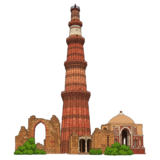
Qutb Minar Delhi
The Qutb Minar is a soaring tower in Delhi, standing about 73 meters tall, making it the tallest brick minaret in the world. Built in the early 13th century by Qutb ud-Din Aibak, it marks the beginning of Muslim rule in India and is a UNESCO World Heritage Site. The tower is covered in intricate carvings and verses from the Quran, wrapping around its five distinct tapered stories.
-
37
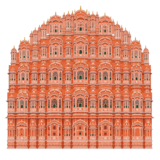
Hawa Mahal Jaipur
Hawa Mahal, meaning 'Palace of Winds,' is a remarkable five-story palace facade in the heart of Jaipur, built in 1799 for the royal ladies of the court. Its front wall is made of pink and red sandstone and is famous for its 953 small latticed windows, called jharokhas, which allowed royal women to watch street life without being seen. The honeycomb-like facade looks almost like a giant ornamental screen from the outside.
-
38
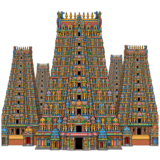
Meenakshi Amman Temple Madurai
The Meenakshi Amman Temple is a stunning ancient Hindu temple complex in the heart of Madurai, Tamil Nadu, dedicated to the goddess Meenakshi and her consort Shiva. It is famous for its 14 towering gopurams, or gateway towers, which are covered from top to bottom in thousands of brightly painted stone sculptures of gods, demons, and mythical creatures. The tallest tower rises about 52 meters high and is a landmark visible from across the city.
-
39

Jim Corbett National Park
Jim Corbett National Park, located in Uttarakhand in the foothills of the Himalayas, is India's oldest national park, established in 1936. It is best known as a sanctuary for the Bengal tiger and was the first reserve under Project Tiger, India's landmark conservation program. The park covers dense sal forests, grasslands, and the winding Ramganga River, making it one of India's most scenic wildlife destinations.
-
40
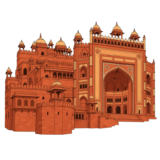
Fatehpur Sikri
Fatehpur Sikri is a deserted walled city near Agra, built in the 1570s by the Mughal Emperor Akbar as his capital. It was abandoned after only about 14 years, likely due to water scarcity, leaving its palaces, mosques, and courtyards remarkably well preserved. The site is a UNESCO World Heritage Site and blends Mughal, Hindu, and Persian architectural styles in a unique way.
Puzzles