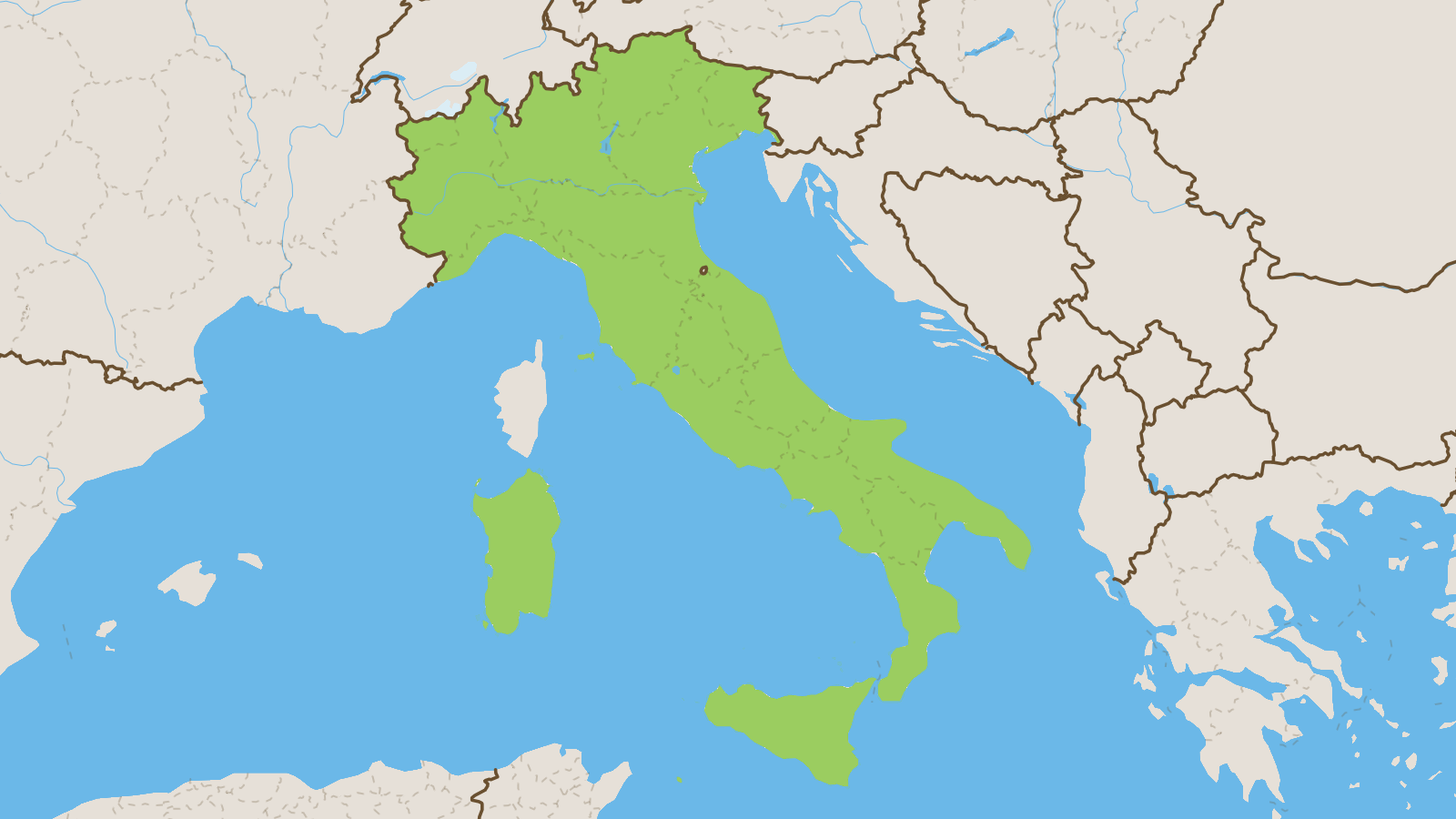
Italy is a beautiful country in Southern Europe, shaped like a long boot kicking into the Mediterranean Sea. It is surrounded by water on three sides and shares its northern border with France, Switzerland, Austria, and Slovenia. Italy is famous for being the birthplace of the Roman Empire, one of the most powerful civilizations in history, and today the country is packed with ancient ruins, stunning art, and magnificent architecture that draws visitors from all over the world.
But Italy is not just about history. It has a warm, lively atmosphere where family, food, and celebrations are at the heart of everyday life. Italians take enormous pride in their cuisine, and the whole world has fallen in love with their pizza, pasta, and gelato. From the romantic canals of Venice to the rolling hills of Tuscany, Italy is a country full of beauty, passion, and incredible character.
Landmarks
-
1
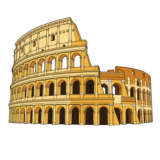
Colosseum Rome
The Colosseum is a massive ancient amphitheater built in Rome around 70–80 AD, capable of holding up to 80,000 spectators. It was used for gladiator battles, animal hunts, and public spectacles that entertained Roman citizens for centuries. It remains the largest amphitheater ever built and is one of the most recognized structures in the world.
-
2
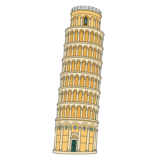
Leaning Tower of Pisa
The Leaning Tower of Pisa is a freestanding medieval bell tower in the Italian city of Pisa, famous worldwide for its dramatic unintended tilt. Construction began in 1173 and the soft ground on one side caused it to lean more with each passing century. Today it leans at about four degrees and draws millions of tourists who love to pose as if they are holding it up.
-
3
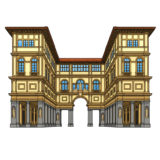
Uffizi Gallery Florence
The Uffizi Gallery in Florence is one of the oldest and most famous art museums in the world, housing an extraordinary collection of Italian Renaissance paintings and sculptures. Originally built in the 1560s as offices for Florentine government magistrates, it was later transformed into a public gallery. Highlights include Botticelli's The Birth of Venus and works by Leonardo da Vinci, Raphael, and Michelangelo.
-
4
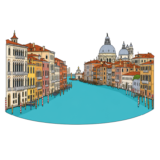
Canal Grande Venice
The Canal Grande, or Grand Canal, is the main waterway running through the heart of Venice, stretching about 3.8 kilometers in a gentle S-shape. Lined with over 170 grand palaces and historic buildings reflecting Venetian Gothic, Renaissance, and Baroque architecture, it is like an open-air museum viewed from the water. Gondolas, water taxis, and vaporetti boats glide along its shimmering waters every day.
-
5

Pompeii Archaeological Park
Pompeii is an ancient Roman city near Naples that was buried under volcanic ash and pumice when Mount Vesuvius erupted in 79 AD, preserving it remarkably well for nearly 2,000 years. Excavations that began in the 18th century have uncovered streets, homes, temples, bakeries, and even the plaster casts of victims caught in the disaster. Visiting Pompeii feels like stepping directly into the daily life of ancient Rome.
-
6
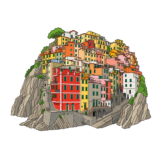
Cinque Terre National Park
Cinque Terre, meaning Five Lands in Italian, is a rugged stretch of coastline in the Liguria region of northwestern Italy comprising five small colorful fishing villages perched on dramatic sea cliffs. The villages — Monterosso, Vernazza, Corniglia, Manarola, and Riomaggiore — are connected by scenic hiking trails and a railway. The entire area is a UNESCO World Heritage Site celebrated for its breathtaking blend of human settlement and natural landscape.
-
7

Mount Etna Summit
Mount Etna, located on the island of Sicily, is the tallest active volcano in Europe, standing about 3,350 meters high. It has been erupting for hundreds of thousands of years and continues to erupt regularly today, making it one of the most studied volcanoes in the world. The summit is a dramatic lunar-like landscape of dark volcanic rock, ash, and smoking craters.
-
8
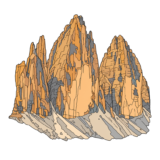
Dolomites Alta Via
The Dolomites Alta Via is a long-distance hiking trail network winding through the Dolomite Mountains in northeastern Italy. The Dolomites are a UNESCO World Heritage Site celebrated for their jagged, pale limestone peaks that glow pink and orange at sunrise and sunset. The Alta Via trails pass alpine meadows, glacial valleys, and historic World War I sites carved into the rock.
-
9
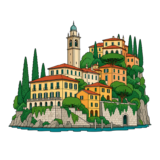
Lake Como
Lake Como is a stunning Y-shaped glacial lake nestled between the Alps in the Lombardy region of northern Italy. It is one of the deepest lakes in Europe and has been a retreat for wealthy Romans, nobles, and celebrities for centuries. Its shores are lined with elegant villas, lush gardens, and colorful hillside towns like Bellagio and Varenna.
-
10
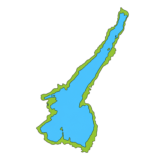
Lake Garda
Lake Garda is the largest lake in Italy, straddling the regions of Lombardy, Veneto, and Trentino in the north of the country. Its northern end is surrounded by dramatic Alpine cliffs and mountains, while the southern shores are gentler and dotted with vineyards and olive groves. The lake is a popular destination for sailing, windsurfing, and visiting historic towns like Sirmione with its medieval castle.
-
11

Rialto Bridge Venice
The Rialto Bridge is the oldest and most famous of the four bridges spanning Venice's Grand Canal, completed in 1591. It served as a vital commercial hub connecting two busy neighborhoods and is still lined with small shops today. Its single white marble arch rises high enough to let gondolas and boats pass underneath.
-
12
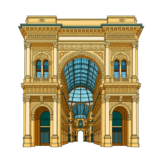
Galleria Vittorio Emanuele II Milan
The Galleria Vittorio Emanuele II is a grand 19th-century shopping arcade in the heart of Milan, often called Italy's oldest active shopping mall. Built between 1865 and 1877, it features a spectacular glass and iron vaulted roof in the shape of a cross, with a large octagonal glass dome at the center. The elegant mosaic floors, upscale boutiques, and ornate painted arches make it one of the most beautiful shopping spaces in the world.
-
13

Valley of the Temples Agrigento
The Valley of the Temples is an extraordinary archaeological site in southern Sicily containing some of the best-preserved ancient Greek temples in the world, built between 510 and 430 BCE. The site was part of the ancient Greek city of Akragas, once one of the most powerful and wealthy cities in the Mediterranean world. The Temple of Concordia is especially remarkable because it is nearly completely intact, its golden limestone columns still standing tall after 2,500 years.
-
14

Gran Paradiso National Park
Gran Paradiso is Italy's oldest national park, established in 1922 in the northwestern Alps. It protects stunning alpine landscapes including glaciers, meadows, and peaks that rise above 4,000 meters. The park is famous for saving the Alpine ibex from extinction — thousands of these sure-footed wild goats now roam its rocky slopes.
-
15

Stromboli Volcano
Stromboli is an active volcanic island off the northern coast of Sicily, known for erupting almost continuously for over 2,000 years. Its fiery explosions of lava and ash light up the night sky so reliably that sailors once called it the 'Lighthouse of the Mediterranean.' The island's steep black volcanic cone rises dramatically straight from the deep blue sea.
-
16
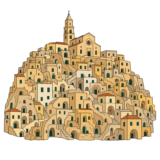
Matera Sassi Cave Dwellings
The Sassi di Matera are ancient cave dwellings carved into a dramatic ravine in the Basilicata region of southern Italy. People have lived in these stone caves for over 9,000 years, making Matera one of the world's oldest continuously inhabited settlements. The city was designated a UNESCO World Heritage Site and served as the European Capital of Culture in 2019.
-
17
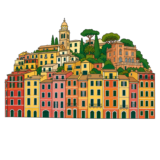
Portofino Fishing Village
Portofino is a tiny, picture-perfect fishing village on the Italian Riviera in Liguria, nestled around a small, sheltered harbor on a rocky headland. Its rows of colorful buildings — painted in warm shades of orange, pink, yellow, and red — are reflected in the calm turquoise waters of the harbor. Once a simple fishing community, Portofino became one of Italy's most glamorous destinations and has attracted artists and celebrities for over a century.
-
18
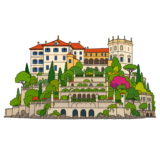
Lake Maggiore
Lake Maggiore is a large, glacier-formed lake straddling the border between northern Italy and southern Switzerland, surrounded by the Alps and pre-Alpine foothills. Its shores are lined with elegant historic villas, lush botanical gardens, and colorful lakeside towns. The jewel of the lake is the Borromean Islands — a small cluster of islands dotted with baroque palaces and terraced gardens rising dramatically from the water.
-
19
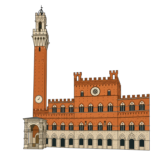
Piazza del Campo Siena
Piazza del Campo is the magnificent central square of Siena, a medieval city in Tuscany, and is considered one of Europe's greatest medieval public spaces. Its distinctive shell or fan shape slopes gently toward the grand Palazzo Pubblico town hall, which is topped by the soaring Torre del Mangia bell tower. Every year the piazza hosts the famous Palio di Siena horse race, during which the dirt track around the square fills with thundering horses and thousands of cheering spectators.
-
20

Alberobello Trulli
Alberobello is a small town in the Puglia region of southern Italy, famous for its extraordinary trulli — traditional whitewashed stone houses with distinctive conical grey roofs made from stacked limestone slabs. There are over 1,500 trulli in the town, giving it a fairy-tale appearance unlike anywhere else in the world. The trulli of Alberobello are a UNESCO World Heritage Site.
-
21

Vatican Museums
The Vatican Museums are a vast complex of galleries and chapels inside Vatican City that display one of the world's greatest art collections, built up by popes over centuries. They are home to the famous Sistine Chapel, whose ceiling was painted by Michelangelo between 1508 and 1512. Miles of corridors filled with ancient sculptures, tapestries, and Renaissance masterpieces make it one of the most visited museum complexes on Earth.
-
22
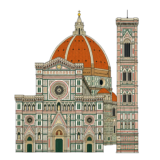
Florence Cathedral Duomo
The Florence Cathedral, officially called the Cattedrale di Santa Maria del Fiore, is a stunning Gothic cathedral topped by Filippo Brunelleschi's revolutionary red-tiled dome completed in 1436. The dome was an engineering marvel for its time, built without the use of a traditional supporting wooden framework. The cathedral's colorful marble exterior in green, white, and pink makes it one of the most beautiful churches in the world.
-
23
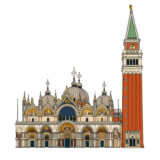
Piazza San Marco Venice
Piazza San Marco, or St. Mark's Square, is the principal public square of Venice and one of the most famous public spaces in the world. It is surrounded by stunning architecture including the ornate St. Mark's Basilica, the tall Campanile bell tower, and the elegant Doge's Palace. Napoleon famously called it the finest drawing room in Europe, and it remains the vibrant social and cultural heart of the city.
-
24
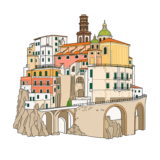
Amalfi Coast
The Amalfi Coast is a stunning stretch of Mediterranean coastline in southern Italy, running about 50 kilometers along the southern edge of the Sorrentine Peninsula in the Campania region. It is famous for its dramatic cliffs plunging into the turquoise sea, colorful hillside villages, terraced lemon groves, and winding coastal roads. In 1997 it was designated a UNESCO World Heritage Site for its outstanding natural beauty and cultural landscape.
More interesting landmarks
-
25
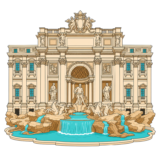
Trevi Fountain Rome
The Trevi Fountain is the largest and most famous Baroque fountain in Rome, standing about 26 meters tall and 49 meters wide. Built in 1762, it marks the terminal point of one of Rome's ancient aqueducts and features the powerful god Oceanus riding a shell-shaped chariot pulled by wild horses. Millions of tourists toss coins into the fountain each year, with legend saying it guarantees a return trip to Rome.
-
26
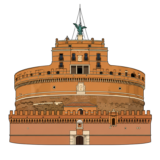
Castel Sant Angelo Rome
Castel Sant'Angelo is a towering cylindrical fortress on the banks of the Tiber River in Rome, originally built as a mausoleum for Emperor Hadrian around 139 AD. Over the centuries it was converted into a medieval castle, a papal fortress, and eventually a prison, with a secret corridor connecting it to the Vatican for popes to escape in emergencies. Today it is a museum topped by a bronze statue of the Archangel Michael sheathing his sword.
-
27

Pantheon Rome
The Pantheon is an ancient Roman temple built around 125 AD that is considered one of the best-preserved buildings from the ancient world. Its most remarkable feature is a massive concrete dome with a 9-meter open oculus, or hole, at the top that allows sunlight and rain to stream directly inside. The building has been in continuous use for nearly 2,000 years and now serves as a Catholic church and burial site for Italian kings.
-
28

Roman Forum
The Roman Forum is a sprawling rectangular plaza in the heart of Rome that was the center of political, religious, and social life in ancient Rome for nearly a thousand years. Today it is an outdoor archaeological site filled with the ruins of temples, government buildings, triumphal arches, and ancient roads. Walking through the Forum feels like stepping back in time, with crumbling marble columns, stone pavements, and towering arches still standing after two millennia.
-
29
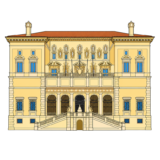
Borghese Gallery Rome
The Borghese Gallery is a world-class art museum housed inside a stunning 17th-century villa set within the lush Villa Borghese park in Rome. It holds one of Italy's finest collections of sculptures and paintings, including breathtaking marble works by Bernini and paintings by Caravaggio, Raphael, and Titian. The gallery is deliberately kept small and intimate, with only a few hundred visitors allowed at a time to protect the artworks.
-
30
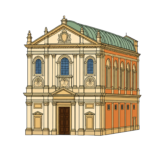
Sistine Chapel Vatican City
The Sistine Chapel is a sacred chapel inside the Vatican, famous worldwide for its extraordinary ceiling painted by Michelangelo between 1508 and 1512. The ceiling features nine scenes from the Book of Genesis, most famously The Creation of Adam, where God and Adam nearly touch fingertips across an vast expanse of painted sky. The chapel is also where Catholic cardinals gather in secret to elect a new Pope.
-
31
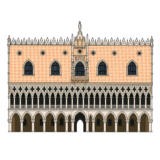
Doge's Palace Venice
The Doge's Palace was the seat of power for Venice's ruler, the Doge, for nearly a thousand years and is one of the finest examples of Venetian Gothic architecture in the world. It housed the government, courts, and prisons, and is connected to the jail by the famous Bridge of Sighs. Its pink and white diamond-patterned marble façade makes it instantly recognizable on the Venice waterfront.
-
32
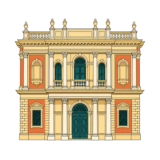
Accademia Gallery Venice
The Accademia Gallery is Venice's most important art museum, housed in a complex of historic buildings including a former church, scuola, and convent near the Grand Canal. It holds a world-class collection of Venetian paintings from the 14th to 18th centuries, including masterpieces by Titian, Tintoretto, and Veronese. The building itself is topped by a graceful wooden bridge, the Ponte dell'Accademia, which connects the two canal banks.
-
33
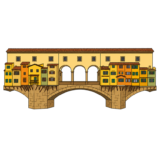
Ponte Vecchio Florence
The Ponte Vecchio is a medieval stone bridge over the Arno River in Florence, famous for being lined with jewelry shops built directly on its sides. Dating back to 1345, it is the oldest bridge in Florence and one of the few bridges in the world to have buildings constructed on it. A secret elevated corridor, the Vasari Corridor, runs along the top of the shops and once allowed the Medici rulers to cross the city unseen.
-
34
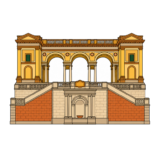
Piazzale Michelangelo Florence
Piazzale Michelangelo is a large hilltop square on the south bank of the Arno River that offers one of the most celebrated panoramic views of Florence and its famous skyline. Designed in 1869, it features a bronze replica of Michelangelo's David statue at its center as a tribute to the great Renaissance artist. Visitors flock here at sunset when the Duomo, Palazzo Vecchio tower, and terracotta rooftops glow golden in the light.
-
35
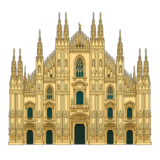
Milan Cathedral Duomo
Milan Cathedral, or the Duomo di Milano, is one of the largest Gothic cathedrals in the world and took nearly six centuries to complete, from 1386 to 1965. It is famous for its forest of 135 marble spires and over 3,400 statues that cover nearly every surface of the exterior. Visitors can climb to the rooftop terrace and walk among the spires for a breathtaking close-up view of the intricate stonework.
-
36
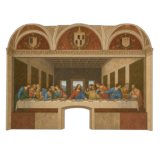
The Last Supper Milan
The Last Supper is one of the most famous paintings in the world, created by Leonardo da Vinci between 1495 and 1498 on the dining room wall of the Convent of Santa Maria delle Grazie in Milan. It depicts the dramatic moment when Jesus tells his twelve apostles that one of them will betray him, capturing each disciple's shocked reaction. The mural is so delicate that only small groups of visitors are allowed in at a time to help preserve it.
-
37
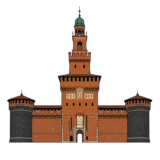
Castel Sforzesco Milan
Castel Sforzesco is a massive 15th-century brick fortress built by Francesco Sforza, the Duke of Milan, on the site of an earlier medieval castle. It was one of the largest citadels in Europe and served as the home of the powerful Sforza family, who employed Leonardo da Vinci as a court artist and engineer. Today the castle houses several museums, including one containing Michelangelo's final unfinished sculpture, the Rondanini Pietà.
-
38
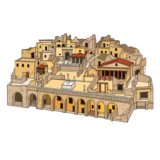
Herculaneum Archaeological Site
Herculaneum was a prosperous Roman city buried under volcanic ash and rock when Mount Vesuvius erupted in 79 AD — the same eruption that destroyed nearby Pompeii. Unlike Pompeii, Herculaneum was sealed by a thick layer of hardened volcanic material that preserved wooden furniture, food, and even papyrus scrolls in remarkable detail. Today visitors can walk through ancient streets, shops, and homes that feel frozen in time.
-
39
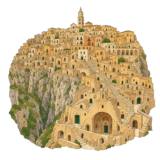
Sassi di Matera UNESCO Site
The Sassi di Matera are a vast network of ancient cave dwellings and stone-carved districts etched into the sides of a dramatic ravine in southern Italy's Basilicata region. Recognized as a UNESCO World Heritage Site, the Sassi represent one of the longest records of continuous human habitation on Earth, spanning approximately 9,000 years. The interiors of the caves served as homes, churches, and stables, with some cave churches preserving remarkable Byzantine-style frescoes.
Puzzles