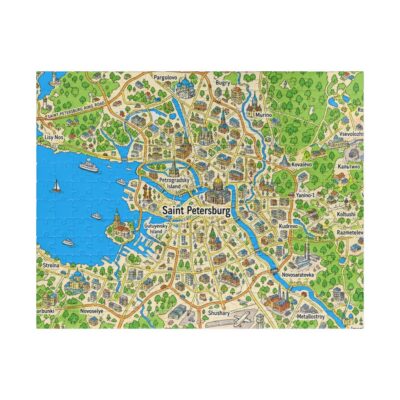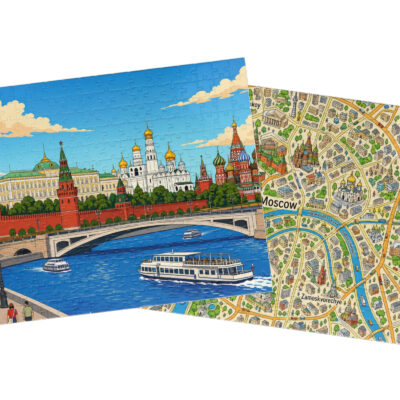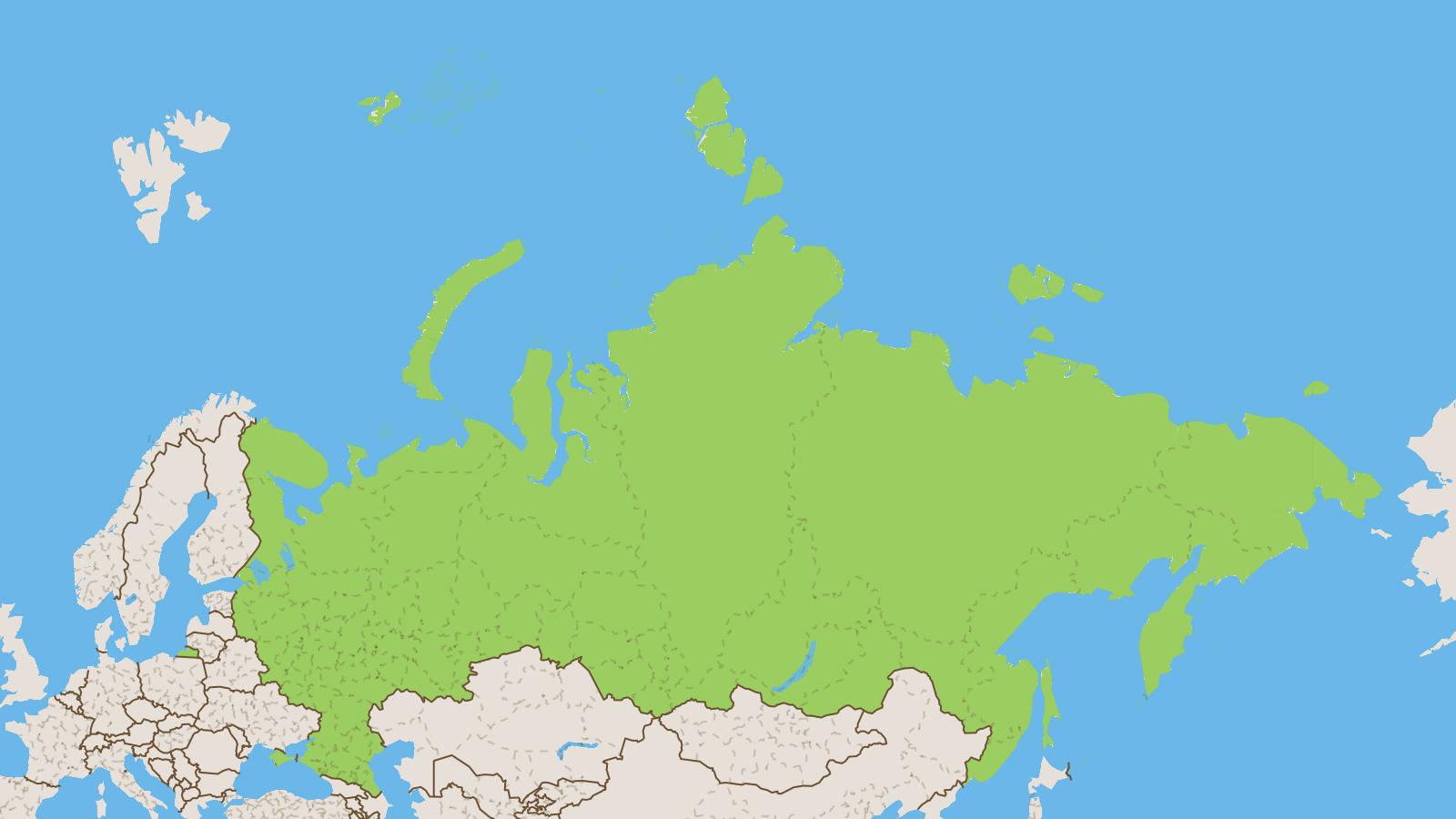
Russia is the biggest country on Earth, so large that it stretches across two continents, Europe and Asia, covering eleven time zones. That means when people in the west are eating breakfast, people in the far east are already going to sleep! It sits in the northern part of the world, where winters are legendary for their fierce cold and deep snow. The capital, Moscow, is a stunning city filled with colourful onion-shaped domes, grand palaces, and a rich history that goes back centuries.
Russia is a land of extremes and contrasts, from frozen Arctic tundra to vast forests called the taiga, the largest forest on the planet. It is famous for its incredible art, literature, and classical music, giving the world composers like Tchaikovsky and writers like Tolstoy. Around 143 million people call Russia home, all connected by the beautiful and complex Russian language.
Landmarks
-
1
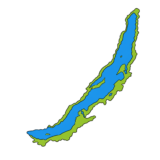
Lake Baikal
Lake Baikal in Siberia is the world's deepest lake, plunging to over 1,600 meters at its deepest point, and holds about 20% of all the fresh unfrozen water on Earth. It is also one of the oldest lakes in the world at around 25 million years old, and is home to thousands of plant and animal species found nowhere else. In winter, the lake freezes over with crystal-clear blue ice that can be seen right through to the depths below.
-
2

Mount Elbrus Summit
Mount Elbrus is the highest mountain in Europe, rising to 5,642 meters above sea level in the Caucasus Mountains of southern Russia. It is actually a dormant volcano with two summits, both permanently capped with snow and glaciers. Thousands of climbers attempt to reach its twin peaks each year, making it one of the famous Seven Summits challenges.
-
3
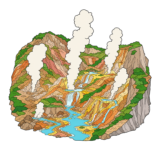
Kamchatka Valley of Geysers
The Valley of Geysers on the Kamchatka Peninsula in Russia's far east is one of the largest geyser fields in the world, with over 90 geysers erupting regularly from the floor of a dramatic river canyon. Hot springs, boiling mud pools, and steam vents surround the geysers in a landscape that looks almost alien. It is so remote and protected that it can only be visited by helicopter.
-
4
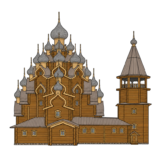
Kizhi Pogost
Kizhi Pogost is a breathtaking wooden church complex located on a small island in Lake Onega in northwestern Russia. It is a UNESCO World Heritage Site famous for its incredible craftsmanship, built entirely without nails using interlocking logs. The Church of the Transfiguration, completed in 1714, is crowned with 22 onion-shaped domes that seem to ripple like silver scales toward the sky.
-
5
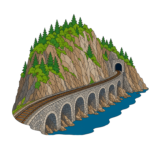
Trans-Siberian Railway Baikal Stretch
The Trans-Siberian Railway is the longest railway in the world, stretching nearly 9,300 kilometers across Russia from Moscow to Vladivostok. The most dramatic section hugs the southern shore of Lake Baikal, the world's deepest lake, threading through rocky cliffs, tunnels, and dense taiga forests. Passengers on this legendary route get stunning views of the vast, crystal-clear blue waters of Lake Baikal right from their train window.
-
6
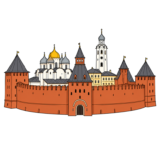
Novgorod Kremlin
The Novgorod Kremlin, also called the Detinets, is one of the oldest surviving kremlins in Russia, located in the city of Veliky Novgorod in northwestern Russia. Founded in the 11th century, it sits on the banks of the Volkhov River and contains the ancient Cathedral of Saint Sophia, which dates back to 1050. In front of the kremlin walls stands the famous Millennium of Russia monument, a massive bronze bell-shaped sculpture celebrating 1,000 years of Russian history.
-
7
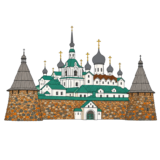
Solovetsky Islands Monastery
The Solovetsky Monastery is a powerful fortress-monastery complex built on a remote archipelago in the White Sea in northern Russia, and is a UNESCO World Heritage Site. Its massive granite walls, some up to four meters thick, were constructed from enormous boulders hauled from the surrounding landscape, giving it a rugged, almost prehistoric look. The monastery has served as a spiritual center, a military stronghold, and tragically as a Soviet labor camp, making it one of Russia's most historically layered places.
-
8
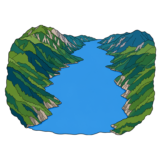
Lake Teletskoye Altai
Lake Teletskoye is a long, deep glacial lake tucked within the Altai Mountains in southern Siberia, and is part of a UNESCO World Heritage area known as the Golden Mountains of Altai. Stretching about 78 kilometers in length, it is surrounded by steep, forested mountain slopes that plunge dramatically into the dark, mirror-like water. The local Altai people call it Altyn-Köl, meaning Golden Lake, and its remote beauty and rich ecosystem make it one of Siberia's most treasured natural wonders.
-
9

Altai Mountains Belukha Peak
Mount Belukha is the highest peak in the Altai Mountains and in all of Siberia, rising 4,506 meters above sea level on the border between Russia and Kazakhstan. Its twin summits are permanently capped with gleaming glaciers and snow, and rivers of ice flow down its steep flanks into the valleys below. Belukha is considered sacred by local peoples and has long attracted mountaineers and spiritual seekers drawn to its remote, awe-inspiring beauty.
-
10
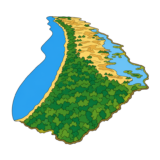
Curonian Spit National Park
The Curonian Spit is a long, narrow strip of land stretching about 98 kilometers along the Baltic Sea coast, shared between Russia and Lithuania. It is famous for its enormous shifting sand dunes, some of the tallest in Europe, rising up to 60 meters high and constantly reshaped by the wind. The spit separates the Curonian Lagoon from the open Baltic Sea, creating a dramatic contrast between calm inland waters and wild ocean waves.
-
11
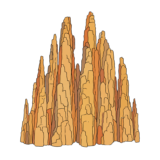
Lena Pillars Nature Park
Lena Pillars Nature Park is a stunning geological formation along the banks of the Lena River in Siberia, Russia, where ancient limestone columns rise dramatically up to 100 meters from the riverbank. These towering rocky pillars were shaped by millions of years of freezing and thawing, and they contain some of the oldest fossils of complex life forms on Earth, dating back over 500 million years. The sight of the jagged stone towers reflected in the wide, calm Lena River is one of the most spectacular views in all of Russia.
-
12

Wrangel Island Nature Reserve
Wrangel Island is a remote Arctic island in the Chukchi Sea off the northeastern tip of Russia, famous for having the world's highest density of polar bear dens. It is also the place where woolly mammoths survived the longest anywhere on Earth, living there until around 4,000 years ago. The island's extreme isolation has made it a unique haven for Arctic wildlife, including thousands of Pacific walruses and vast seabird colonies.
-
13
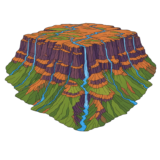
Putorana Plateau
The Putorana Plateau is a vast, remote highland in central Siberia made up of ancient volcanic basalt rock, cut through by thousands of rivers, lakes, and spectacular waterfalls. It is home to Russia's largest waterfall by water volume, and the plateau's many deep lakes hold a significant portion of the world's fresh water. Because it is so hard to reach, Putorana remains one of the least visited wilderness areas on Earth, making it feel like a truly lost world.
-
14

Mamayev Kurgan Volgograd
Mamayev Kurgan is a monumental memorial complex in Volgograd commemorating the Battle of Stalingrad, one of the bloodiest battles of World War II. It is dominated by 'The Motherland Calls,' a colossal concrete statue of a woman with a raised sword standing 85 meters tall. The statue was the tallest in the world when unveiled in 1967 and remains a powerful symbol of Russian sacrifice and resilience.
-
15

Baikal-Lena Nature Reserve
The Baikal-Lena Nature Reserve is a vast protected wilderness in Siberia stretching from the northwestern shore of Lake Baikal to the headwaters of the mighty Lena River. Covering over 6,000 square kilometers, it protects extraordinary ecosystems including ancient taiga forests, rare plant species, brown bears, and the endangered Baikal sturgeon. The reserve is one of Russia's wildest and most remote corners, largely untouched by human activity.
-
16
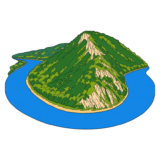
Zhiguli Mountains Samara Bend
The Zhiguli Mountains rise dramatically along the Samara Bend, where the Volga River curves in a great loop around a rocky highland peninsula in central Russia. Although modest in height, these ancient eroded hills are remarkable as the only true mountains along the entire length of the Volga. The area is a protected national park known for its unique flora, breathtaking river views, and legends of Cossack outlaws who once hid in its forests.
-
17
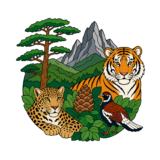
Sikhote-Alin Biosphere Reserve
The Sikhote-Alin Biosphere Reserve is a UNESCO World Heritage Site in Russia's Far East, protecting one of the richest and most unusual temperate forests on Earth. It is the last stronghold of the Amur tiger, the world's largest wild cat, and is home to a remarkable mix of northern and subtropical species living side by side. The reserve covers mountains, river valleys, and a rugged Pacific coastline where bears are sometimes spotted catching fish near the sea.
-
18
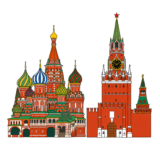
Red Square Moscow
Red Square is the most famous public square in Russia, sitting at the very heart of Moscow next to the Kremlin walls. It has been the site of historic parades, markets, and major national events for centuries. The square is so large that it can hold over 70,000 people at once!
-
19
Saint Basil's Cathedral Moscow
Saint Basil's Cathedral is one of the most recognizable buildings in the world, built in the 1550s by Tsar Ivan the Terrible to celebrate a military victory. It features nine chapels, each topped with a uniquely patterned and brightly colored onion-shaped dome. Legend says the tsar blinded the architects so they could never build anything more beautiful.
-
20
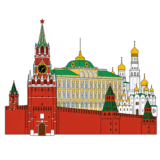
The Kremlin Moscow
The Moscow Kremlin is a massive fortified complex in the center of Moscow that serves as the official residence of Russia's president. Its name means 'fortress' in Russian, and it contains palaces, cathedrals, government buildings, and museums all within its walls. The iconic red-brick walls stretch nearly 2.5 kilometers and are lined with 20 distinctive towers.
-
21
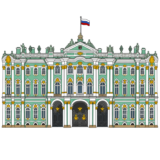
Hermitage Museum Saint Petersburg
The Hermitage is one of the largest and most celebrated art museums in the world, housed in the grand Winter Palace that was once home to Russian tsars. It holds over three million works of art, from ancient Egyptian artifacts to paintings by Rembrandt and Leonardo da Vinci. It would take years to spend just one minute in front of every item in the collection!
-
22
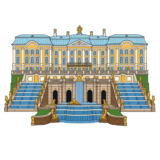
Peterhof Palace and Gardens
Peterhof, sometimes called the 'Russian Versailles,' is a spectacular palace complex near Saint Petersburg built by Tsar Peter the Great in the early 1700s. It is most famous for its breathtaking Grand Cascade, a grand staircase of fountains featuring over 60 gilded statues and 150 fountains. The water all flows by gravity alone — no pumps needed!
-
23
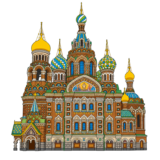
Church of the Savior on Spilled Blood Saint Petersburg
This stunning church in Saint Petersburg was built on the exact spot where Tsar Alexander II was fatally wounded in 1881, which is why it has such a dramatic name. Its colorful exterior is covered in elaborate mosaics, and its interior contains over 7,000 square meters of mosaic artwork — the largest mosaic collection in Europe. It looks almost like a fairy-tale building transported from medieval Russia.
-
24
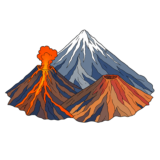
Volcanoes of Kamchatka
The Kamchatka Peninsula in Russia's far east is home to 29 active volcanoes, making it one of the most volcanically active regions on Earth and a UNESCO World Heritage Site. The volcanoes rise dramatically from the landscape, some perfectly cone-shaped and snow-capped, regularly puffing ash and smoke into the sky. The peninsula also has rich wildlife including brown bears, eagles, and salmon rivers fed by volcanic hot springs.
More interesting landmarks
-
25
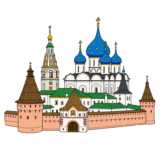
Golden Ring Suzdal Kremlin
Suzdal Kremlin is one of Russia's oldest and best-preserved historical complexes, sitting at the heart of the charming town of Suzdal in the Golden Ring region east of Moscow. It features the blue-domed Cathedral of the Nativity with its striking star-patterned golden domes, surrounded by ancient earthen ramparts. Suzdal itself has barely changed in centuries, making it feel like a living open-air museum of medieval Russia.
-
26
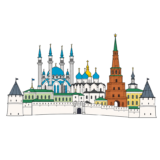
Kazan Kremlin
The Kazan Kremlin is a UNESCO World Heritage Site and the only surviving Tatar fortress in Russia, located in Kazan, the capital of the Republic of Tatarstan. It is a unique blend of Russian and Tatar Islamic architecture, most strikingly illustrated by the tall, leaning white Söyembikä Tower and the modern Qolşärif Mosque with its four sky-blue minarets. This kremlin represents centuries of cultural exchange between Slavic and Turkic civilizations on the Volga River.
-
27
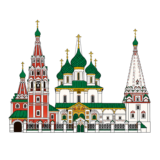
Yaroslavl Historic Centre
The historic centre of Yaroslavl, a UNESCO World Heritage Site, is one of the finest examples of Russian urban planning and Orthodox church architecture from the 17th and 18th centuries. Located at the confluence of the Volga and Kotorosl rivers, the city is filled with richly decorated churches featuring colorful ceramic tile friezes, elaborate frescoes, and multi-domed silhouettes. Yaroslavl is also home to one of Russia's oldest theatres, reflecting its long history as a major cultural center.
-
28
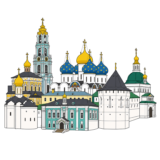
Sergiev Posad Trinity Lavra
The Trinity Lavra of St. Sergius in Sergiev Posad is the most important monastery in Russia and a UNESCO World Heritage Site, located about 70 kilometers northeast of Moscow. Founded in the 14th century by St. Sergius of Radonezh, it remains an active spiritual and religious center that draws millions of pilgrims each year. Its most iconic feature is the brilliant blue Cathedral of the Assumption, whose dome is painted a deep cobalt blue scattered with golden stars.
-
29
Caucasus Biosphere Reserve
The Caucasus Biosphere Reserve is one of the largest protected mountain forests in Europe, located in the western part of the Greater Caucasus mountain range in southern Russia. It shelters an extraordinary variety of wildlife, including leopards, brown bears, and the rare West Caucasian tur, a wild goat found nowhere else on Earth. The reserve's ancient beech and fir forests have remained largely untouched for thousands of years, making it a living window into prehistoric landscapes.
-
30
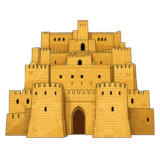
Derbent Ancient Fortress
Derbent is one of the oldest inhabited cities in Russia, located on the Caspian Sea coast in the republic of Dagestan, and its ancient fortress has guarded a narrow strategic pass between the mountains and the sea for over 1,500 years. The Naryn-Kala citadel sits on a hilltop above the city and its massive stone walls once stretched all the way down to the sea to control all movement through the region. At its peak, Derbent was a key crossroads of civilizations, and layers of Persian, Arab, Mongol, and Russian history are all written into its stones.
-
31
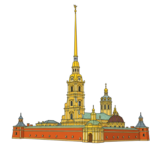
Peter and Paul Fortress Saint Petersburg
The Peter and Paul Fortress is the original core of Saint Petersburg, founded by Tsar Peter the Great in 1703 on a small island in the Neva River. Inside its star-shaped walls stands the golden-spired Peter and Paul Cathedral, the burial place of nearly every Russian tsar from Peter the Great onward. The fortress later served as a notorious political prison, holding famous captives including the writer Fyodor Dostoevsky.
-
32
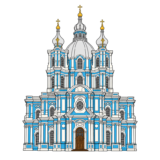
Smolny Cathedral Saint Petersburg
Smolny Cathedral is a breathtaking Baroque masterpiece in Saint Petersburg, designed by the Italian architect Bartolomeo Rastrelli and completed in 1764 after a construction process lasting over 60 years. The cathedral stands at the center of a convent complex and is famous for its striking combination of brilliant blue and white paintwork topped with five distinctive onion domes. Its intricate, ornate exterior with layers of decoration makes it one of the most visually impressive churches in all of Russia.
-
33
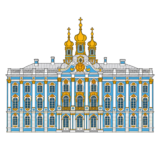
Catherine Palace Tsarskoe Selo
Catherine Palace is a magnificent royal summer residence located in the town of Tsarskoe Selo, about 25 kilometers south of Saint Petersburg, built for the Russian tsars in the 18th century. Its breathtaking facade stretches over 300 meters and is painted in brilliant turquoise blue and white, decorated with golden ornaments and baroque columns. The palace was famously home to the legendary Amber Room, a chamber whose walls were entirely covered in amber panels and gold, sometimes called the Eighth Wonder of the World.
-
34
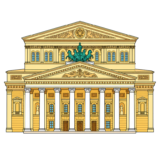
Bolshoi Theatre Moscow
The Bolshoi Theatre is Russia's most famous opera and ballet house, located in the heart of Moscow, and one of the most celebrated performing arts venues in the entire world. Founded in 1776, it has staged legendary premieres of ballets like Swan Lake and Sleeping Beauty by Pyotr Tchaikovsky. The building itself is a grand neoclassical landmark topped with a bronze sculpture of Apollo's chariot pulled by four horses.
-
35
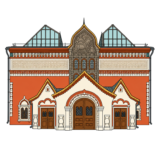
Tretyakov Gallery Moscow
The Tretyakov Gallery is Russia's most famous art museum, home to the world's greatest collection of Russian fine art spanning over a thousand years. Founded by merchant Pavel Tretyakov in 1856, it holds more than 200,000 works including legendary icons and paintings. Its fairy-tale facade, designed to look like an old Russian mansion, is itself a work of art.
-
36
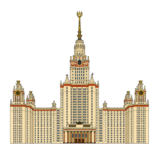
Moscow State University Sparrow Hills
Moscow State University's main building is one of the most iconic skyscrapers in Russia, rising 240 meters above Sparrow Hills overlooking the Moscow River. Built in the Stalinist style during the 1950s, it was the tallest building in Europe when completed. Its symmetrical towers, ornate spire, and massive scale make it instantly recognizable on the city skyline.
-
37
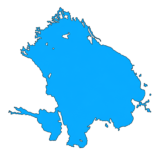
Lake Ladoga
Lake Ladoga is the largest lake in Europe, stretching across northwestern Russia near St. Petersburg with a surface area of about 17,700 square kilometers. It played a vital role in World War II as the 'Road of Life,' a supply route across its frozen surface to besieged Leningrad. The lake is dotted with hundreds of rocky islands, dramatic cliffs, and ancient monasteries.
-
38
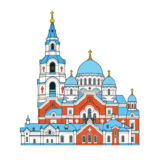
Valaam Monastery
Valaam Monastery is a historic Russian Orthodox monastery complex located on an archipelago of islands in Lake Ladoga, founded over a thousand years ago. The cluster of blue and white churches and bell towers rises dramatically from the forested granite islands. It remains an active spiritual community and a stunning destination that blends natural wilderness with centuries of religious heritage.
-
39
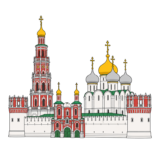
Novodevichiy Convent Moscow
Novodevichiy Convent is a magnificent 16th-century Russian Orthodox monastery complex in Moscow, recognized as a UNESCO World Heritage Site. Its striking red-and-white Baroque towers and golden domes have made it one of the most photographed landmarks in Russia. The convent served as a place of exile for noble women and is surrounded by a famous cemetery where many of Russia's greatest writers, scientists, and leaders are buried.
-
40
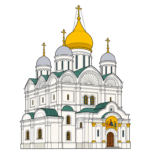
Archangel Cathedral Moscow Kremlin
The Archangel Cathedral is one of the most important churches inside the Moscow Kremlin, built in 1508 and dedicated to Archangel Michael, the guardian of Russian princes. For centuries it served as the royal burial church of the tsars and grand princes of Moscow, and many of their white stone sarcophagi still line its interior walls. Its exterior blends traditional Russian Orthodox architecture with Renaissance Italian decorative details, reflecting a unique moment in Russian history.
Ten Largest Cities
Puzzles