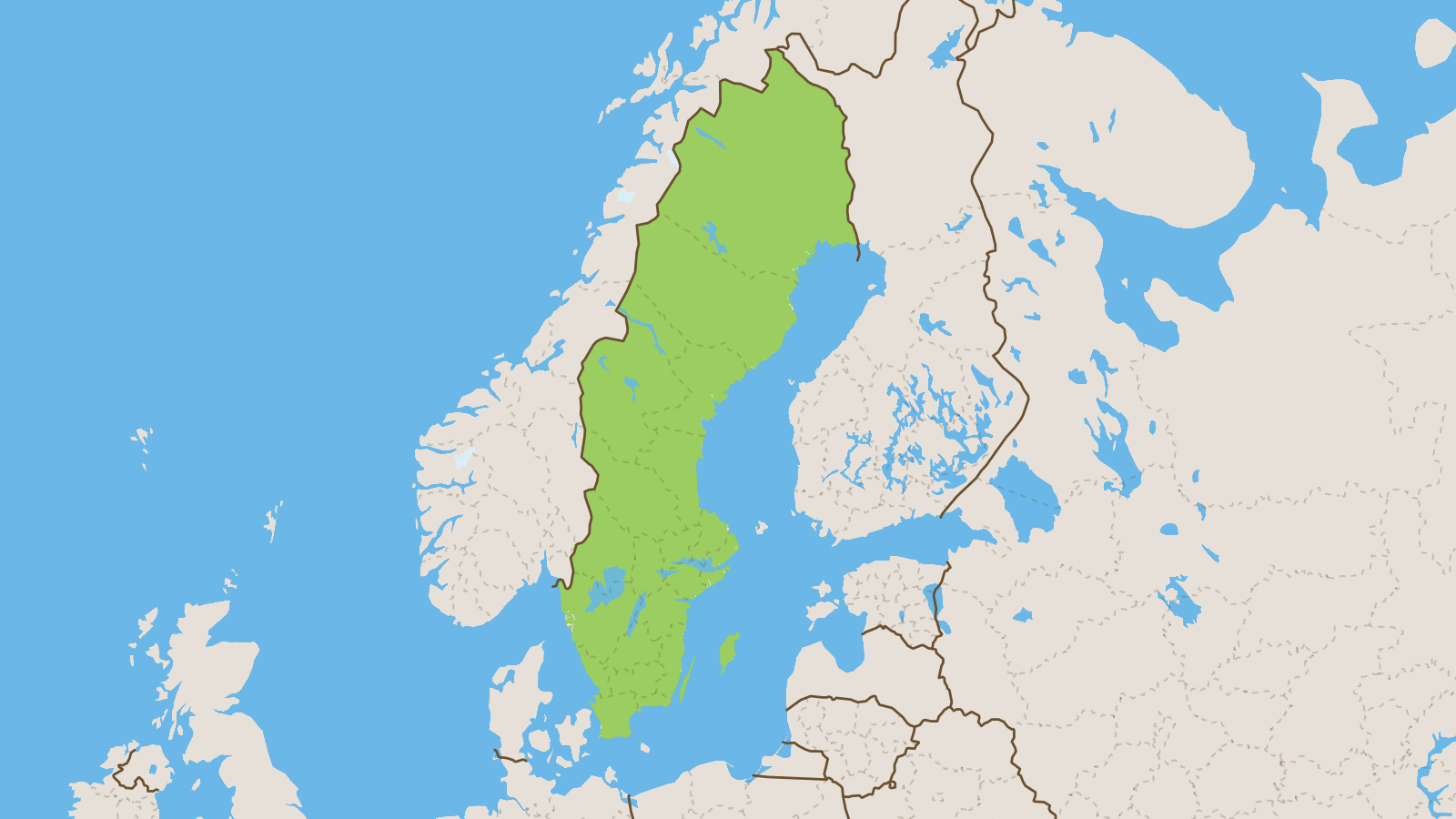
Sweden is a long, narrow country in Northern Europe, stretching so far north that parts of it sit inside the Arctic Circle, where the sun never sets in summer and the northern lights dance across the winter sky. It shares the Scandinavian Peninsula with Norway, and its eastern coast is hugged by the Baltic Sea, dotted with thousands of islands that make the landscape feel magical and wild.
Sweden has a calm, cool character, full of deep forests, sparkling lakes, and cozy wooden villages painted in classic red. It is famous for its clever design and inventions, giving the world everything from flat-pack furniture to the zipper. Swedes love the outdoors, and there is even a word here, "lagom," meaning just the right amount, which perfectly captures the balanced, thoughtful way of life. With around ten million people speaking Swedish, this is a country that is easy to fall in love with.
Landmarks
-
1
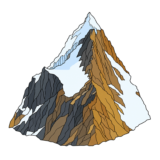
Kebnekaise Summit
Kebnekaise is Sweden's highest mountain, rising about 2,100 meters above sea level in the far north of Lapland. It is a popular destination for hikers and mountaineers who want to stand at the top of the country. The southern peak is covered by a glacier that has actually been shrinking due to climate change.
-
2
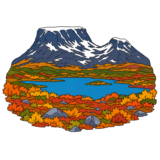
Abisko National Park
Abisko National Park sits above the Arctic Circle in northern Sweden and is one of the best places in the world to see the Northern Lights. The park features stunning subarctic landscapes including birch forests, the dramatic Lapporten valley gate, and the shores of Lake Torneträsk. Its unusually dry and clear climate makes it a prime stargazing and aurora-watching destination.
-
3
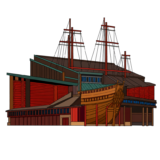
Vasa Museum Stockholm
The Vasa Museum in Stockholm is home to the world's only almost fully intact 17th-century warship, the Vasa, which sank on its maiden voyage in 1628 and was salvaged in 1961. The enormous wooden ship is decorated with hundreds of colorful carved wooden sculptures and stands about 52 meters tall with three masts. It is Sweden's most visited museum and a remarkable window into naval history.
-
4

Gothenburg Opera House
The Gothenburg Opera House, opened in 1994, is a striking modern building on the waterfront of Sweden's second-largest city. Its bold curved roof is designed to evoke the shape of a ship's hull, a nod to Gothenburg's proud maritime heritage. The interior hosts world-class opera, ballet, and musical performances throughout the year.
-
5
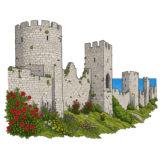
Visby Medieval City Walls
Visby is a small town on the island of Gotland in the Baltic Sea and is surrounded by one of the best-preserved medieval ring walls in all of Europe, dating back to the 13th and 14th centuries. The limestone wall stretches nearly 3.5 kilometers and is dotted with 44 towers of varying shapes. Visby is a UNESCO World Heritage Site and hosts a famous Medieval Week festival every summer.
-
6
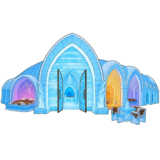
Icehotel Jukkasjärvi
The Icehotel in Jukkasjärvi is the world's first and largest hotel built entirely from ice and snow, reconstructed every winter using blocks cut from the nearby Torne River. Artists from around the world design unique suites sculpted from crystal-clear blue ice, making each room a frozen work of art. Guests sleep on ice beds covered with reindeer hides under the glowing Arctic sky.
-
7
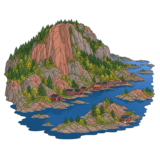
High Coast UNESCO World Heritage Site
The High Coast is a dramatic stretch of coastline along the Gulf of Bothnia in northern Sweden, recognized by UNESCO for its exceptional geological significance. After the last Ice Age, the land here has risen over 285 meters as the massive weight of glaciers lifted — the highest recorded post-glacial rebound on Earth. The landscape is a stunning mix of rocky cliffs, deep fjord-like inlets, forested islands, and sandy beaches.
-
8
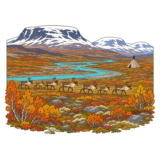
Laponia UNESCO World Heritage Site
Laponia is one of the largest areas of wilderness in Europe, covering about 9,400 square kilometers of northern Sweden and listed as a UNESCO World Heritage Site for both its natural and cultural value. The region is the ancestral homeland of the Sámi people, who have herded reindeer across its vast tundra, mountains, and forests for thousands of years. It contains four national parks and hosts rare wildlife including wolverines, golden eagles, and brown bears.
-
9
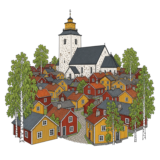
Gammelstad Church Town Luleå
Gammelstad is a UNESCO World Heritage Site near Luleå in northern Sweden and the largest and best-preserved example of a Nordic church town in the world. Around a medieval stone church, more than 400 small wooden cottages huddle tightly together — these were built so that worshippers who traveled long distances could sleep overnight during religious festivals. The contrast between the solid grey stone church at the center and the ring of brightly painted wooden cabins around it is truly unique.
-
10
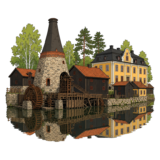
Engelsberg Ironworks
Engelsberg Ironworks is a remarkably well-preserved 17th and 18th-century industrial site in central Sweden, recognized as a UNESCO World Heritage Site. It was one of the most advanced iron-producing facilities in the world during its time, exporting high-quality iron across Europe. The complex includes a blast furnace, forge, manor house, workers' cottages, and warehouses, all still intact and giving a vivid picture of early industrial life.
-
11
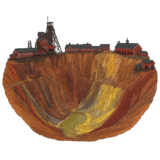
Falun Copper Mine
The Falun Copper Mine in central Sweden is a UNESCO World Heritage Site and one of the most important industrial sites in European history, operating for over a thousand years until it closed in 1992. At its peak in the 17th century, it produced two-thirds of the world's copper supply, funding Sweden's empire and financing wars. The mine is famous for producing a distinctive red iron oxide pigment called Falun red, which is the iconic color painted on traditional Swedish wooden houses across the country.
-
12
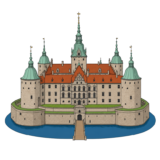
Kalmar Castle
Kalmar Castle is a well-preserved Renaissance castle in the city of Kalmar on Sweden's southeast coast. It played a crucial role in Swedish history as the site where the Kalmar Union — uniting Sweden, Denmark, and Norway — was signed in 1397. The castle is surrounded by a moat and features round towers at each corner, making it one of the best examples of Renaissance architecture in Scandinavia.
-
13
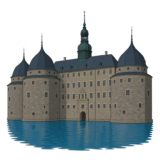
Vadstena Castle
Vadstena Castle sits on the eastern shore of Lake Vättern in the small town of Vadstena, built in the 16th century by King Gustav Vasa. It is a powerful example of a Swedish Renaissance fortress, originally designed to defend against enemy attacks by water. The castle's four massive round corner towers and its lakeside setting make it one of the most photographed castles in Sweden.
-
14
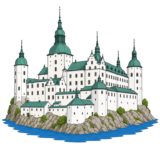
Läckö Castle
Läckö Castle is a magnificent white Baroque castle perched on a rocky peninsula stretching into Lake Vänern, Sweden's largest lake. Built during the 13th century and later transformed into an impressive Baroque palace in the 17th century, it was once home to Sweden's powerful Count Magnus Gabriel De la Gardie. With over 240 rooms and brilliant white walls rising from the blue water, it looks like something out of a fairy tale.
-
15
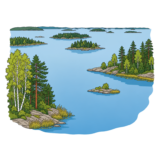
Vänern Lake
Lake Vänern is the largest lake in Sweden and the third largest in all of Europe, covering about 5,650 square kilometers in the southwest of the country. It is so large that it contains more than 22,000 islands and islets, creating a stunning archipelago within a freshwater lake. Vänern is home to a unique landlocked population of salmon and sea trout, left over from when the lake was connected to the sea thousands of years ago.
-
16

Vättern Lake
Lake Vättern is Sweden's second largest lake and is known for its exceptionally deep, clear, and cold blue water, stretching roughly 130 kilometers from north to south in a long narrow shape. Its depth reaches 128 meters, making it one of the deepest lakes in Scandinavia. The lake is so clear and blue that it almost resembles a sea, and its shores are dotted with historic towns, castles, and nature reserves.
-
17
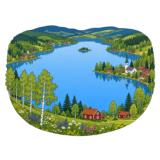
Siljan Lake
Lake Siljan is located in the Dalarna region of central Sweden and is one of the most scenically beautiful lakes in the country. It was formed around 360 million years ago when a massive meteorite struck the earth, making the lake bed part of an ancient impact crater. The surrounding area is famous for its deep-rooted Swedish folk traditions, colorful Midsummer celebrations, and iconic red Dala horse figurines.
-
18
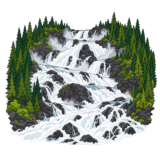
Storforsen Waterfall
Storforsen is the largest natural whitewater rapids in Europe, located on the Pite River in the far north of Sweden. The rapids drop about 82 meters over a 5-kilometer stretch of river, creating a thunderous cascade of churning white water through a wild subarctic landscape. Unlike most major waterfalls, Storforsen is not a single vertical drop but a long powerful surge of wild rapids through forested wilderness.
-
19

Tännforsen Waterfall
Tännforsen is Sweden's most powerful and voluminous waterfall, located in Jämtland in northwestern Sweden near the Norwegian border. With a drop of 38 meters and an enormous flow of water, it is a breathtaking wall of crashing white water framed by rugged mountain scenery. In winter, the edges of the falls freeze into spectacular ice formations while the center continues to thunder down.
-
20
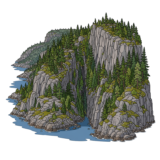
Skuleskogen National Park
Skuleskogen is a rugged coastal national park in northern Sweden, where ancient forest meets the dramatic cliffs of the High Coast along the Gulf of Bothnia. It is famous for showing the effects of post-glacial land uplift, where the land is still slowly rising after being pressed down by Ice Age glaciers. Visitors can hike through primeval spruce forests and discover deep ravines carved into the bedrock.
-
21
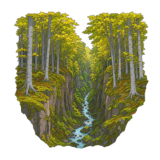
Söderåsen National Park
Söderåsen is a lush national park in southern Sweden built around a deep, dramatic gorge carved through a beech forest plateau. It is one of the largest contiguous deciduous forests in Scandinavia and shelters rare plants, birds of prey, and rich wildlife. In autumn the beech trees turn brilliant shades of gold and copper, making it especially stunning.
-
22
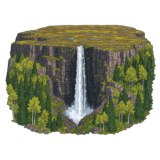
Fulufjället National Park
Fulufjället is a remote national park in the Dalarna region of central Sweden, centered on a broad flat-topped mountain plateau rising above a surrounding landscape of forests and lakes. It is home to Njupeskär, Sweden's highest waterfall, which plunges about 93 meters in a dramatic free-fall drop. The park also contains the world's oldest known individual tree, a 9,500-year-old Norway spruce nicknamed Old Tjikko.
-
23
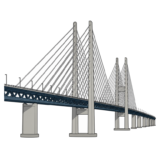
Öresund Bridge Malmö End
The Öresund Bridge is an iconic combined road and rail bridge-tunnel that links Malmö in Sweden with Copenhagen in Denmark across the Öresund strait. At the Malmö end, the bridge emerges from the water with its striking cable-stayed design featuring tall concrete pylons and radiating steel cables. It is one of the longest combined road and rail bridges in Europe and a powerful symbol of Nordic cooperation.
-
24
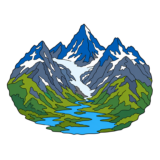
Sarek National Park
Sarek National Park is one of Europe's last true wilderness areas, located in the mountains of Swedish Lapland with no roads, no visitor centers, and no marked trails. It contains about 200 glaciers and 100 peaks, making it a dramatic and challenging destination for experienced adventurers. The park is part of a larger UNESCO World Heritage Site known as Laponia.
More interesting landmarks
-
25
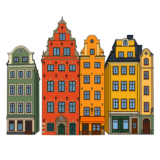
Gamla Stan Stockholm
Gamla Stan, meaning Old Town, is Stockholm's historic medieval island city center and one of the best-preserved medieval city centers in Europe. Its narrow cobblestone streets are lined with colorful buildings in shades of ochre yellow, burnt orange, deep red, and cream that date back to the 13th century. It is home to the Royal Palace, many museums, and lively cafes and shops.
-
26

Stockholm Royal Palace
The Stockholm Royal Palace, known as Kungliga Slottet, is one of the largest palaces in the world and serves as the official residence of the Swedish monarch. Built in the Baroque style and completed in the 18th century, it has over 600 rooms and a striking façade of pale yellow-beige stone. The Changing of the Guard ceremony held in its courtyard is a popular attraction for visitors.
-
27

ABBA Museum Stockholm
The ABBA Museum in Stockholm celebrates the legendary Swedish pop group ABBA, one of the best-selling music acts in history. Opened in 2013, it features the group's costumes, memorabilia, interactive exhibits, and a hologram experience where visitors can virtually sing alongside the band. The museum is a vibrant and fun tribute to the music and style of the 1970s and 80s.
-
28
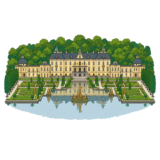
Drottningholm Palace
Drottningholm Palace is the permanent home of the Swedish royal family and is located on an island just west of Stockholm. Built in the late 17th century, it is often called the Versailles of Sweden because of its stunning Baroque architecture and beautifully designed formal gardens. It is a UNESCO World Heritage Site and one of the best-preserved royal palaces in Scandinavia.
-
29
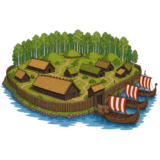
Birka Viking Settlement
Birka is one of Scandinavia's most important Viking Age towns, founded around 750 AD on the island of Björkö in Lake Mälaren. It was a thriving trading hub where merchants from across Europe and Asia exchanged goods like furs, silver, and glass beads. Today it is a UNESCO World Heritage Site with a museum and ancient burial mounds that archaeologists still study.
-
30
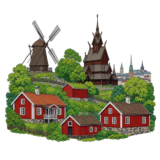
Skansen Open Air Museum Stockholm
Skansen is the world's oldest open-air museum, opened in 1891 on the island of Djurgården in Stockholm. It preserves over 150 historic Swedish buildings from different regions and centuries, letting visitors walk through a living slice of Swedish history. The museum also has a zoo with Nordic animals like moose, wolves, and brown bears.
-
31

Aurora Sky Station Abisko
The Aurora Sky Station sits at the top of a mountain in Abisko National Park in northern Sweden, reached by a chairlift, and is one of the world's best places to watch the northern lights. The area sits in a unique microclimate that keeps the sky unusually clear even when surrounding regions are cloudy. On clear nights, shimmering curtains of green, violet, and white aurora dance over frozen Lake Torneträsk below.
-
32
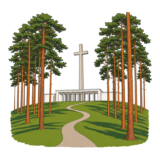
Skogskyrkogården Stockholm
Skogskyrkogården, meaning 'The Woodland Cemetery,' is a UNESCO World Heritage Site in Stockholm designed by architects Gunnar Asplund and Sigurd Lewerentz between 1917 and 1940. It is considered a masterpiece of Scandinavian design, blending a cemetery seamlessly into a natural pine forest landscape so that grief and nature feel deeply connected. Its simple, elegant chapels, open meadows, and tall pine trees have influenced cemetery design around the world.
-
33
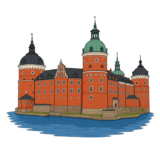
Gripsholm Castle
Gripsholm Castle is a striking royal castle built on a small island in Lake Mälaren near the town of Mariefred, about 65 kilometers west of Stockholm. Construction began in the 1530s under King Gustav Vasa, and the castle has been expanded and modified by Swedish royals over the centuries. It is famous for housing Sweden's national portrait collection, with thousands of historical portraits displayed in its many rooms.
-
34
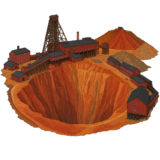
Ekomuseum Bergslagen Falun
The Falun Mine, part of the Ekomuseum Bergslagen, is a UNESCO World Heritage Site located in central Sweden that was once one of the world's most important copper mines. It operated for over a thousand years and at its peak in the 17th century produced two-thirds of Europe's copper supply. The mine's most famous legacy is the distinctive red paint called Falun red, which has colored traditional Swedish farmhouses for centuries.
-
35
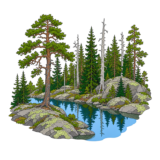
Tyresta National Park
Tyresta is a remarkable national park located just 20 kilometers south of central Stockholm, making it one of the most accessible wilderness areas near a major European capital. The park protects a vast ancient boreal forest with trees up to 400 years old that survived a great fire in 1999, which left ghostly standing dead trees alongside living forest. Crystal-clear lakes dot the landscape of pine forest and smooth granite outcrops.
-
36
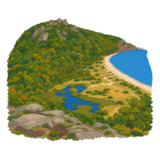
Stenshuvud National Park
Stenshuvud is a small but diverse national park on the southeastern tip of Sweden, centered on a rounded rocky headland rising above the coast of Skåne and the Baltic Sea. The park is unusual for Sweden because it supports warm-climate plants and animals more typical of southern Europe, including rare orchids and sand lizards. From the top of the headland there are sweeping views over sandy beaches, forest, and open sea.
-
37
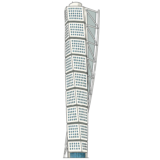
Turning Torso Malmö
The Turning Torso is a spectacular twisted skyscraper in Malmö, Sweden, and the tallest building in Scandinavia at 190 meters high. Designed by Spanish architect Santiago Calatrava, its nine segments rotate 90 degrees from bottom to top, giving it a dramatic spiraling appearance. It stands on the western waterfront of Malmö and has become the defining symbol of the city's modern transformation.
-
38

Ales Stenar Stone Ship
Ales Stenar, meaning Ale's Stones, is a remarkable ancient monument on the southern coast of Sweden consisting of 59 large boulders arranged in the outline of a ship 67 meters long. Dating back about 1,400 years to the Iron Age, it stands on a dramatic hilltop cliff overlooking the Baltic Sea and is the largest stone ship setting in Scandinavia. Historians believe it may have served as a burial monument or a ceremonial calendar aligned with the sun.
-
39
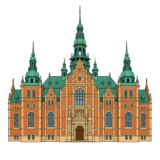
Nordiska Museet Stockholm
The Nordiska Museet is Sweden's largest museum dedicated to the cultural history and folk traditions of the Nordic countries, housed in a grand renaissance-style building on the island of Djurgården in Stockholm. Its towering entrance hall contains a monumental carved wooden statue of King Gustav Vasa, the founder of modern Sweden. The museum's ornate facade of red brick, turrets, and decorative stonework makes it look like a fairy-tale Nordic castle.
-
40

Swedish History Museum Stockholm
The Swedish History Museum, known as Historiska museet, is Sweden's primary museum of archaeology and medieval history, located in central Stockholm. It is most famous for its extraordinary Gold Room, a vault displaying one of Europe's finest collections of ancient gold artifacts including Iron Age necklaces, Bronze Age crowns, and Viking jewelry. The museum's 1930s functionalist building is decorated with remarkable bronze relief doors depicting scenes from Swedish prehistory.
Ten Largest Cities
Puzzles