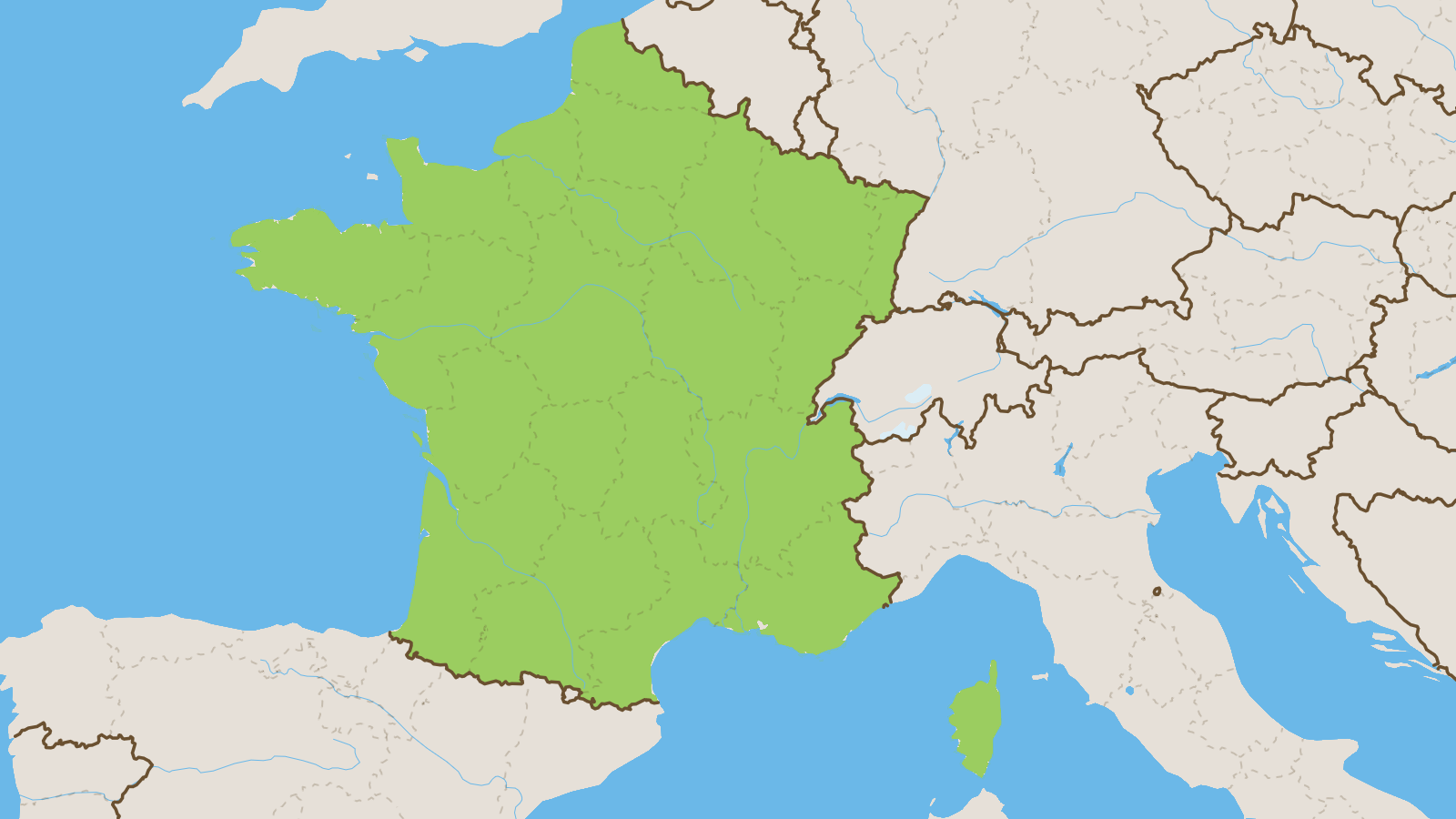
France sits in the heart of Western Europe, bordered by the Atlantic Ocean, the Mediterranean Sea, and the Alps mountains. It is one of the most visited countries on Earth, and it is easy to see why. From the snowy peaks of the south to the golden beaches of the west, France is packed with stunning landscapes. The country has a warm, proud character, and its people take great joy in food, art, and style. French cuisine is famous worldwide, with everything from crispy baguettes to creamy cheeses filling the markets and bakeries.
The capital city, Paris, is one of the most romantic and beautiful cities anywhere on the planet. It is home to the iconic Eiffel Tower, a giant iron structure that draws millions of visitors every year. France is also the birthplace of some of history's greatest artists and thinkers, making it a place where creativity and culture truly come alive.
Landmarks
-
1

Eiffel Tower Paris
The Eiffel Tower is a massive iron lattice tower built in 1889 as the entrance arch for the World's Fair in Paris. Standing 330 meters tall, it was the world's tallest man-made structure for over 40 years. Every night it sparkles with thousands of twinkling lights for five minutes every hour after dark.
-
2

Mont Blanc Summit
Mont Blanc is the highest mountain in the Alps and in all of Western Europe, reaching 4,808 meters above sea level. It sits on the border between France and Italy and draws thousands of mountaineers and skiers every year. The summit is permanently covered in snow and ice, often surrounded by swirling clouds.
-
3
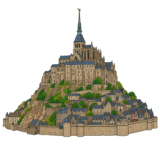
Mont Saint-Michel
Mont Saint-Michel is a small rocky island topped by a stunning medieval abbey off the coast of Normandy in northern France. At high tide, water surrounds the island completely, making it look like a castle rising magically from the sea. The narrow, winding streets inside its walls are packed with historic buildings, shops, and homes that have existed for centuries.
-
4
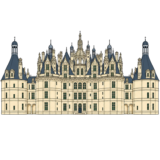
Château de Chambord
The Château de Chambord is the largest château in the Loire Valley, built in the 16th century as a hunting lodge for King Francis I, though it was so grand it was rarely used. Its rooftop is legendary — it looks like a fantasy skyline all on its own, with 365 chimneys, towers, turrets, and domes crowded together. Inside, a famous double-helix staircase allows two people to walk up and down at the same time without ever meeting, a design sometimes credited to Leonardo da Vinci.
-
5
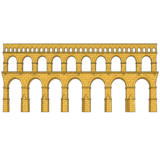
Pont du Gard Roman Aqueduct
The Pont du Gard is a remarkable ancient Roman aqueduct bridge in southern France, built around 50 CE to carry fresh water over 50 kilometers to the Roman city of Nîmes. It stands 49 meters high and spans a river gorge using three tiers of perfectly proportioned stone arches stacked on top of each other. It is one of the best-preserved Roman structures in the world and a powerful reminder of how advanced ancient Roman engineering truly was.
-
6
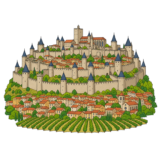
Carcassonne Medieval Citadel
Carcassonne is a fortified medieval city in southern France, surrounded by a double ring of stone walls and 52 watchtowers that have stood for over a thousand years. It looks like something straight out of a fairy tale and is one of the best-preserved medieval fortifications in Europe. From a distance, its towers and turrets rising above the hilltop make it look like a real-life fantasy castle.
-
7

Lascaux Cave Paintings Montignac
The Lascaux cave paintings near Montignac are a collection of remarkable prehistoric artworks estimated to be around 17,000 years old, depicting bulls, horses, deer, and other animals in vivid detail. They were discovered by four teenagers in 1940 and are considered one of the greatest archaeological finds in history. The original caves are now closed to protect the paintings, but a detailed replica called Lascaux IV lets visitors experience the magic.
-
8

Camargue Natural Regional Park
The Camargue is a vast wild wetland delta in southern France where the Rhône River meets the Mediterranean Sea, forming a unique landscape of lagoons, marshes, and salt flats. It is famous for its wild white horses, black bulls, and huge flocks of pink flamingos that wade through the shallow waters. This untamed natural park feels like a world apart from the rest of France.
-
9
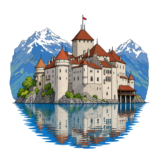
Château de Chillon
Château de Chillon is a stunning island castle sitting on a rocky outcrop right at the edge of Lake Geneva, straddling the border region between France and Switzerland. Its towers and walls rise dramatically from the blue-green water, and it has been a fortress, prison, and royal residence over its 900-year history. The romantic poet Lord Byron visited and made it famous in his 1816 poem 'The Prisoner of Chillon.'
-
10
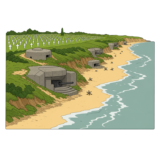
D-Day Beaches Normandy
The D-Day Beaches of Normandy mark the site of the largest seaborne military invasion in history, which took place on June 6, 1944, and was a turning point in World War II. Miles of wide, sandy beaches stretch along the Normandy coast, and today they are dotted with memorials, preserved bunkers, and military cemeteries that honor the thousands of soldiers who lost their lives. Visiting these beaches is a powerful and moving experience that connects you directly to history.
-
11
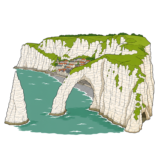
Étretat Cliff Normandy
Étretat is a small town on the Normandy coast famous for its extraordinary white chalk cliffs that arch dramatically into the sea, forming natural arches and a tall pointed rock stack called the Aiguille. The cliffs were painted repeatedly by the Impressionist artist Claude Monet, who was captivated by their beauty and changing light. Walking along the cliff tops gives breathtaking views of the swirling waves below.
-
12
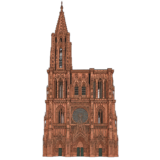
Strasbourg Cathedral
Strasbourg Cathedral is a stunning Gothic masterpiece that took over 400 years to build, finally completing in 1439. It stands in the heart of Alsace and was once the tallest building in the entire world. Its famous astronomical clock inside still wows visitors today with moving figures that parade on the hour.
-
13
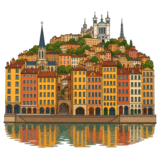
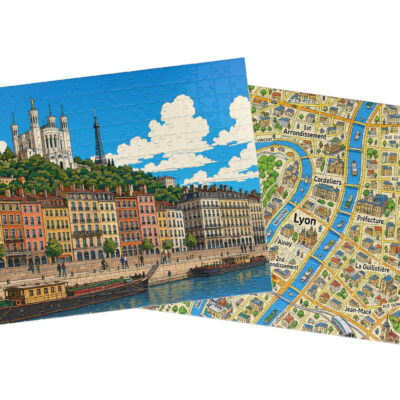
Lyon Old Town UNESCO Historic Site
Lyon's Old Town, known as Vieux-Lyon, is one of the largest Renaissance neighborhoods in Europe and a UNESCO World Heritage Site. Its narrow cobblestone streets are lined with colorful Italian-influenced buildings featuring inner courtyards connected by secret passageways called traboules. Lyon is also France's culinary capital, making this historic district a feast for both the eyes and the stomach.
-
14
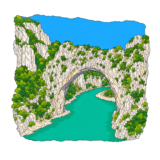
Gorges de l'Ardèche
The Gorges de l'Ardèche is a spectacular river canyon in southern France carved over millions of years by the Ardèche River. It stretches about 30 kilometers and features dramatic limestone cliffs that rise up to 300 meters above the turquoise water below. The natural stone arch called the Pont d'Arc, which towers 54 meters high, is the canyon's most iconic and breathtaking landmark.
-
15

Puy de Dôme Volcano
Puy de Dôme is a dormant volcano rising 1,465 meters above sea level in the Auvergne region of central France. It is the highest peak in a chain of ancient volcanoes called the Chaîne des Puys, which is now a UNESCO World Heritage Site. At the very summit sit the ruins of a Roman temple dedicated to Mercury, reminding visitors that people have been climbing this mountain for thousands of years.
-
16
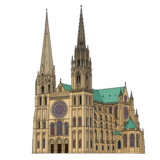
Chartres Cathedral
Chartres Cathedral is considered one of the finest examples of Gothic architecture in the world, built in the 13th century in the flat plains of northern France. It is especially famous for its extraordinary stained glass windows, which cover over 2,600 square meters and bathe the interior in brilliant blue and red light. The cathedral has two mismatched spires of different heights, giving it a uniquely charming and recognizable silhouette.
-
17

Château de Chenonceau
Château de Chenonceau is one of France's most elegant Renaissance castles, famously built directly over the Cher River in the Loire Valley. A long gallery of arched rooms stretches across a bridge spanning the water, making it look like the castle is floating on the river. It is often called the Ladies' Castle because throughout history it was owned and shaped by a remarkable series of powerful women.
-
18

Calanques National Park Marseille
The Calanques are a series of narrow, dramatic sea inlets carved into brilliant white limestone cliffs along the Mediterranean coast near Marseille. This national park protects both a stunning seascape and rich underwater ecosystems, with water so clear and blue it seems unreal. Rare plants cling to the rocky cliffs, and the park is a paradise for hikers, kayakers, and snorkelers.
-
19
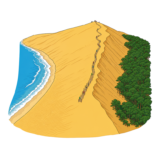
Dune du Pilat
The Dune du Pilat is the tallest sand dune in Europe, rising over 100 meters high on the Atlantic coast near Arcachon in southwestern France. It stretches nearly 3 kilometers long and contains an estimated 60 million cubic meters of sand that slowly moves inland each year. From the top, visitors get a dramatic view of pine forests on one side and the sparkling blue Atlantic Ocean on the other.
-
20
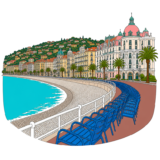
Côte d'Azur Nice Promenade des Anglais
The Promenade des Anglais is a famous 7-kilometer seafront boulevard that runs along the sparkling blue Mediterranean in Nice on the French Riviera. Built in the 19th century with funding from English visitors who loved to stroll there, it is lined with grand Belle Époque hotels, palm trees, and the distinctive blue chairs that have become an icon of the city. The pebbly beach and turquoise bay, known as the Baie des Anges, stretch along its entire length.
-
21
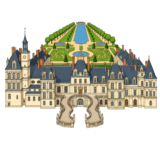
Château de Fontainebleau
The Château de Fontainebleau is a magnificent royal palace located about 55 kilometers south of Paris, surrounded by a vast forest. It served as a home to French kings and emperors for nearly 800 years, making it one of the most historically used royal residences in Europe. Napoleon Bonaparte famously said his farewells to his Imperial Guard on its famous horseshoe-shaped staircase before his first exile in 1814.
-
22

Aiguille du Midi Chamonix
The Aiguille du Midi is a dramatic, needle-sharp granite peak rising 3,842 meters above the town of Chamonix in the French Alps. A cable car carries visitors to a terrace and observation platforms perched right at the summit, offering jaw-dropping views of Mont Blanc and surrounding glaciers. On clear days you can see across three countries — France, Italy, and Switzerland.
-
23

Carnac Standing Stones Brittany
The Carnac Stones are an extraordinary collection of more than 3,000 prehistoric standing stones arranged in long parallel rows across the Breton countryside in northwestern France. They were erected by ancient peoples during the Neolithic period, roughly 4,500 to 7,000 years ago, making them older than Stonehenge. No one knows exactly why they were built, which makes them one of archaeology's greatest mysteries.
-
24
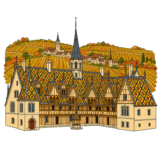
Burgundy Wine Region Beaune
The Burgundy wine region around the town of Beaune is one of the most celebrated wine-producing areas in the entire world, famous for its Pinot Noir and Chardonnay grapes. The rolling hillside vineyards, known as the Côte d'Or or 'Golden Slope,' produce wines so prized that small parcels of land can be worth millions of euros. At the heart of Beaune sits the stunning 15th-century Hôtel-Dieu, a medieval hospital with a dazzling multicolored glazed-tile roof.
More interesting landmarks
-
25

Massif des Écrins National Park
The Massif des Écrins is France's southernmost major Alpine national park, protecting a vast wilderness of glaciers, dramatic peaks, and wildflower meadows in the Dauphiné Alps. The highest summit, Barre des Écrins, reaches 4,102 meters, making it one of the few peaks in France above 4,000 meters. The park is home to rare wildlife including the ibex, chamois, and golden eagle.
-
26

Côte de Granit Rose Brittany
The Côte de Granit Rose, or Pink Granite Coast, is a magical stretch of coastline in northern Brittany renowned for its remarkable rose-pink and orange-hued granite boulders. Over millions of years, wind and sea erosion have sculpted these rocks into fantastical rounded shapes that look like giant stacked sculptures. The contrast of the warm pink rocks against the turquoise sea and the golden light of Brittany makes it one of the most photogenic coastlines in all of Europe.
-
27
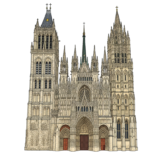
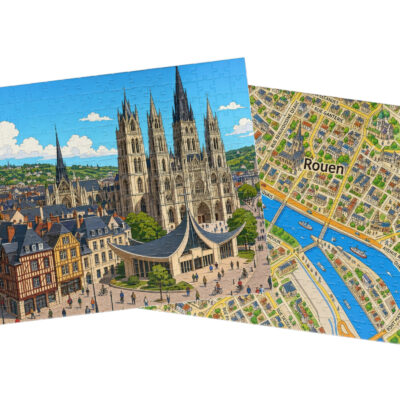
Rouen Cathedral
Rouen Cathedral is a magnificent Gothic masterpiece in the city of Rouen in Normandy, northern France, and is one of the tallest cathedrals in the world. It is particularly famous in the art world because the Impressionist painter Claude Monet painted it over 30 times under different lighting conditions, capturing how light transforms the texture of its ornate stone facade. The cathedral's intricately carved front is so detailed it looks almost like lacework carved in stone.
-
28

Millau Viaduct
The Millau Viaduct is a record-breaking cable-stayed road bridge that soars above the Tarn River valley in southern France, and at its tallest point it stands higher than the Eiffel Tower. Opened in 2004 and designed by British architect Norman Foster, it carries the A75 motorway across a wide valley in the Massif Central region. Driving across it feels like gliding above the clouds, as the bridge often sits above the morning mist filling the valley below.
-
29
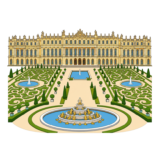
Palace of Versailles
The Palace of Versailles is a breathtaking royal château located just outside Paris, built for King Louis XIV in the 17th century. It was the center of French political power for over a century and is famous for its lavish Hall of Mirrors, a gallery lined with 357 huge mirrors. The palace is surrounded by vast, perfectly manicured gardens with grand fountains and sculpted hedges.
-
30

Louvre Museum Paris
The Louvre is the world's largest and most visited art museum, housed in a historic medieval fortress that was expanded into a royal palace over centuries. It is home to nearly 35,000 works of art, including the world-famous Mona Lisa by Leonardo da Vinci. A striking glass and steel pyramid, added in 1989, now serves as the museum's main entrance in its central courtyard.
-
31
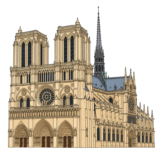
Notre-Dame Cathedral Paris
Notre-Dame Cathedral is a masterpiece of Gothic architecture sitting on a small island in the middle of the Seine River in Paris, built between 1163 and 1345. It is famous for its stunning rose windows, rows of stone gargoyles peering down from its towers, and its iconic twin square bell towers. After a devastating fire in 2019 destroyed its spire and roof, the cathedral has been carefully restored and reopened in 2024.
-
32

Sacré-Cœur Basilica Montmartre
The Sacré-Cœur Basilica is a stunning white church perched at the very top of Montmartre hill, the highest point in Paris. Built from a special type of travertine stone that stays brilliantly white even in rain, its gleaming domes are visible from many parts of the city. From its steps, visitors enjoy one of the most spectacular panoramic views of Paris stretching for miles in every direction.
-
33

Arc de Triomphe Paris
The Arc de Triomphe is a monumental triumphal arch standing at the top of the famous Champs-Élysées avenue in Paris, commissioned by Napoleon Bonaparte in 1806 to honor his victorious armies. It stands 50 meters tall and is covered in detailed relief sculptures depicting famous battles and military figures. Twelve major avenues radiate outward from the arch like the spokes of a wheel, making it one of the world's most dramatic city intersections.
-
34
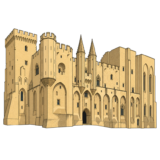
Palace of the Popes Avignon
The Palace of the Popes in Avignon is a massive Gothic fortress and palace built in the 14th century when the Catholic popes moved from Rome to southern France. It was the center of the Christian world for about 70 years and is one of the largest and most important medieval buildings in Europe. Its sheer size and fortress-like walls make it an unforgettable landmark in the heart of Avignon.
-
35
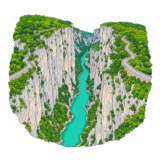
Gorges du Verdon
The Gorges du Verdon is a dramatic river canyon in southeastern France, often called the Grand Canyon of Europe. The Verdon River has carved gorges up to 700 meters deep through pale limestone rock, and the river itself glows a striking turquoise-green color. It is a paradise for kayakers, hikers, and rock climbers who come to marvel at the stunning scenery.
-
36

Musée d'Orsay Paris
The Musée d'Orsay in Paris is a world-famous art museum housed in a beautifully converted 19th-century railway station on the banks of the Seine River. It holds the largest collection of Impressionist and Post-Impressionist paintings in the world, including masterpieces by Monet, Renoir, and Van Gogh. The grand arched glass roof of the old train station gives the museum a spectacular, light-filled interior.
-
37

Centre Pompidou Paris
The Centre Pompidou is a bold and unconventional modern art museum in central Paris that looks like a building turned inside out, with its colorful pipes, escalators, and structural elements displayed on the outside rather than hidden inside. Opened in 1977, it was so radical in design that it shocked Parisians at first, but it is now one of France's most visited cultural sites. The transparent escalator tubes climbing the exterior offer amazing panoramic views of Paris as you ride up.
-
38

Colosseum of Nîmes Roman Arena
The Roman Arena of Nîmes is one of the best-preserved Roman amphitheaters in the entire world, built around 70 AD and able to seat up to 24,000 spectators. Unlike ruins in many other cities, this arena is still actively used today for concerts and bullfights, making it one of the most remarkable living ancient monuments on Earth. Its two-story oval exterior of honey-colored stone arches has stood remarkably intact for nearly 2,000 years.
-
39

Sainte-Chapelle Paris
Sainte-Chapelle is a breathtaking Gothic royal chapel built in the 1240s on the Île de la Cité in Paris. It was constructed by King Louis IX to house precious Christian relics, including what was believed to be Christ's Crown of Thorns. The upper chapel is famous for having walls that are almost entirely made of stunning stained glass — over 1,000 panels telling biblical stories in vivid color.
-
40
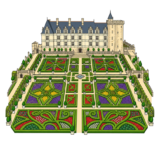
Château de Villandry Gardens
The Château de Villandry in the Loire Valley is world-famous not just for its elegant Renaissance castle but above all for its extraordinary formal gardens, considered among the finest in France. The gardens are arranged on three terraces: one with ornamental water features, one with beautiful geometric flower and box hedge patterns, and one with a stunning ornamental kitchen garden growing vegetables in colorful, decorative patterns. Every plant is meticulously maintained to create a living work of art.
Puzzles