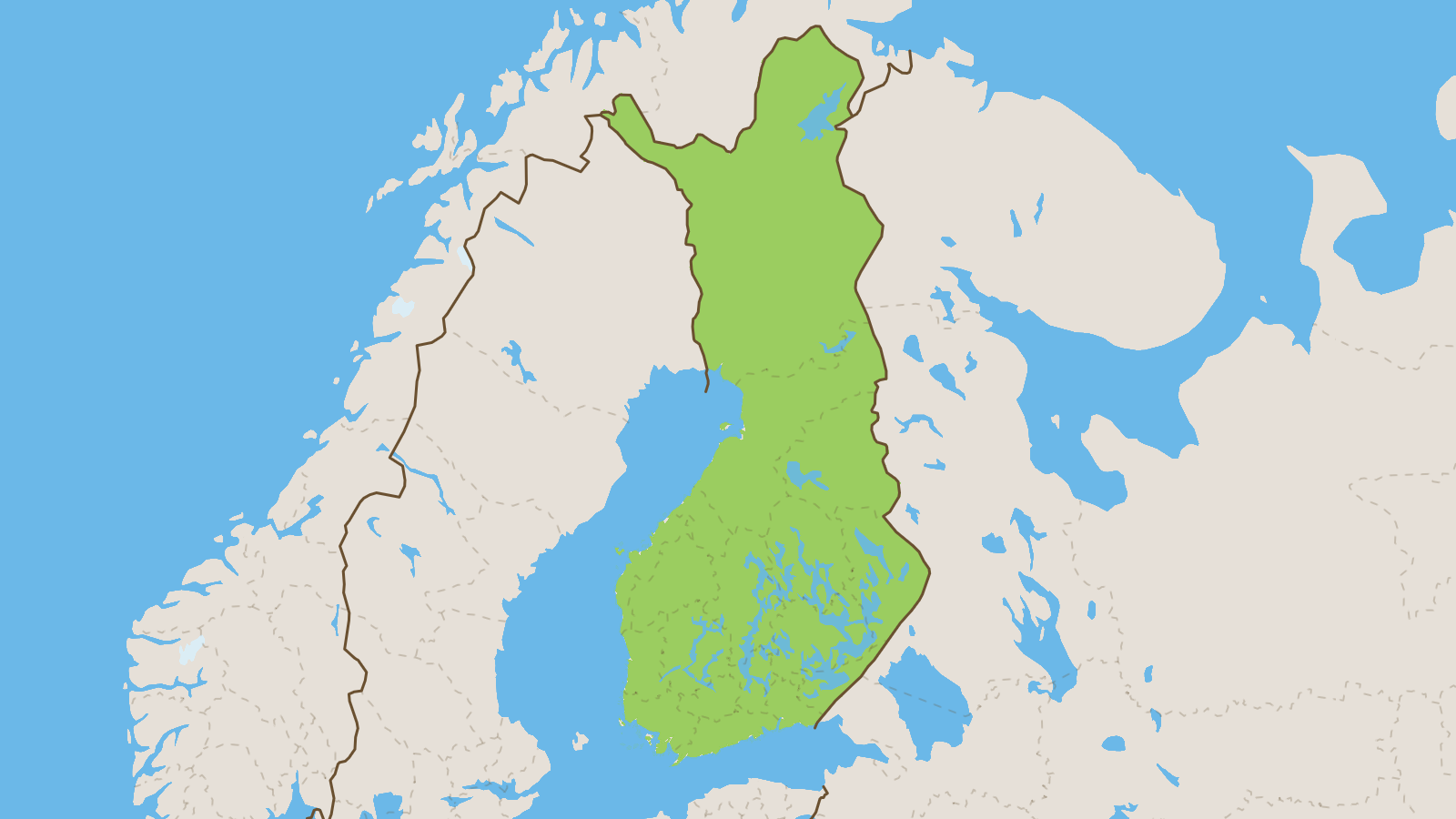
Finland sits in the far north of Europe, sharing borders with Sweden, Norway, and Russia, with the Baltic Sea along its southwestern coast. It is a land of stunning natural beauty, covered in thick forests and dotted with around 188,000 lakes. In winter, the northern skies come alive with the Northern Lights, dancing in brilliant greens and purples above the snow. During summer, the sun barely sets, giving Finland its magical "Land of the Midnight Sun" nickname.
Finnish people are known for being calm, resourceful, and deeply connected to nature. The country is famously the home of the sauna, a hot steam bath that Finns have enjoyed for thousands of years. Finland is also where the legend of Santa Claus is said to live, in a magical region called Lapland. With its reindeer, cozy wooden cabins, and vast wilderness, Finland feels like a place straight out of a storybook.
Landmarks
-
1
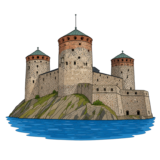
Olavinlinna Castle Savonlinna
Olavinlinna is a medieval stone castle built in 1475 on a small rocky island in the middle of Lake Saimaa. It is one of the best-preserved medieval castles in Northern Europe and served as a key military fortress guarding the border between Sweden and Russia. Every summer, the castle hosts a famous opera festival where performances take place inside its ancient stone courtyard.
-
2
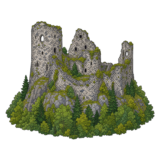
Raseborg Castle Ruins
Raseborg Castle is a hauntingly beautiful set of medieval ruins perched on a rocky outcrop in the forests of southern Finland, near the town of Snappertuna. Built in the late 14th century, it was once an important Swedish administrative fortress but was abandoned in the 16th century and slowly crumbled over time. Today, the crumbling grey stone towers and walls draped in moss and greenery make it one of Finland's most atmospheric historic sites.
-
3
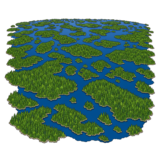
Saimaa Lake System
The Saimaa Lake System is the largest lake in Finland and the fourth largest in Europe, made up of thousands of interconnected lakes, channels, and islands spread across southeastern Finland. It is home to the critically endangered Saimaa ringed seal, one of the world's rarest seals, which is found nowhere else on Earth. The landscape is a stunning mosaic of dark blue water, forested islands, and rocky shorelines.
-
4
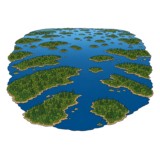
Lake Inari
Lake Inari is the largest lake in Finnish Lapland and the third largest in all of Finland, located well above the Arctic Circle in the remote north. It contains over 3,000 islands and is a sacred place for the indigenous Sámi people, who have lived around its shores for thousands of years. In winter the lake freezes completely and the surrounding landscape transforms into a stunning Arctic wilderness of snow and ice.
-
5
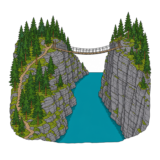
Repovesi National Park
Repovesi National Park is a dramatic wilderness area in southern Finland known for its steep cliffs, deep blue lakes, and thick old-growth forests. The park's most iconic feature is a series of rocky ridges and gorges carved by ancient glaciers, making it one of the most rugged landscapes in southern Finland. Hikers love the park for its suspension bridges and cliff-top viewpoints that offer sweeping views over the forested lake scenery below.
-
6
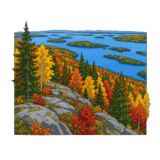
Koli National Park
Koli National Park is one of Finland's most celebrated landscapes, famous for its forested hills rising steeply above the vast blue expanse of Lake Pielinen in North Karelia. The view from the top of Ukko-Koli, the highest peak at 347 meters, inspired some of Finland's greatest artists and composers in the 19th century, including Jean Sibelius and painter Eero Järnefelt. In autumn the hillside forests turn brilliant shades of red, orange, and gold, making Koli one of the most photographed places in Finland.
-
7
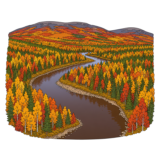
Lemmenjoki National Park
Lemmenjoki National Park is Finland's largest national park, stretching across the wilderness of Lapland near the Norwegian border. It is famous for its ancient gold-panning tradition along the Lemmenjoki River, which still attracts adventurers today. The park is also a sacred area for the indigenous Sámi people, who have lived in this landscape for thousands of years.
-
8
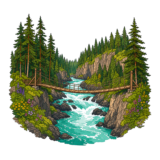
Oulanka National Park
Oulanka National Park sits in northern Finland near the Russian border and is celebrated for its dramatic river canyons, rushing rapids, and lush riverbanks. It is one of Finland's most visited national parks, popular for hiking the famous Karhunkierros trail. The park's mix of pine forests, flower-filled meadows, and powerful waterfalls makes it a striking contrast to the surrounding flat taiga.
-
9
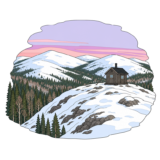
Pallas-Yllästunturi National Park
Pallas-Yllästunturi National Park is one of Finland's oldest and most beloved national parks, featuring a long chain of bare, rounded fells stretching across Lapland. It is a paradise for hikers in summer and skiers and snowshoers in winter, with well-maintained trails connecting the fells. The park is also known for its crisp, clean air — it hosts one of the world's longest-running clean air monitoring stations.
-
10
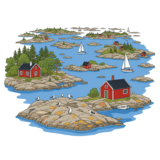
Archipelago National Park
Archipelago National Park protects the southwestern corner of Finland's vast island chain, which is one of the largest archipelagos in the world with tens of thousands of islands. The park's landscape is a maze of rocky skerries, sheltered bays, and traditional Finnish fishing villages painted in red and yellow. It is a hotspot for birdwatching, sailing, and spotting grey seals basking on sun-warmed rocks.
-
11
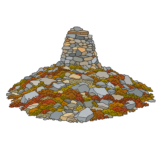
Halti Summit
Halti is the highest point in Finland, rising to 1,324 meters above sea level on the remote northwestern border with Norway. Because the actual peak sits just inside Norway, Finland's highest point on its own territory is a slightly lower shoulder of the same mountain. The area is wild and roadless, making reaching it a true wilderness adventure through open tundra.
-
12
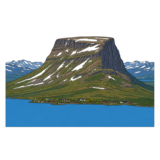
Saana Fell Kilpisjärvi
Saana Fell is a striking flat-topped mountain that rises steeply above the village of Kilpisjärvi in Finland's far northwest corner. Standing 1,029 meters tall, its distinctive tabletop shape makes it instantly recognizable and it is considered a sacred fell in Sámi culture. From its summit, hikers can see into Norway and Sweden on a clear day, a rare spot where three countries almost meet.
-
13
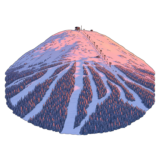
Ylläs Fell
Ylläs is the highest fell in Finnish Lapland that is fully within Finland's borders, reaching 718 meters above sea level. In winter it transforms into one of Finland's largest ski resorts, with slopes descending through birch and pine forest on all sides. In summer, its open summit offers panoramic views over a sea of forested wilderness with no towns in sight.
-
14
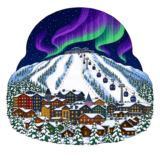
Levi Ski Resort Fell
Levi is Finland's most popular ski resort, built around a 531-meter fell in the heart of Lapland near the town of Sirkka. Its gentle, wide slopes are ideal for families and beginners, while the resort village at the base buzzes with hotels, restaurants, and activities year-round. Levi is also one of the best places in Finland to spot the northern lights dancing over snowy treetops.
-
15
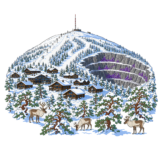
Luosto Fell
Luosto is a small, peaceful fell in southern Lapland known for its family-friendly ski slopes and its unique amethyst mine, one of the only tourist amethyst mines in Europe. Visitors can dig for their own amethyst gemstones in the open-air mine, making it a one-of-a-kind experience. The fell is also surrounded by old-growth pine forest, home to reindeer that often wander right through the resort village.
-
16
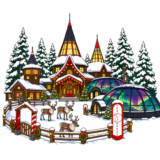
Santa Claus Village Rovaniemi
Santa Claus Village is a famous theme park and resort sitting right on the Arctic Circle in Rovaniemi, the official hometown of Santa Claus. Visitors can meet Santa himself, cross the Arctic Circle line, ride reindeer sleds, and zoom through snowy forests on snowmobiles. The village's colorful glass-roofed Arctic cabins let guests sleep under a sky that frequently glows with the northern lights.
-
17
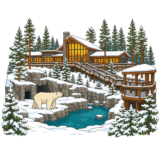
Ranua Wildlife Park
Ranua Wildlife Park is Finland's northernmost wildlife park, located deep in Lapland and home to over 50 Arctic and sub-Arctic species including polar bears, wolverines, and reindeer. It is one of the best places in the world to see polar bears up close in a natural-style habitat. The park sits within a snowy boreal forest, giving visitors a true taste of Arctic wilderness.
-
18
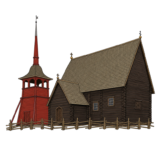
Petäjävesi Old Church UNESCO
Petäjävesi Old Church is a beautiful log church built in central Finland in 1764 and a UNESCO World Heritage Site since 1994. It is an outstanding example of traditional Nordic log architecture, combining Lutheran church design with centuries-old Finnish timber-building techniques. The church sits in a peaceful forest setting and is still used for special services today.
-
19
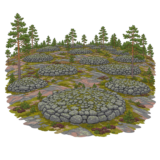
Sammallahdenmäki Bronze Age Burial Site UNESCO
Sammallahdenmäki is an ancient Bronze Age burial ground in southwestern Finland, inscribed as a UNESCO World Heritage Site in 1999. It contains over 30 granite burial cairns — large mounds of stacked stones — built between 1500 and 500 BCE, making it one of the best-preserved prehistoric monuments in northern Europe. The site reveals how people lived, died, and honored their dead thousands of years ago.
-
20
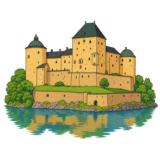
Aland Islands Kastelholm Castle
Kastelholm Castle is a medieval fortress on the Åland Islands, an autonomous Swedish-speaking archipelago belonging to Finland. Built in the 14th century, it served as an important administrative center for the Swedish Crown and was once visited by Swedish kings. The castle's striking silhouette of yellow-plastered stone towers rises above a peaceful rural landscape beside a narrow strait.
-
21
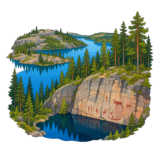
Hossa National Park
Hossa National Park in northeastern Finland is a vast wilderness of shimmering lakes, ancient forests, and rugged rocky ridges. Established in 2017 to celebrate Finland's 100th year of independence, the park is known for excellent hiking, canoeing, and fishing. One of its most special features is a 3,500-year-old rock painting on the lakeside cliffs, showing prehistoric human figures and animals.
-
22
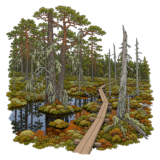
Seitseminen National Park
Seitseminen National Park in southwestern Finland protects one of the country's finest examples of old-growth taiga forest, with ancient gnarled pines, mossy wetlands, and quiet forest ponds. The park is a haven for rare woodland birds such as the Siberian jay and the three-toed woodpecker. Its untouched boglands and lichen-draped trees give it an almost mystical atmosphere.
-
23
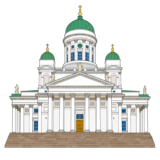
Helsinki Cathedral
Helsinki Cathedral is a stunning white neoclassical church that sits at the top of Senate Square in the heart of the Finnish capital. Built in the mid-1800s, it is the most recognizable landmark in Helsinki and serves as a symbol of the city. Its massive green dome is visible from far out at sea, making it a guide for sailors approaching the harbor.
-
24
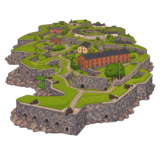
Suomenlinna Sea Fortress
Suomenlinna is a UNESCO World Heritage Site built on a cluster of islands just off the coast of Helsinki, constructed in the 18th century to defend the region from naval attack. Today it is a living neighborhood and open-air museum where visitors can explore old cannon batteries, tunnels, and thick stone walls. It is one of the largest sea fortresses in the world and attracts nearly a million visitors each year.
More interesting landmarks
-
25
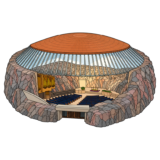
Temppeliaukio Rock Church
The Temppeliaukio Church, also called the Rock Church, is one of Helsinki's most unique buildings — it was literally excavated and blasted out of solid bedrock in 1969. The circular church is topped with a copper dome supported by 180 vertical windows that flood the interior with natural light. The rough, unfinished rock walls inside give the space an extraordinary cave-like atmosphere unlike any other church in the world.
-
26
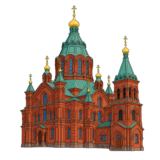
Uspenski Cathedral Helsinki
Uspenski Cathedral is a striking Russian Orthodox church perched on a rocky peninsula overlooking Helsinki's harbor, completed in 1868. Its red brick exterior and multiple golden onion domes make it look quite different from Finland's typically Lutheran churches, reflecting the period when Finland was part of the Russian Empire. It is the largest Orthodox church in Western Europe.
-
27
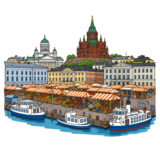
Helsinki Market Square
Helsinki Market Square, known as Kauppatori, is a lively open-air marketplace right on the city's waterfront where locals and tourists have gathered for centuries. Colorful market stalls sell fresh fish, berries, vegetables, handicrafts, and traditional Finnish foods. The square is framed by beautiful neoclassical buildings and offers a great view of the harbor, ferries, and Uspenski Cathedral on the hill beyond.
-
28

National Museum of Finland
The National Museum of Finland in Helsinki tells the story of Finnish history from prehistoric times all the way to the present day. The building itself, completed in 1916, is a beautiful example of National Romantic architecture, blending medieval castle elements with Finnish granite and folk art motifs. One of its most memorable features is the grand ceiling fresco in the entrance hall, painted by the famous Finnish artist Akseli Gallen-Kallela, depicting scenes from the Finnish national epic, the Kalevala.
-
29
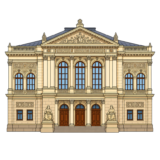
Ateneum Art Museum
The Ateneum is Finland's most important art museum, home to the country's largest collection of classical Finnish art, including famous works by masters like Akseli Gallen-Kallela and Albert Edelfelt. The grand neoclassical building opened in 1887 and sits right in the center of Helsinki near the main railway station. Its facade features allegorical statues of famous artists and decorative stonework that make it one of the most elegant buildings in the city.
-
30

Kiasma Museum of Contemporary Art
Kiasma is Helsinki's museum of contemporary art, housed in a bold and curving modern building designed by American architect Steven Holl and opened in 1998. The building's unusual swooping shape and large glass panels were designed to bring natural light deep into the exhibition spaces, and the structure itself is considered a work of art. Its name, Kiasma, comes from a scientific term for the crossing of two curves, reflecting the building's distinctive interlocking form.
-
31
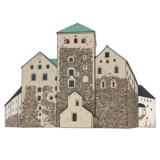
Turku Castle
Turku Castle is one of the oldest and largest medieval castles in Finland, founded in the late 13th century at the mouth of the Aura River in the city of Turku. Over the centuries it served as a royal residence, a prison, and an administrative center, and today it houses a fascinating historical museum. The castle's thick grey stone walls and towers have survived wars, fires, and hundreds of years of history, making it a powerful symbol of Finland's medieval past.
-
32
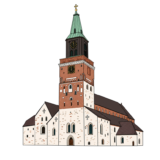
Turku Cathedral
Turku Cathedral is the mother church of the Evangelical Lutheran Church of Finland and the country's most important medieval religious building, with construction beginning in the 13th century. Its tall, pale stone tower is a landmark visible across the whole city and has watched over Turku for more than 700 years. The cathedral holds the tombs of several important historical figures and contains medieval frescoes that survived devastating fires over the centuries.
-
33
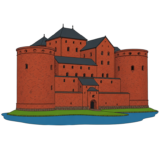
Häme Castle Hämeenlinna
Häme Castle is one of Finland's oldest buildings, constructed in the late 13th century by Swedish crusaders in the heart of the country. Its distinctive red-brick walls made it unusual compared to the grey stone castles more common in Europe, and it served as an important administrative center for centuries. Today visitors can explore its well-preserved rooms and learn about medieval Finnish history.
-
34
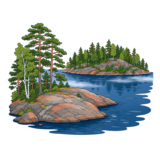
Päijänne National Park
Päijänne National Park protects a chain of scenic islands and shorelines along Lake Päijänne, the second largest lake in Finland, running through the heart of the country. The park is known for its rugged rocky islands, crystal-clear water, and rich wildlife including white-tailed eagles and otters. It is a popular destination for kayaking and boating, letting visitors island-hop through beautiful lake scenery.
-
35
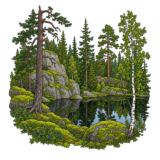
Nuuksio National Park
Nuuksio National Park is a surprisingly wild natural escape located just 30 kilometers from the Finnish capital Helsinki, making it one of the most accessible national parks in the country. The park is a gentle landscape of ancient forests, mossy rocks, and small quiet lakes connected by well-marked hiking trails. It is home to the rare flying squirrel and the Siberian jay, and Finns love to visit for foraging, swimming, and experiencing the traditional practice of peaceful nature immersion.
-
36

Urho Kekkonen National Park
Urho Kekkonen National Park is one of the largest national parks in Finland, covering a vast area of Lapland wilderness near the town of Saariselkä and the Russian border. The park is a spectacular Arctic landscape of open fell plateaus, ancient boreal forests, river valleys, and reindeer herds roaming freely across the tundra. It is also one of the best places in Finland to witness the Northern Lights dancing across the sky on clear winter nights.
-
37
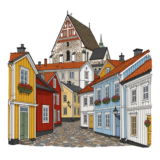
Rauma Old Town UNESCO
Rauma Old Town is one of the best-preserved historic wooden towns in Scandinavia and a UNESCO World Heritage Site since 1991. Its charming streets are lined with hundreds of colorful wooden buildings dating back to the 17th and 18th centuries, many still used as homes and shops today. The town is also famous for its unique local dialect and a centuries-old tradition of bobbin lace-making.
-
38
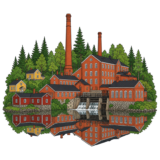
Verla Groundwood and Board Mill UNESCO
The Verla Groundwood and Board Mill is a remarkably intact 19th-century industrial complex in southeastern Finland, inscribed as a UNESCO World Heritage Site in 1996. Built in the 1880s, it produced paperboard until 1964 and has been preserved almost exactly as it was when operations ceased. It offers a vivid window into early industrial life, complete with original machinery, workers' homes, and a mill pond.
-
39
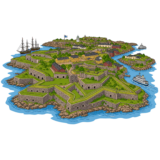
Fortress of Suomenlinna UNESCO
Suomenlinna is a mighty sea fortress built on a cluster of islands just off the coast of Helsinki, recognized as a UNESCO World Heritage Site in 1991. Constructed by Sweden in the 18th century, it was designed to defend against naval attacks and is one of the largest sea fortresses in the world. Today it is both a living neighborhood and a popular tourist destination, home to museums, cafes, and dramatic coastal ramparts.
-
40
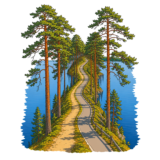
Punkaharju Ridge
Punkaharju Ridge is a breathtaking narrow glacial ridge in the Finnish Lake District, stretching for about eight kilometers through the middle of Lake Saimaa. Formed during the last Ice Age, the ridge is sometimes only a few dozen meters wide, with shimmering lake water on both sides and a canopy of ancient pines overhead. It has been celebrated as one of Finland's most beautiful natural landscapes for over two centuries.
Puzzles